





Description
Key Technical Specifications
| Parameter | Value |
|---|---|
| Manufacturer | ABB |
| Model | FPBA-01 |
| Product Type | PROFIBUS DP Adapter Module |
| Communication Protocol | PROFIBUS DP-V0 / DP-V1 |
| Supported Profiles | PROFIdrive, ABB Drives Profile, Transparent 16-bit, Transparent 32-bit |
| Telegram Support | PPO Types 1–8, Standard Telegram 1 & 2 |
| Bus Connector | 9-pin D-Sub PROFIBUS Connector |
| Drive Interface | 20-pin Internal Drive Connector |
| Status Indicators | HOST, MODULE, NETWORK Bi-color LEDs |
| Protection Rating | IP20 |
| Mounting | Internal Drive Option Slot |
| Compatible Drives | ACS355, ACS380, ACS480, ACS580, ACS850, ACS880, ACH580, ACQ580, DCS880 and other supported ABB drives |
| Configuration | Drive Parameters and GSD File |
| Typical Application | PLC-to-Drive Fieldbus Communication |
Product Introduction & Supply Chain Strategy
The ABB FPBA-01 is a PROFIBUS DP adapter module that enables ABB variable frequency drives to communicate with Siemens and other PROFIBUS DP master controllers. It supports deterministic fieldbus communication, automatic telegram detection, and multiple communication profiles for industrial automation applications.
This product is a Brand New Surplus unit. It is not used, not pulled from a decommissioned plant, and not refurbished. All modules undergo rigorous quality verification to ensure OEM-level reliability. Because communication modules are essential to drive availability, maintaining 1–2 FPBA-01 modules as buffer stock reduces lead time variability and lowers Total Cost of Ownership (TCO). Genuine New Surplus inventory also eliminates the reliability risks associated with repaired communication electronics.
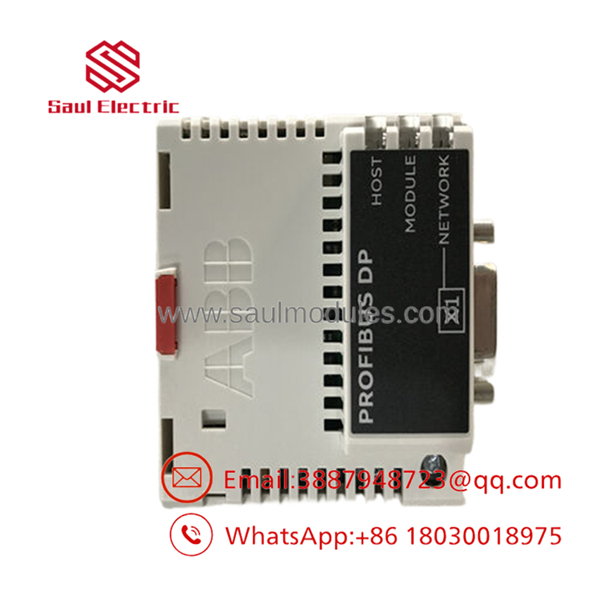
- FPBA-01
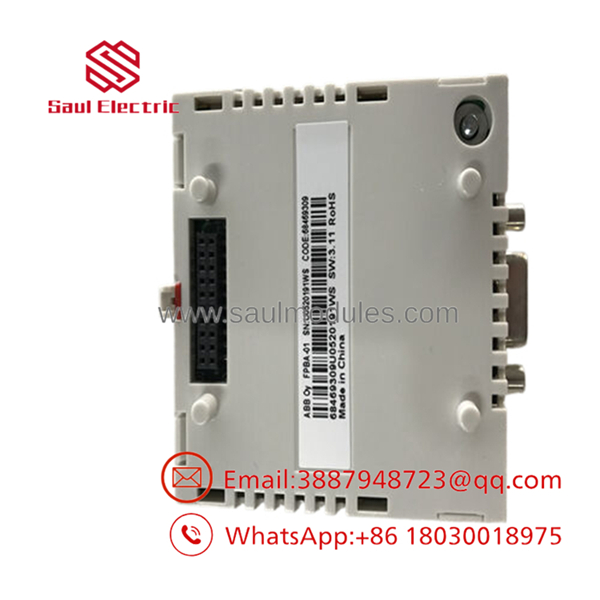
- FPBA-01
Installation & Configuration Guide
Stage 1: Pre-Installation (Prep & Safety)
- Apply Lock-Out/Tag-Out (LOTO).
- Disconnect incoming AC power and allow the DC bus to discharge completely.
- Wear a grounded ESD wrist strap.
- Record:
- Drive firmware version
- PROFIBUS node address
- Network baud rate
- PLC hardware configuration
- Back up all drive parameters before replacing the module.
Stage 2: Removal
- Remove the drive front cover if required.
- Disconnect the PROFIBUS connector.
- Release the retaining screw or locking clip.
- Carefully remove the FPBA-01 without bending the connector pins.
- Inspect the option slot and connector for contamination or damage.
Stage 3: Installation (Clone & Seat)
- Verify the replacement model is ABB .
- Install the adapter fully into the option slot.
- Secure the retaining hardware.
- Reconnect the PROFIBUS cable.
- Configure the node address and drive communication parameters exactly as the original installation.
Stage 4: Power-On & Testing
- Restore drive power.
- Verify the HOST, MODULE, and NETWORK LEDs indicate normal operation.
- Confirm the PLC establishes PROFIBUS communication.
- Verify cyclic control and status data exchange.
- Test drive start, stop, reference, and fault reset commands before returning the equipment to production.
Firmware/Software Versions & Upgrade Notes
- Current modules support software version 3.10 or later for the latest user manual revisions.
- Verify that the selected GSD file matches the installed firmware revision.
- The module supports both PROFIBUS DP-V0 and DP-V1 communication.
- Configure the drive for PROFIdrive or ABB Drives Profile according to the PLC application.
- Avoid upgrading drive firmware during emergency module replacement unless compatibility has been verified.
- Always back up drive parameters and PLC hardware configuration before replacing the communication module.
- A firmware/GSD mismatch can prevent successful PROFIBUS commissioning even if the hardware is functioning correctly.
Frequently Asked Questions (FAQ)
Q1. Is this module genuinely new?
Yes. This is a New Original / New Surplus ABB . It is not used, not repaired, and not refurbished. Every module undergoes OEM serial verification, communication testing, electrical inspection, and ESD-safe packaging before shipment.
Q2. Why is New Surplus priced below OEM factory supply but above refurbished modules?
New Surplus inventory is sourced through genuine OEM channels and retains original electronic components. Although it generally costs more than refurbished hardware, it eliminates the risks of repaired circuit boards, hidden component aging, and uncertain operating history that can lead to unexpected production downtime.
Q3. Should the be stocked as a critical spare?
Yes. If PROFIBUS communication is required for drive control, classify the as an A-Class critical spare. Maintain 1–2 units as buffer stock to minimize stock-out incidents caused by lead time variability and reduce recovery time after communication failures.
Q4. Can the be hot-swapped?
No. Install or remove the only after the drive has been completely de-energized and the DC bus has fully discharged. Hot-swapping can damage the option module or the drive interface.
Q5. Will replacing the require PLC program changes?
Normally, no. If the replacement module uses the same firmware revision, PROFIBUS node address, telegram type, and communication profile, the existing PLC application remains unchanged. Verify that the correct GSD file is used during commissioning.
Q6. What quality verification is completed before shipment?
Every New Surplus follows a documented quality process including:
- OEM serial number verification
- Inbound traceability inspection
- Power-on diagnostics
- PROFIBUS communication verification
- LED functional testing
- Connector integrity inspection
- Electrical continuity testing
- QC inspector approval
- ESD-safe packaging
- Heavy-duty export shipping preparation
Q7. What inventory strategy provides the lowest Total Cost of Ownership (TCO)?
For facilities operating ABB ACS355, ACS380, ACS480, ACS580, ACS850, ACS880, ACH580, ACQ580, or DCS880 drives on PROFIBUS networks, classify the as an A-Class critical spare. Maintain 1–2 modules as buffer stock, standardize firmware and GSD versions across all sites, implement vendor consolidation, and use cross-site inventory sharing where practical. This approach minimizes lead time variability, reduces stock-out incidents, controls carrying costs, and delivers a lower Total Cost of Ownership (TCO).

 Start Chat


