





Description
Key Technical Specifications
| Parameter | Value |
| Core Application | Gate driving and firing circuit control for high-power thyristor/IGBT stacks |
| Input Supply Voltage | 24 V DC Nominal |
| Internal Power Draw | Less than 5 W operational |
| Signal Transmission | High-speed fiber-optic channels for clean electrical isolation |
| Interface Connectors | Onboard ribbon-cable shunt header and auxiliary input array |
| Supported Protocols | Modbus system interface capable via upstream master coupling |
| Net Product Dimensions | 276 mm (L) x 206 mm (W) x 37 mm (H) |
| Board Net Weight | 0.42 kg |
| Country of Origin | Switzerland / Sweden |
| Protection Classification | Open type chassis card; intended for layout inside IP54 drive cabinets |
Product Introduction
The ABB GDB021BE01 (HIEE300766R0001) is a high-performance Gate Control Unit (GCU) circuit board designed for industrial high-power Variable Frequency Drives (VFDs) and UNITROL excitation systems. This board serves as the critical hardware link between low-voltage digital control processors and high-power semiconductors, generating the high-speed, sharp-edged firing pulses required to switch thyristor arrays or IGBT blocks. By converting software timing flags into high-current physical gate drive commands, the board achieves microsecond-level switching coordination across complex grid synchronization loops and large motor drives.
Engineers deploy this module to maintain precise control over power generation equipment, industrial fans, and complex continuous processing lines. To completely insulate sensitive logic processors from high-voltage back-EMF transients and heavy switching noise on the power rails, the GDB021BE01 integrates high-speed fiber-optic interface channels directly on the board. This optical isolation boundary allows the unit to run continuously under severe industrial loads without suffering from data jitter, phase deviations, or localized signal corruption.
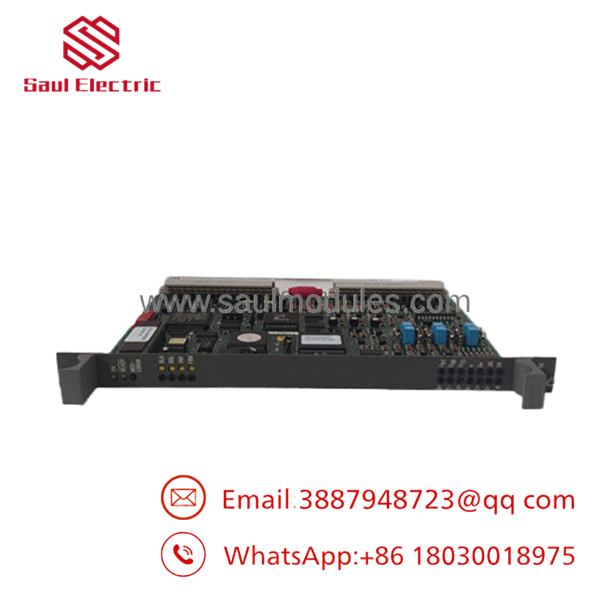
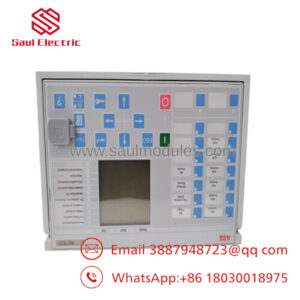
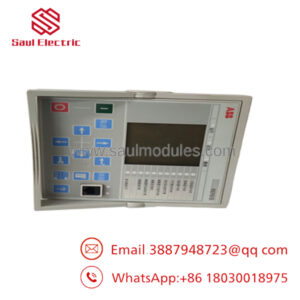
- GDB021BE01 HIEE300766R0001
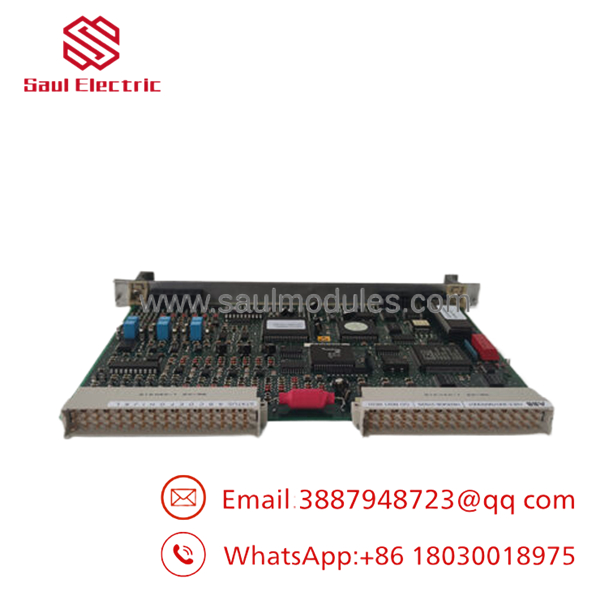
- GDB021BE01 HIEE300766R0001
Technical Pitfall & Survival Guide
- The Fiber-Optic Contamination Trap
❗ Risk: Leaving the protective fiber-optic port caps off during physical board handling or mounting. Even a microscopic layer of airborne dust or grease from a fingertip inside the optical port will attenuate the light signal, causing intermittent firing pulse failures and severe drive commutation faults.
- Avoidance: Keep the protective caps securely inside the ports until the absolute second you slide the fiber cables into position. If a cable connector touches an uncleaned surface, use lint-free optical wipes and pure isopropyl alcohol to clean the lens before seating it firmly.
- The “Magic Smoke” Gate Short Breakdown
❗ Risk: Swapping the GDB021BE01 into a drive enclosure without running an isolation and resistance check on the primary thyristor/IGBT gate pins first. If a power semiconductor has failed shorted from a previous electrical fault, plugging in a new board will route high-voltage back-feed directly through the gate drive circuits, blowing the replacement module instantly on power-up.
- Avoidance: Always use a digital multimeter to measure resistance across the gate-to-cathode or gate-to-emitter paths of the power semiconductors before replacing the card. I watched a field tech rush a repair during an unscheduled outage, skip the semiconductor tests, and blow a brand new gate control card the moment they closed the main breaker because the underlying thyristor was hard-shorted. Test the power components first.
- Shared Ribbon Routing EMI Noise Corruption
❗ Risk: Bundling the low-voltage control ribbon cables running to the GDB021BE01 directly alongside high-current 3-phase AC power cables inside the drive cabinet. The severe electromagnetic induction will distort the pulse edges, leading to irregular switching times and potential drive overcurrent trips.
- Avoidance: Run control and feedback signal lines through dedicated, grounded steel wire ways. Ensure they cross any high-power AC line paths strictly at a 90-degree right angle to minimize inductive coupling paths.
Troubleshooting Quick Reference
| Symptom | Possible Cause | Relevance to this Part | Quick Check Method | Recommendation |
| Complete loss of switching pulses; drive is idle | Loss of primary 24 V DC auxiliary feed or dead internal processing bus. | ✅ High | Measure voltage directly across the card’s 24 V DC input pins with a multimeter. Check for stable, un-sagged DC power. | If 24 V DC is active at the board but zero feedback is transmitted via the fiber link, replace the gate control unit. |
| Intermittent “Commutation Fault” trips on drive | Attenuated light path or cracked fiber-optic cable running to the board. | 🟡 Medium | Use a dedicated fiber-optic power meter to measure the signal attenuation levels across the light link lines. | Clean the optical connectors with lint-free swabs. If the cable shows physical bends or micro-cracks, replace the fiber line. |
| Single phase firing channel fails to respond | Punched-through output driver transistor on that specific gate path. | ✅ High | Power down and isolate the drive. Disconnect the target gate cable and measure channel output resistance to ground. | If any channel reads shorted or significantly unbalanced compared to the others, the board’s output array is dead. Replace the card. |
| Upstream PLC logs throw a “Drive Sync Timeout” | Grid frequency tracking or phase reference parameters out of tolerance. | ❌ Low | Review the main drive diagnostic log. Check external grid potential transformers and phase tracking relays. | The fault typically stems from unstable field input voltage sources or parameter drift inside the master controller database rather than this card. |
Frequently Asked Questions (FAQ)
Can I use the with older UNITROL excitation systems that do not use fiber-optic links?
No. The relies heavily on its integrated onboard fiber-optic interfaces for high-speed signal synchronization and logic-side electrical isolation. Attempting to modify or bypass these optical ports to match older copper-wire trigger systems will render the firing loops inoperable and compromise the isolation boundaries of the drive cabinet.
Does this card require specific firmware firmware loading before installation into our drive rack?
The functions primarily as an execution-level hardware gate driver board. It receives real-time switching commands directly from the main drive controller over the high-speed optical interface. While it does not require an independent firmware operating system upload, you must ensure that all on-board configuration jumpers or DIP switches match the specific drive model parameters found in your original cabinet schematic.
Why are the grounding paths on this board so critical compared to standard PLC cards?
Because this gate control unit handles firing pulses that interact closely with high-energy thyristors and IGBT modules, any ground potential difference can introduce massive electrical noise. Improper grounding can warp the switching pulse waveforms or cause false triggering, which risks damaging the main power components. Ensure the board is mounted tightly to a clean, unpainted, grounded backplate.
What is the significance of the “HIEE300766R0001” and “HIEE300766R000” part numbers?
These numbers represent identical factory hardware lines. HIEE300766R0001 is the complete internal ABB ordering code used to identify the physical board assembly within their global parts network, while serves as the functional model code found on the unit’s faceplate sticker. Sourcing either code ensures you receive the exact same direct-fit replacement card.
Why choose a New Surplus gate control unit over sending our failed board out for component repair?
Sourcing a New Surplus module provides a rapid, reliable solution to get your operations back online. Component-level board repairs often introduce unpredictable lead times and variable reliability depending on the source of the replacement components. A New Surplus board gives your plant an unused, factory-validated unit that can be deployed into your drive cabinet immediately, minimizing expensive production delays.

 Start Chat


