





Description
Product Introduction & Engineering Value
After years of working on legacy DCS platforms, one lesson remains consistent: when an INFI 90 controller becomes unstable, production quickly follows. The ABB IMMFP01 has remained one of the most widely deployed processor modules because it combines deterministic control execution with proven compatibility across Bailey INFI 90 installations.
Designed as a Multi-Function Processor, the IMMFP01 performs continuous regulatory control, logic execution, sequencing, and communication tasks. For facilities extending the service life of existing INFI 90 systems, it remains a practical replacement that minimizes engineering changes.
Technical Specifications
| Parameter | Specification |
|---|---|
| Manufacturer | ABB / Bailey Controls |
| Model | IMMFP01 |
| Product Type | Multi-Function Processor Module |
| System Platform | INFI 90 DCS |
| Primary Function | Distributed Process Control |
| Configuration | DIP Switch Address Selection |
| Communication | Controlway Architecture Support |
| Mounting | Standard INFI 90 Module Rack |
| Cooling | Passive Convection |
| Diagnostics | Front Panel Status LEDs and System Diagnostics |
| Configuration Method | Engineering Workstation / Configuration Tools |
| Typical Service | Continuous Industrial Operation |
Some hardware characteristics may vary between production revisions.
Field Application & The “Trench” Experience
An engineering contractor was troubleshooting repeated controller watchdog alarms during a scheduled refinery turnaround. Initial suspicion focused on the communication network, but diagnostic records showed processor execution times gradually increasing before every fault.
After replacing the IMMFP01 and restoring the original configuration, scan times returned to normal without modifying the control database. The failure ultimately traced back to aging processor hardware rather than network infrastructure, avoiding several unnecessary cabinet modifications.
Typical applications include:
- Catalytic Cracking Unit (FCCU) combustion control
- Steam turbine governor supervisory control
- Boiler combustion management systems
- Chemical batch sequencing within legacy INFI 90 architectures
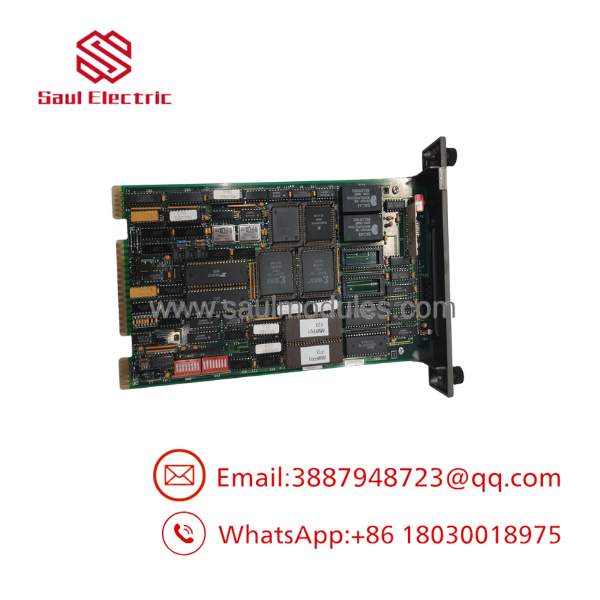
- IMMFP01
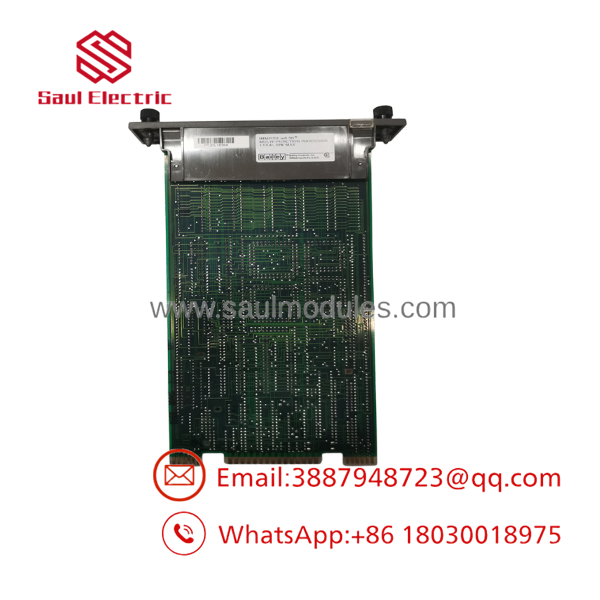
- IMMFP01
Transparency SOP: QA & Testing
Every shipped as New Surplus or Refurbished follows a documented inspection process.
- ✔ Part number and hardware revision verification
- ✔ PCB inspection under magnification for damaged traces or component defects
- ✔ Connector examination for bent or oxidized pins
- ✔ Functional power-up in an INFI 90-compatible test rack
- ✔ Processor diagnostics and LED verification
- ✔ Burn-in observation where applicable
- ✔ Anti-static packaging with traceable inventory records
This procedure helps identify hidden failures before the module reaches the plant floor.
The Veteran’s Tech Trap Guide
⚠️ Do not clone DIP switch settings blindly. The module address is determined by onboard switches. Installing two processors with identical addresses can prevent the controller from initializing correctly.
⚠️ Check the J5 jumper before installation. Early Network 90 systems and later Controlway configurations require different jumper settings. Using the incorrect position may prevent proper operation. Factory documentation specifically notes this configuration difference.
PRO TIP: Always archive the complete control strategy before replacing a processor. Hardware replacement is straightforward; recovering an outdated control database is not.
PRO TIP: If replacing a failed processor after years of operation, inspect the module backplane connectors. Oxidized contacts frequently produce intermittent processor faults that resemble CPU failures.
Dynamic FAQ
Q1. What is the primary function of the ABB ?
The is the primary processing module within the ABB Bailey INFI 90 system. It executes control logic, PID loops, sequencing, calculations, and communication tasks.
Q2. Is the interchangeable with the IMMFP02?
Not necessarily. Although both are Multi-Function Processors, they differ in hardware revisions and supported capabilities. Compatibility should always be verified using the system documentation and application requirements.
Q3. Does replacing the processor erase the control program?
No. The replacement procedure depends on how the control strategy is stored and backed up within the INFI 90 architecture. Always perform a verified backup before removing the existing module.
Q4. Why are DIP switch settings important?
The onboard DIP switches define the processor’s module address and operating options. Incorrect settings can prevent startup or create communication conflicts.
Q5. How do you verify New Surplus authenticity?
Each module undergoes serial number verification, visual inspection, hardware identification, functional testing, and ESD-safe packaging before shipment.
Q6. What warranty is normally provided?
Warranty terms vary by supplier. Most professional industrial automation distributors provide a functional warranty covering operational defects under standard installation and operating conditions.

 Start Chat


