



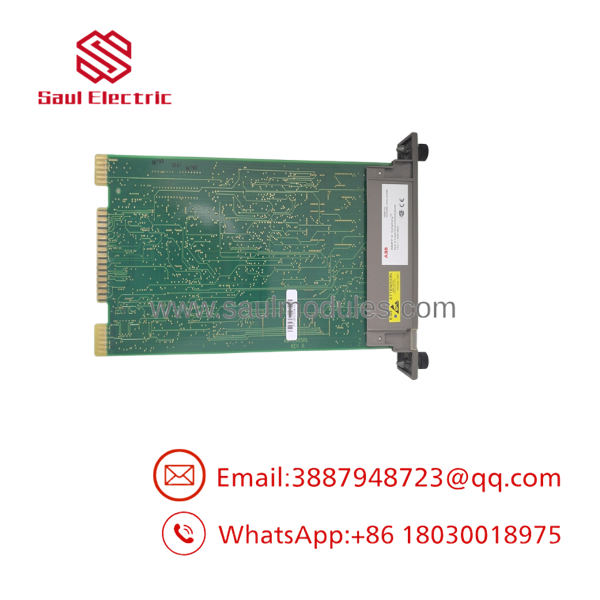


Description
Product Introduction & Engineering Value
When a legacy DCS must continue operating around the clock, controller reliability becomes far more important than adding new features. The ABB IMMFP12 was developed for exactly that environment, providing deterministic execution of control logic while maintaining compatibility with the Bailey INFI 90 OPEN architecture.
Unlike standard processor modules, the IMMFP12 combines high-speed control execution, peer-to-peer communications, and support for complex application programming. For facilities extending the operational life of an installed INFI 90 system, it remains a proven processor for maintenance, expansion, and controller replacement projects.
Technical Specifications
| Parameter | Specification |
|---|---|
| Manufacturer | ABB Bailey |
| Model | IMMFP12 |
| Product Type | Multi-Function Processor Module |
| Processor | 32-bit CPU (16-bit external bus), 16 MHz |
| Memory | 512 KB ROM, 512 KB RAM, 256 KB NVRAM |
| Power Requirement | +5 VDC @ 2 A |
| Typical Power Consumption | 10 W |
| Serial Interfaces | Two RS-232-C or one RS-232-C plus one RS-485 |
| Serial Data Rate | Up to 19.2 kbaud |
| Redundant Communication Link | 1 Mbaud Serial |
| Mounting | One slot in a standard INFI 90 OPEN module mounting unit |
| Operating Temperature | 0°C to 70°C (32°F to 158°F) |
| Relative Humidity | 5–95% RH (non-condensing, temperature dependent) |
| Certifications | CSA Certified; Factory Mutual Approved for Class I, Division 2 applications |
Field Application & The “Trench” Experience
A petrochemical plant experienced intermittent controller scan delays after adding several new process loops during a turnaround. Initial troubleshooting focused on the network interface because communications appeared normal. However, processor diagnostics revealed increasing execution time as additional function blocks were enabled.
The engineering team replaced the aging controller with an ABB IMMFP12 while preserving the existing control database. After downloading the validated configuration, controller scan time stabilized and redundant communication resumed without modifications to the field wiring or I/O modules.
Typical applications include:
- Catalytic cracking unit reactor temperature control
- Combined-cycle power plant boiler master control
- Pulp digester sequence and batch management
- Compressor anti-surge control with redundant processing
- Chemical reactor supervisory control requiring continuous execution of advanced function codes
Transparency SOP: QA & Testing
Every IMMFP12 designated as New Surplus or Refurbished completes a documented verification process before shipment.
- ✔ Part number, firmware label, and hardware revision verification
- ✔ Complete PCB inspection for damaged components, solder fatigue, and connector wear
- ✔ Memory retention verification using NVRAM diagnostics
- ✔ Functional processor startup in an INFI 90-compatible test rack
- ✔ Front-panel LED diagnostic confirmation
- ✔ Serial communication verification through supported interfaces
- ✔ Final ESD-safe packaging with traceable inventory records
Testing focuses on operational functionality rather than cosmetic appearance.
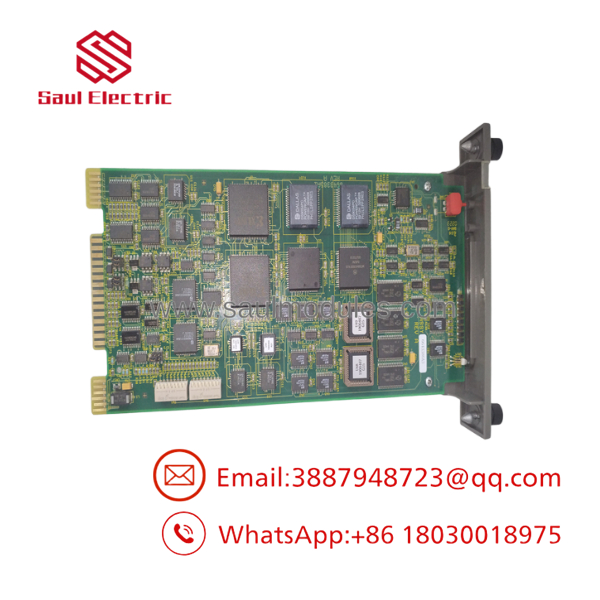
- IMMFP12
The Veteran’s Tech Trap Guide
⚠️ Never overlook the firmware revision. Two modules may appear identical externally but operate with different firmware levels. Always confirm compatibility with the installed control strategy before replacement.
⚠️ Verify the NVRAM condition. The controller stores critical operating information in non-volatile memory. If the replacement module has been stored for many years, verify memory integrity before commissioning.
PRO TIP: Before removing the existing processor, archive the complete control configuration and document every communication address. Recovering configuration data after a failed processor is considerably more difficult than restoring it from a verified backup.
PRO TIP: Inspect the module backplane connectors during installation. Oxidized contacts frequently create intermittent faults that resemble processor failures.
Dynamic FAQ
Q1. What distinguishes the from earlier Multi-Function Processor modules?
The offers a 32-bit processor architecture, expanded memory resources, enhanced communication capability, and support for more advanced control applications than earlier generations.
Q2. Can the execute custom control strategies?
Yes. The processor supports multiple programming methods, including function codes, ladder logic, BASIC, C, batch control, and user-defined functions within the INFI 90 environment.
Q3. Does replacing an automatically restore the control database?
No. The replacement hardware requires the correct application configuration and firmware compatibility. Always maintain verified backups before replacing the controller.
Q4. Is the suitable for redundant controller configurations?
Yes. The module supports a 1 Mbaud redundant communication link, allowing deployment in redundant control architectures where system design requires high availability.
Q5. How is New Surplus authenticity confirmed?
Each module undergoes identification verification, hardware inspection, functional diagnostics, communication testing, and traceable inventory documentation before shipment.
Q6. What warranty is normally available?
Most industrial automation suppliers provide a functional warranty for New Surplus and professionally refurbished modules. Warranty duration varies by supplier, but operational testing documentation should always accompany the shipment.

 Start Chat


