





Description
Product Introduction
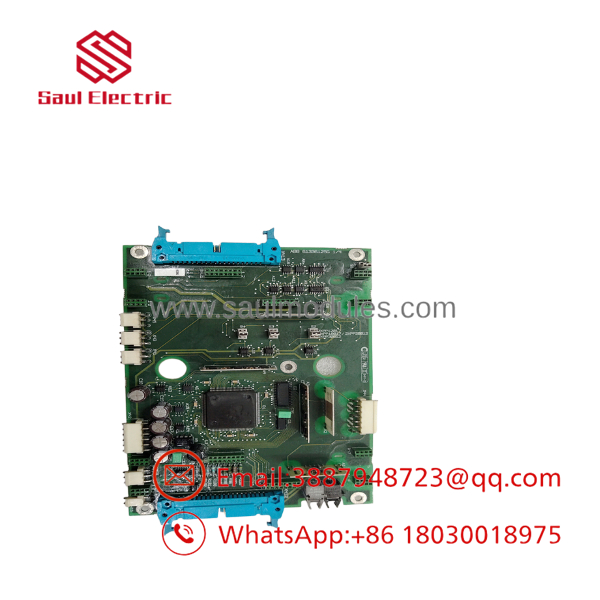
The ABB NINT-72C is a Main Circuit Interface Board used in the ABB ACS600 medium- and high-power AC drive platform. It transfers critical control signals between the drive control electronics and the power stage, supporting gate control, status monitoring, and internal drive communication.
One thing to watch out for is that the NINT-72C belongs to an older generation of ACS600 hardware. ABB later introduced the NXPP-02C as its replacement for certain drive frame sizes. Before ordering, verify the drive frame, hardware revision, and service documentation to ensure compatibility.
Key Technical Specifications
| Parameter | Value |
|---|---|
| Manufacturer | ABB |
| Model | NINT-72C |
| Product Type | Main Circuit Interface Board |
| Drive Family | ACS600 |
| Function | Control-to-Power Interface Board |
| Installation | Internal Drive Control Assembly |
| Compatible Frame Sizes | R10i / R11i (application dependent) |
| Successor Part | NXPP-02C (for designated ACS600 upgrades) |
| Mounting | PCB Assembly |
| Application | Industrial Variable Frequency Drives |
| Lifecycle Status | Legacy / Discontinued Spare Part |
Note: Exact electrical characteristics depend on the specific ACS600 drive variant. Verify the drive type code and ABB service manual before installation.
Application Scenarios & The “Trench” Experience
Here’s one that has fooled plenty of maintenance teams.
The ACS600 powers up normally. The keypad works. DC bus voltage is present. Yet the drive immediately reports firing faults or refuses to enable the inverter.
Many engineers suspect the IGBT modules.
After several hours of troubleshooting, they discover the real problem is the NINT-72C interface board that no longer transfers gate control signals correctly.
Typical Applications
Steel Mills — Main rolling mill drives — Coordinates control signals between the drive controller and power stage.
Pulp & Paper — Paper machine drives — Maintains inverter operation for continuous production lines.
Mining — Conveyor drives — Supports reliable operation of high-power systems.
Water Treatment — Large pumping stations — Interfaces control electronics with the converter section.
Cement Plants — Kiln and fan drives — Provides stable internal communication within legacy drives.
Field Case Study
A cement plant experienced repeated inverter enable faults on a 400 kW drive. Power semiconductors, current sensors, and the DC bus all tested within specification.
Technicians eventually isolated the fault to the NINT-72C. After installing a tested replacement board, confirming all ribbon cable connections, and performing a complete startup sequence, the drive returned to continuous operation without replacing the power section.
Transparency SOP: Quality Assurance & Testing
We don’t just ship boxes; we test them on compatible ABB drive platforms whenever practical.
- Inbound Inspection
- Verify ABB labels and PCB identification.
- Inspect edge connectors and ribbon cable sockets.
- Check for overheating, damaged components, and previous repairs.
- Live Rig Testing
- Install the board in an test chassis.
- Verify successful drive initialization.
- Confirm communication with the control board.
- Check inverter enable functions.
- Electrical Parameter Checks
- Verify power rails.
- Test interface circuitry.
- Inspect signal continuity.
- Examine solder joints and PCB traces.
- Hardware Verification
- Record board revision.
- Verify compatibility with the requested drive frame.
- Confirm replacement part identification.
- Final QC & Anti-static Packaging
- Complete functional inspection.
- Anti-static protection.
- Moisture-barrier packaging.
- Shock-resistant export packaging.
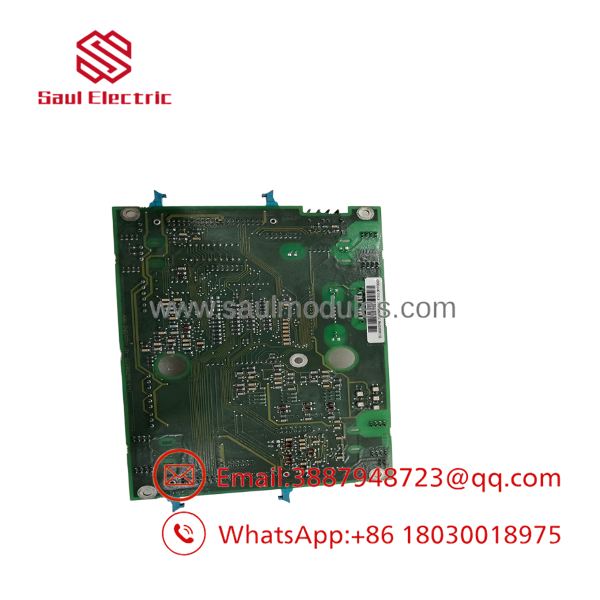
- NINT-72C
The Veteran’s Tech Trap Guide
⚠️ Don’t replace the interface board until you’ve checked the power supply rails.
A failed auxiliary power supply can produce exactly the same symptoms as a defective .
⚠️ Inspect every ribbon cable carefully.
Loose connectors between the control board and interface board frequently generate firing faults and communication alarms.
❗ Verify the drive frame before ordering.
ABB documentation specifies that is associated with certain frame sizes, and later retrofit kits replace it with NXPP-02C. Installing the wrong board can delay commissioning.
⚠️ Observe ESD precautions during installation.
The interface board contains sensitive control electronics. A static discharge can damage components that may not fail until the drive is placed under load.
Frequently Asked Questions (FAQ)
Q1. What is the ABB ?
The is the Main Circuit Interface Board used in ABB variable frequency drives. It connects the control electronics with the drive’s main power circuit.
Q2. Which ABB drives use the ?
It is primarily used in drive systems, particularly certain R10i and R11i frame sizes. Always verify the exact drive type code before ordering.
Q3. Is the still available from ABB?
It is considered a legacy spare part. For some applications, ABB documentation identifies NXPP-02C as the replacement board used during approved upgrade procedures.
Q4. Can the board be replaced while the drive remains energized?
No.
Completely isolate the drive, verify that the DC bus has discharged, and follow ABB lockout/tagout procedures before removing any internal PCB.
Q5. Does replacing the board require parameter downloads?
Usually no, because the is an interface board rather than the drive’s parameter storage device. However, after replacement, verify drive diagnostics, inverter operation, and all protection functions before returning the equipment to service.
Q6. What warranty is normally available?
Professional industrial surplus suppliers typically provide a 12-month warranty on tested new surplus or refurbished units. Warranty terms vary by supplier.
Q7. What should be verified before ordering?
Confirm the following:
- ABB Model:
- drive type code
- Drive frame size
- Hardware revision
- Existing PCB revision
- Connector configuration
- Whether the drive has already been upgraded to NXPP-02C
Finally, compare the installed board with the drive’s spare-parts list before installation. On legacy systems, the interface board revision is just as important as the part number itself.

 Start Chat


