





Description
Key Technical Specifications
| Parameter | Value |
|---|---|
| Manufacturer | ABB |
| Model | NTAC-02 |
| Product Type | Pulse Encoder Interface Module |
| Primary Function | Incremental encoder feedback interface |
| Compatible Drives | ABB ACS 600 Series (application dependent) |
| Supply Voltage | 24 V DC |
| Encoder Supply | Selectable 15 V DC or 24 V DC |
| Maximum Encoder Frequency | 100 kHz |
| Speed Feedback Resolution | 15-bit (0.00305%) |
| Encoder Channels | A, B, Z Incremental Encoder |
| Node Address | Seven DIP switches (Default: 16) |
| Mounting | Standard DIN Rail |
| Protection Rating | IP20 |
| Current Consumption | 250 mA maximum |
| Condition | New Original / New Surplus |
| Warranty | Typically 12 Months |
The NTAC-02 supports incremental encoder feedback through A, B, and Z channels and communicates with ABB drives via an optical interface.
Product Introduction & Supply Chain Strategy
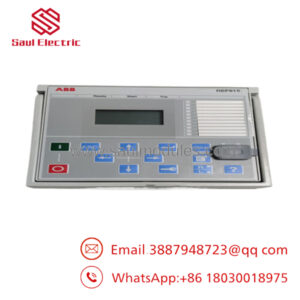
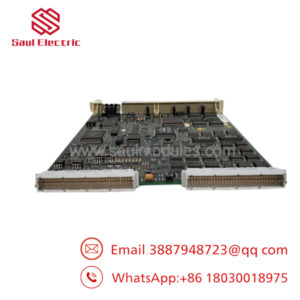
The ABB NTAC-02 is a pulse encoder interface module designed for ABB ACS drive systems. It converts incremental encoder signals into accurate speed and position feedback, allowing the drive to perform precise motor control, positioning, and closed-loop regulation.
This product is a Brand New Surplus unit. It is not used, not pulled from a decommissioned plant, and not refurbished. Maintaining inventory of the NTAC-02 reduces Total Cost of Ownership (TCO), limits production interruptions caused by obsolete hardware, and avoids the reliability risks associated with refurbished electronic assemblies.
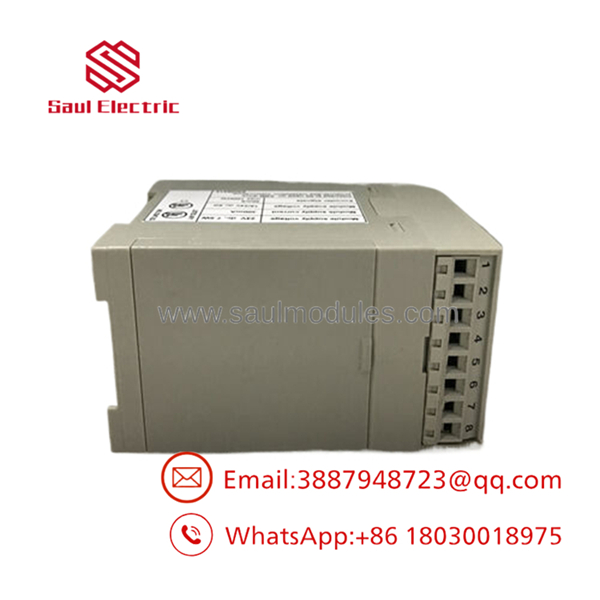
- NTAC-02
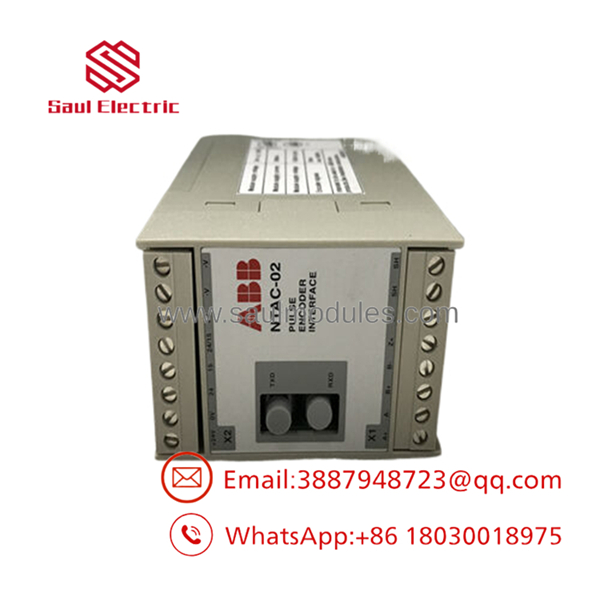
- NTAC-02
Installation & Configuration Guide
Stage 1 – Pre-Installation (Prep & Safety)
- Apply lock-out/tag-out procedures.
- Disconnect drive and control power.
- Wear a grounded ESD wrist strap.
- Record existing drive parameters.
- Photograph encoder wiring, DIP switch settings, and terminal connections.
- Verify the replacement module is an . The NTAC-01 and are not interchangeable.
Stage 2 – Removal
- Disconnect encoder and power terminals.
- Remove the module from the DIN rail.
- Handle the PCB only by its edges.
- Protect optical connectors from contamination.
Stage 3 – Installation (Clone & Seat)
- Configure the node address using the DIP switches.
- Select the correct encoder supply voltage (15 V or 24 V).
- Reconnect encoder channels A, B, Z and shield exactly as documented.
- Secure all wiring and verify terminal torque.
Stage 4 – Power-On & Testing
- Restore the 24 V DC supply.
- Verify normal module operation.
- Confirm encoder feedback is detected by the drive.
- Rotate the motor slowly and verify speed feedback accuracy.
- Test positioning and closed-loop operation before returning the machine to service.
Firmware/Software Versions & Upgrade Notes
- Configure the through the ABB drive firmware parameter groups after installation.
- Parameter Groups 50 and 98 should be reviewed and adjusted after communication with the module is established.
- New parameter settings become active only after the module is power-cycled.
- Record the original drive firmware and parameter backup before replacing the module.
- Avoid firmware upgrades during emergency maintenance unless required for compatibility.
Frequently Asked Questions (FAQ)
Q1. Is this module genuinely new?
Yes. This is a New Original / New Surplus ABB module. It has never been installed in production equipment and is not refurbished.
Q2. What is the primary purpose of the ?
The interfaces incremental pulse encoders with ABB drives, providing accurate speed and position feedback for closed-loop motor control.
Q3. Can I replace an NTAC-01 with an ?
No. Always replace a failed module with the same model.
Q4. Does the module support both 15 V and 24 V encoders?
Yes. The encoder supply voltage is selectable between 15 V DC and 24 V DC, allowing compatibility with different incremental encoder types.
Q5. Can the be hot-swapped?
No. Always remove system power before replacing the module to prevent drive faults, encoder communication errors, or hardware damage.
Q6. What quality verification is performed before shipment?
Each New Surplus unit undergoes serial number verification, visual inspection, ESD-controlled handling, connector inspection, electrical verification, and functional quality checks before shipment.
Q7. What inventory strategy is recommended?
For production-critical ABB ACS drive installations, maintain . This strategy reduces lead time variability, supports vendor consolidation, minimizes End-of-Life supply risks, and lowers the Total Cost of Ownership by preventing extended production downtime.

 Start Chat


