





Description
Key Technical Specifications
| Parameter | Value |
|---|---|
| Manufacturer | ABB |
| Model | PM825 |
| Order Number | 3BSE010796R1 |
| Product Type | Processor Module |
| Controller Platform | Advant Controller AC80 / S800 |
| Processor | Motorola MC68360, 25 MHz |
| System Flash Memory | 1 MB |
| User Flash Memory | 512 KB |
| RAM | 1 MB |
| Network Support | AF100 (Advant Fieldbus 100) |
| User Interfaces | DriveWindow, Modbus panels, AF100 HMI |
| Mounting | DIN 50022 Rail |
| Net Dimensions | 225 × 135 × 108 mm |
| Net Weight | Approximately 1.0 kg |
The PM825 may operate as a standalone controller or as part of an AF100 distributed control network.
Product Introduction & Supply Chain Strategy
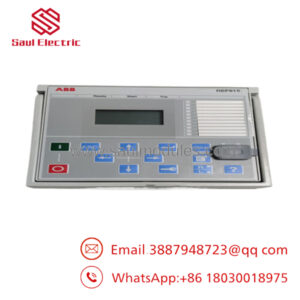
The ABB PM825 (3BSE010796R1) is an AC80 processor module designed for the Advant Controller platform. It serves as the central CPU responsible for executing application programs, coordinating communications, and controlling industrial processes. The processor supports both standalone operation and integration into the ABB AF100 (Advant Fieldbus 100) network, making it suitable for power generation, pulp and paper, chemical processing, water treatment, and other continuous-process industries.
Selecting a New Original / New Surplus PM825 provides genuine ABB hardware while avoiding the uncertainty associated with refurbished electronics. Because the AC80 platform is a mature automation system, maintaining buffer stock, reducing lead time variability, implementing vendor consolidation, and planning last-time-buy purchases can significantly reduce Total Cost of Ownership (TCO) and minimize unexpected production downtime.
Installation & Configuration Guide
Stage 1 – Pre-Installation (Prep & Safety)
- Perform Lock-Out/Tag-Out (LOTO).
- Back up the controller application and configuration.
- Record communication parameters and controller settings.
- Wear a grounded ESD wrist strap.
- Label and photograph all wiring before removal.
Stage 2 – Removal
- Verify complete power isolation.
- Disconnect communication connectors.
- Release the DIN rail locking clip.
- Carefully remove the processor module.
- Inspect connectors and mounting hardware for damage.
Stage 3 – Installation
- Verify the replacement part number is PM825 (3BSE010796R1).
- Mount the processor onto the DIN rail.
- Reconnect power and communication connectors.
- Confirm all wiring matches the original installation.
- Verify secure grounding and cable routing.
Stage 4 – Commissioning
- Restore system power.
- Verify normal CPU status indications.
- Confirm successful application startup.
- Test communication with AF100, HMI, and connected devices.
- Validate process operation before returning the controller to production.
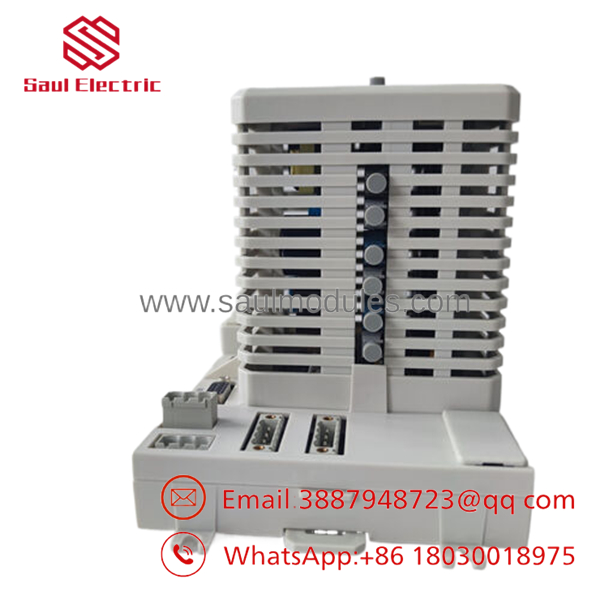
- PM825 3BSE010796R1
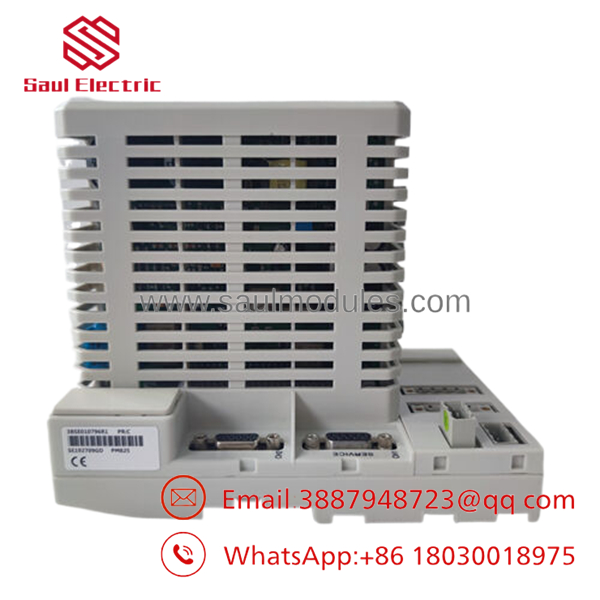
- 3BSE010796R1
Firmware / Software Notes
- Verify compatibility with the installed Advant Controller AC80 software revision before replacement.
- Back up the controller application prior to servicing.
- Record communication parameters for restoration if required.
- Avoid performing firmware upgrades during processor replacement unless specifically required.
- After commissioning, verify communication with AF100, operator interfaces, and connected field devices before placing the controller back into service.
Frequently Asked Questions (FAQ)
Q1. Is this processor module genuinely new?
Yes. This product is supplied as New Original / New Surplus. It is not used, not repaired, and not refurbished. Each module undergoes quality verification before shipment.
Q2. What is the function of the ?
The is the primary processor for the ABB Advant Controller AC80 platform. It executes the automation program, manages communications, and coordinates system control functions across the automation network.
Q3. Can the operate on an network?
Yes. The supports operation both as a standalone controller and as part of an distributed control network, allowing communication with HMIs, engineering tools, and other controllers.
Q4. Can the processor be replaced while the system is energized?
Unless the installed control architecture specifically supports online replacement, ABB recommends isolating power before replacing the processor module to prevent controller interruptions or data loss.
Q5. Does replacing the erase the control program?
The application should always be backed up before replacement. Depending on the system configuration, application software and parameters may need to be restored after installation. Verify controller startup and application integrity during commissioning.
Q6. What quality inspections are performed before shipment?
Each New Surplus module undergoes:
- OEM part number verification
- Serial number traceability
- Visual inspection
- Connector integrity inspection
- Mechanical housing inspection
- ESD-safe packaging
- Final QC approval documentation
Q7. What spare parts strategy is recommended?
For critical AC80 automation systems:
- Maintain as on-site buffer stock.
- Keep compatible batteries and communication accessories available.
- Implement vendor consolidation to simplify procurement.
- Plan a last-time-buy strategy as legacy hardware availability declines, reducing lead time variability and lowering long-term Total Cost of Ownership (TCO).

 Start Chat


