





Description
Key Technical Specifications
| Parameter | Value |
|---|---|
| Manufacturer | ABB |
| Model | PM864A (PM864AK01) |
| Order Number | 3BSE018161R1 |
| Product Type | Processor Unit |
| Controller Platform | AC 800M / System 800xA |
| Processor | High-performance industrial CPU |
| Redundancy | Full CPU redundancy support |
| Ethernet Ports | 2 × RJ45 Control Network ports |
| Serial Interfaces | 2 × RJ45 (COM3 RS-232C, COM4 Isolated Serial) |
| Communication | Ethernet, ModuleBus, CEX-Bus, PROFIBUS (via communication modules) |
| Mounting | TP830 Baseplate |
| Backup | Lithium memory backup battery |
| Protection | IP20 |
| Typical Applications | Power generation, oil & gas, chemical, water treatment, pharmaceuticals, manufacturing |
Product Introduction & Supply Chain Strategy
The ABB PM864A (3BSE018161R1 / PM864AK01) is a high-performance processor unit for the AC 800M controller family within the ABB System 800xA distributed control system (DCS). It executes application programs, manages real-time control tasks, coordinates communications, and supports both standard and redundant controller architectures for high-availability industrial automation systems. The module interfaces with ABB S800 I/O, CEX-Bus communication modules, and Ethernet control networks, making it suitable for mission-critical process industries.
Choosing a New Original / New Surplus PM864A ensures genuine ABB hardware while avoiding the uncertainty associated with refurbished electronics. For mature AC 800M installations, maintaining buffer stock, reducing lead time variability, implementing vendor consolidation, and planning last-time-buy purchases can significantly reduce Total Cost of Ownership (TCO) and help prevent unplanned process shutdowns.
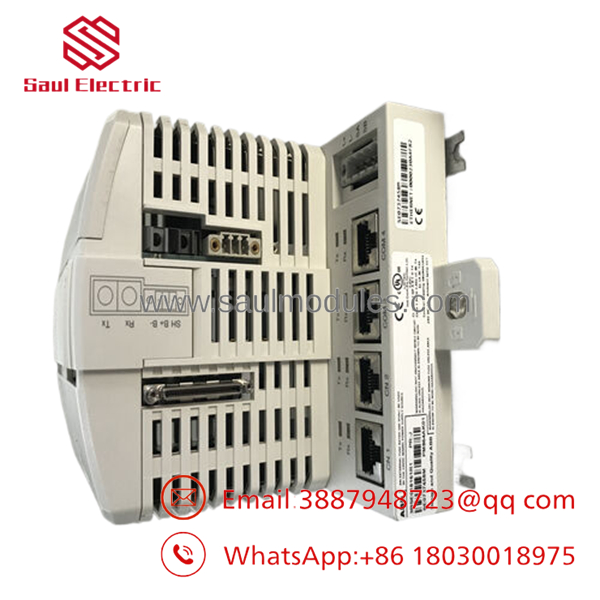
- PM864A
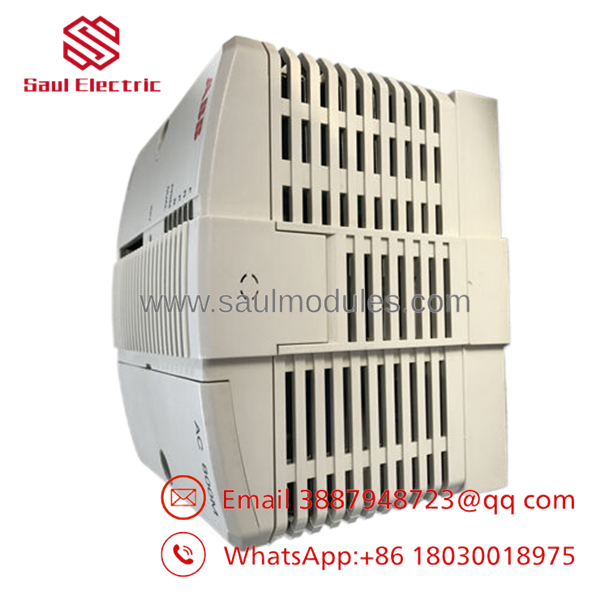
- PM864A
Installation & Configuration Guide
Stage 1 – Pre-Installation (Prep & Safety)
- Perform Lock-Out/Tag-Out (LOTO).
- Back up the AC 800M application and controller database.
- Record:
- IP configuration
- Controller name
- Redundancy settings
- Communication module configuration
- Wear an ESD wrist strap.
- Verify the replacement module matches 3BSE018161R1.
Stage 2 – Removal
- Shut down the controller according to ABB procedures.
- Disconnect Ethernet and communication cables.
- Remove the processor from the TP830 baseplate.
- Retain the backup battery if required.
- Inspect ModuleBus and CEX-Bus connectors.
Stage 3 – Installation
- Install the PM864A onto the TP830 baseplate.
- Install the memory backup battery.
- Reconnect Ethernet, serial, and communication interfaces.
- Verify ModuleBus and CEX-Bus terminators are correctly installed.
- Confirm secure grounding and connector engagement.
Stage 4 – Commissioning
- Restore controller power.
- Verify normal CPU LED indications.
- Download or restore the application if required.
- Confirm communication with S800 I/O, operator stations, and engineering workstations.
- Test redundant controller synchronization (if installed) before returning the process to service.
Firmware / Software Notes
- Verify compatibility with the installed ABB System 800xA and Control Builder M software version before replacement.
- Back up the controller database and application before servicing.
- If replacing one controller in a redundant pair, follow ABB redundancy synchronization procedures.
- Verify communication with CEX-Bus modules and S800 I/O after commissioning.
- Confirm Ethernet network redundancy and controller diagnostics before returning the system to operation.
Frequently Asked Questions (FAQ)
Q1. Is this processor module genuinely new?
Yes. This product is supplied as New Original / New Surplus. It is not used, repaired, or refurbished. Every unit undergoes quality verification before shipment.
Q2. What is the primary function of the PM864A?
The is the central processing unit of the ABB AC 800M controller. It executes control applications, manages communications, and coordinates distributed automation processes within ABB System 800xA.
Q3. Does the support controller redundancy?
Yes. The supports CPU redundancy, including redundant CPUs, CEX-Bus, communication interfaces, and S800 I/O, providing high availability for critical industrial processes.
Q4. What communication interfaces are built into the ?
The processor includes:
- 2 × RJ45 Ethernet control network ports
- 1 × RS-232C serial port (COM3)
- 1 × Isolated serial port (COM4)
- ModuleBus and CEX-Bus connectivity for expansion modules and I/O.
Q5. Can the processor be replaced while the system is running?
In redundant architectures, replacement procedures may differ. However, replacement should always follow ABB’s approved maintenance procedures to avoid controller interruption or loss of synchronization.
Q6. What quality inspections are completed before shipment?
Each New Surplus processor undergoes:
- OEM part number verification
- Serial number traceability
- Connector inspection
- Housing inspection
- Battery compartment inspection
- ESD-safe packaging
- Final QC approval
Q7. What inventory strategy is recommended?
For critical AC 800M and System 800xA installations:
- Maintain as on-site buffer stock.
- Keep compatible TP830 baseplates, backup batteries, and communication accessories available.
- Implement vendor consolidation to simplify spare parts management.
- Plan last-time-buy purchases as legacy hardware availability declines, reducing lead time variability and lowering long-term Total Cost of Ownership (TCO).

 Start Chat


