





Description
Key Technical Specifications
| Parameter | Value |
|---|---|
| Manufacturer | ABB |
| Model | REF615 |
| Full Order Code | HBFFAEAGNBA1ANB1XD |
| Series | Relion 615 |
| Product Type | Feeder protection and control relay |
| Primary Use | Utility and industrial feeder protection |
| Communications | IEC 61850 Editions 1 and 2, HSR/PRP, GOOSE, Modbus, DNP3, IEC 60870-5-103 |
| Protection Functions | Directional and non-directional overcurrent, earth fault, voltage, frequency, power-based protection |
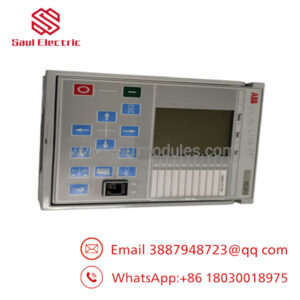
| Design | Compact withdrawable plug-in unit |
| HMI | Large graphical display and web-browser-based HMI |
| Fault Functions | Cable fault detection, high-impedance fault detection, arc flash detection |
| Application Scope | Overhead lines, cable feeders, radial, looped, and meshed networks |
Product Introduction & Supply Chain Strategy
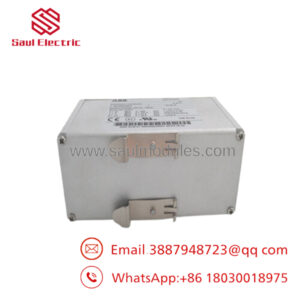
ABB REF615 HBFFAEAGNBA1ANB1XD is a feeder protection and control relay for medium-voltage utility and industrial power systems. ABB describes the REF615 as a dedicated feeder relay for protection, control, measurement, and supervision, with withdrawable design and IEC 61850-based interoperability.
From a supply-chain perspective, this is a strong strategic spare for plants with installed Relion 615 fleets. If your feeder protection depends on this exact build, New Surplus buffer stock reduces lead time variability and limits the risk of a protection relay stock-out during outage windows.
Installation & Configuration Guide
Stage 1: Pre-Installation
Lock out and tag out the switchgear before any work begins. Use an ESD wrist strap, insulated hand tools, and a camera to record terminal wiring, setting group selections, and any communication labels. Confirm the CT/VT ratios, bay configuration, and protection logic before removal.
Stage 2: Removal
De-energize the bay unless your site procedure explicitly permits live replacement on that architecture. Release the relay evenly and pull it straight out to avoid stressing connectors or adjacent terminal blocks. Do not force the unit if panel trim or cable slack is restricting movement.
Stage 3: Installation
Replicate the original settings exactly, including setting groups, I/O mapping, and communication addresses. Seat the module fully and secure it per the withdrawable design sequence. Reconnect control wiring only after confirming terminal numbers and wiring diagrams match the original record.
Stage 4: Power-On & Testing
Restore auxiliary power and verify the supply is stable before commissioning. Check the display, LEDs, and event logs, then perform secondary injection or functional testing if required by your procedure. Verify trip circuits, interlocks, and communications before returning the feeder to service.
Firmware/Software Versions & Upgrade Notes
ABB’s public REF615 documentation confirms standard configurations and communication options, but the exact firmware revision depends on the specific unit and project environment. The safest practice is to match the replacement relay to the existing firmware and settings set before energizing.
Avoid upgrading or downgrading firmware during a hardware swap unless ABB compatibility data for your exact station architecture confirms it. A mismatch can alter protection behavior, communication performance, or downloaded settings, which is unacceptable in a medium-voltage feeder.
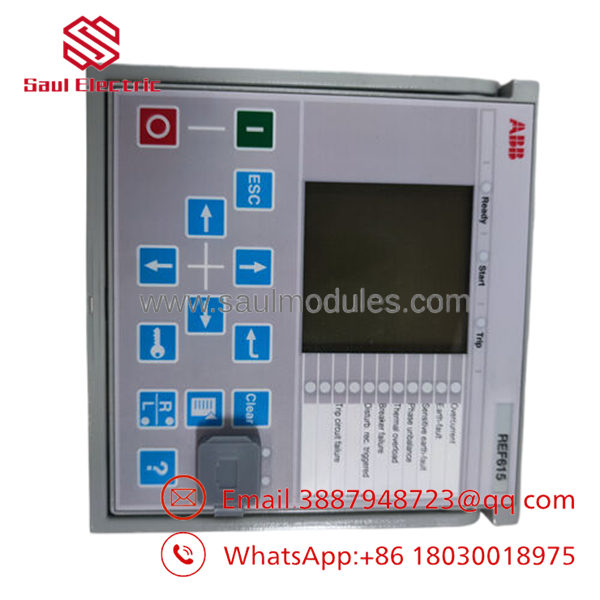
- REF615 HBFFAEAGNBA1ANB1XD
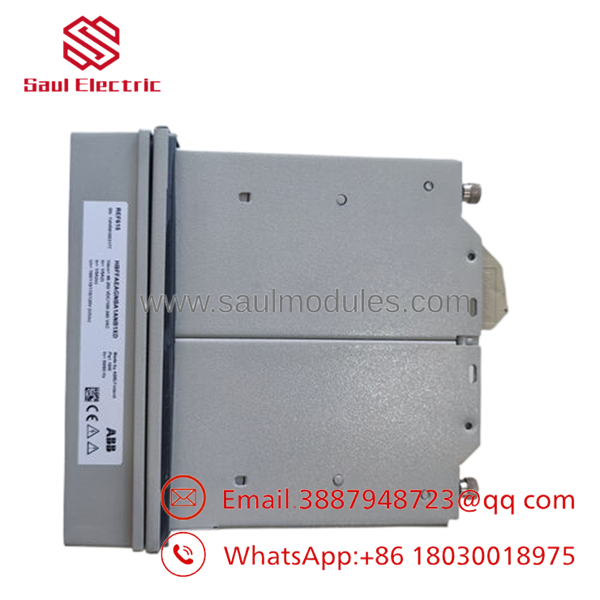
- REF615 HBFFAEAGNBA1ANB1XD
Frequently Asked Questions
Is this really new?
Yes, the correct procurement position is New Surplus / Original New, not refurbished. That means traceable OEM inventory, intact packaging, and QC verification before shipment.
Why is it cheaper than OEM new but higher than refurb?
New Surplus usually comes from excess OEM inventory or controlled release stock. It prices below OEM list, but above lower-traceability inventory because it carries better risk control.
No, ABB’s current product pages still describe as an active feeder relay family. Still, the exact order code should be treated as configuration-sensitive.
Can I hot-swap it?
Only if your switchgear design and site procedure explicitly allow it. For most feeder protection applications, plan a controlled outage and follow your commissioning checklist.
Will my settings stay intact?
Do not assume retention without verification. Back up the relay settings, communication parameters, and setting groups before removal, then confirm them after installation.
What warranty should I expect?
Warranty terms depend on the supplier and QC package. For New Surplus protection relays, ask for serial traceability, test records, and a written warranty period tied to shipment.

 Start Chat


