





Description
Key Technical Specifications
| Parameter | Value |
|---|---|
| Manufacturer | ABB / Bailey Controls |
| Model Designation | SPHSS03 |
| Product Series | Symphony Harmony Distributed Control System (DCS) |
| Module Classification | Hydraulic Servo Control Slave Board |
| Control Loops | 2 independent or redundant closed-loop positioning channels |
| Servo Drive Output | Programmable up to ±100 mA high-resolution current drive |
| Feedback Interfaces | Supports Linear/Rotary Variable Differential Transformers (LVDT/RVDT) |
| Demodulator Accuracy | 12-bit phase-sensitive detection for position feedback |
| Power Consumption | Typical 6.5 W drawn from the system backplane |
| Current Consumption | 270 mA at +24 V DC |
| Communication Bus | Dedicated high-speed internal slave bus link |
| Operating Temperature | 0 to +70 °C |
Product Introduction & Supply Chain Strategy
The ABB SPHSS03 is a high-precision, dual-channel hydraulic servo slave module engineered for legacy Bailey Infi 90 and Symphony Harmony distributed control platforms. Positioned as a critical execution node within steam and gas turbine control systems, this module manages high-speed closed-loop positioning for electro-hydraulic servo valves. By evaluating real-time position feedback from LVDTs or RVDTs, the card calculates instantaneous error variables and outputs modulated current commands (up to ±100 mA) to adjust fuel valves, steam governor valves, or actuator positioning systems.
For asset managers overseeing power generation or heavy mechanical drive infrastructures, treating this obsolete component as an absolute New Surplus requirement minimizes your Total Cost of Ownership (TCO). Because the SPHSS03 governs the physical throttling of high-speed rotating machinery, its analog feedback demodulators and power output transistors operate under strict performance tolerances. Sourcing a refurbished or second-hand alternative introduces unacceptable risks; slight thermal calibration drift or micro-faults within an old card’s demodulator circuit can cause valve oscillations, turbine hunting, or dangerous overspeed trips. Securing factory-clean, zero-hour surplus hardware ensures strict deterministic control and protects your plant assets from catastrophic failure.
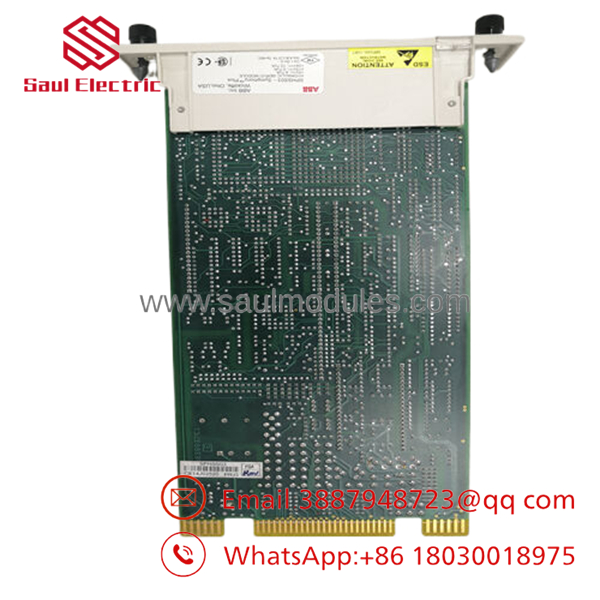
- SPHSS03
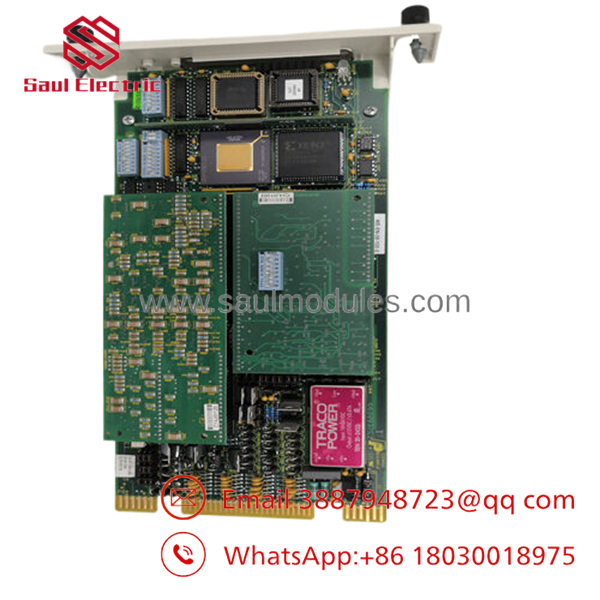
- SPHSS03
Installation & Configuration Guide
Stage 1: Pre-Installation (Prep & Safety)
- Verify the designated rack slot assignment within the Bailey mounting unit (MMU) chassis.
- Ensure the turbine is in a safe, tripped state with hydraulic fluid headers depressurized to prevent uncommanded valve movement during the swap.
- Put on a grounded ESD wrist strap and connect it to the copper enclosure ground bar.
- Document the hardware jumper configurations on the component layout, which establish parameters like LVDT excitation frequencies and output current limits.
Stage 2: Removal
- Unlatch the upper and lower plastic module retaining clips on the front bezel of the module assembly.
- Pull the card straight forward out of the chassis guide rails, maintaining steady, horizontal pressure to prevent scratching adjacent active cards.
- Store the extracted board immediately inside an ESD-shielding bag.
Stage 3: Installation (Clone & Seat)
- Set all hardware jumpers and DIP switches on the new surplus SPHSS03 to mirror the original module’s layout exactly (ensuring matching LVDT gain scales and coil impedances).
- Align the top and bottom circuit edges with the plastic tracks of the MMU chassis slot.
- Push the module firmly backward until the rear card-edge gold contacts seat fully into the backplane connector socket, then snap the faceplate retaining clips closed.
Stage 4: Power-On & Testing
- Once seated, the backplane applies power to the module. Monitor the faceplate LEDs to confirm that initialization passes without triggering a local hardware fault.
- Access the engineering terminal to verify that the master processor establishes a clean handshake with the new slave slot.
- Re-pressurize the hydraulic lines and execute a static valve calibration sequence, logging the LVDT feedback percentages across 0%, 25%, 50%, 75%, and 100% stroke intervals to ensure perfect linear precision before restarting the turbine.
Firmware/Software Versions & Upgrade Notes
The utilizes localized firmware embedded within onboard ROM chips to manage high-speed analog-to-digital conversion, LVDT phase demodulation, and slave-bus communications.
When configuring this new surplus module, verify that the revision suffix of the replacement card matches the hardware profile defined in your central engineering software (such as Composer or WinTools). If your master controller (e.g., BRC300 or BRC400) is running an older firmware layer, a mismatch in the slave module’s revision index can cause configuration errors or block access to specialized calibration registers. Always verify block structure configurations in your controller logic before attempting full valve auto-tuning sweeps.
Frequently Asked Questions (FAQ)
Is this servo module brand new, or is it a pulled/repaired unit?
This module is a guaranteed New Surplus item. It has never been installed in a working turbine control panel, run in a live facility, or subjected to field repairs. It has been preserved in a climate-controlled environment and opened exclusively for our inbound physical quality checks. We maintain a zero-tolerance policy against supplying refurbished or repaired components.
Why should we pay more for a New Surplus card instead of a cheap refurbished model?
Servo control modules are high-consequence assets. Refurbished cards often hide internal degradation within their phase-sensitive analog demodulator chips and output driver channels. If an aged component drifts under load, it can cause the governor valve to overshoot or lose synchronization, leading to process instability or turbine damage. Buying new surplus inventory completely eliminates this risk, providing a fresh 10–15 year operational lifespan.
Does the supply the electrical excitation signal required by LVDT position sensors?
Yes. The features integrated onboard AC excitation generators designed to power the primary coils of attached LVDT or RVDT feedback sensors. The exact frequency and voltage levels of this excitation signal are configured using the physical hardware jumpers on the board.
Can this module be hot-swapped while the remainder of the system is running?
Yes. The Bailey Infi 90 and Harmony backplane architectures support hot-swapping slave boards. However, because pulling this specific card will instantly break the servo positioning loop and cause the associated hydraulic valve to slam shut, you must verify that the turbine is fully stopped or that redundant tracking loops are successfully handling the process before extracting the module.
What type of warranty protection covers this hardware?
We provide a comprehensive 1-year warranty on this New Surplus module, starting from the day it leaves our warehouse. This matches standard OEM warranty frameworks, giving your engineering and maintenance teams complete peace of mind.

 Start Chat


