





Description
Key Technical Specifications
| Parameter | Value |
| Manufacturer | ABB |
| Model Designation | TB820V2 |
| Product ID | 3BSE013208R1 |
| Communication Protocol | ModuleBus (Optical and Electrical) |
| Device Role | Slave Interface Modem |
| Optical Ports | 2 dedicated fiber-optic ports |
| Local Module Capacity | Connects up to 12 I/O modules via electrical ModuleBus |
| Cluster Scaling | Supports up to 7 remote clusters on a single optical link |
| Node Addressing | Local front-panel rotary switch (Positions 1 to 7) |
| Primary Input Power | 24 V DC nominal (19.2 to 30 V DC range) |
| Current Consumption | 100 mA typical at 24 V DC |
| Isolation Design | Fully isolated power distribution to local I/O modules |
| Protection Rating | IP20 conforming to EN60529 / IEC 529 |
| Environmental Safety | Class I Div 2 cULus, ATEX Zone 2, G3 severe corrosion resistant |
| Dimensions & Weight | 58 mm W × 170 mm H × 122 mm D |
Product Introduction & Supply Chain Strategy
The ABB TB820V2 (3BSE013208R1) is a specialized ModuleBus cluster modem designed to link central Field Communication Interfaces (FCIs like the CI801 or CI840) to decentralized remote S800 I/O clusters. This module acts as a high-speed translator, featuring two optical fiber ports to receive data over long distances and an electrical base connection to drive up to 12 local I/O modules. By utilizing fiber-optic connections, the TB820V2 eliminates ground-loop noise and signal attenuation across complex plant environments, making it a critical communication component in paper mills, wastewater plants, and power distribution setups.
From an operations and reliability standpoint, sourcing this module as a New Surplus asset optimizes your Total Cost of Ownership (TCO). Because the cluster modem acts as the primary gatekeeper for an entire rack of 12 downstream I/O cards, any signal loss or hardware failure will drop all 12 field channels instantly. Refurbished alternatives pose significant operational risks; aged optical transceivers suffer from faded light emission over time, which can lead to intermittent CRC errors, sudden bus timeouts, and costly unexpected plant trips. Securing factory-clean, zero-hour surplus hardware guarantees maximum optical signal strength and protects your distributed network from unpredictable data loss.
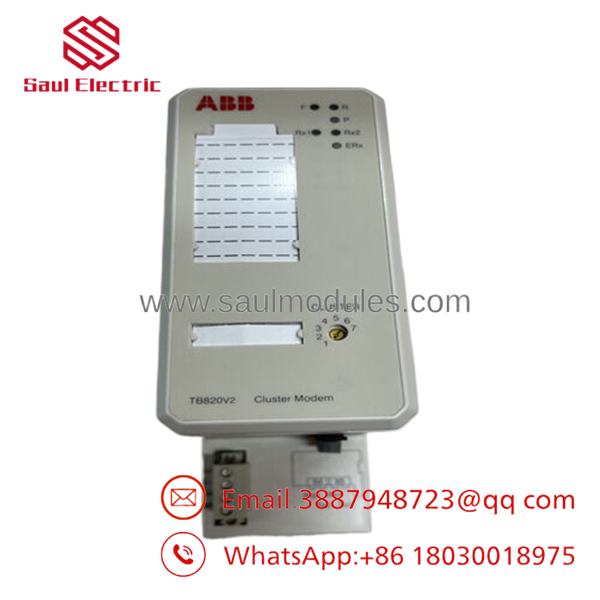
- TB820V2
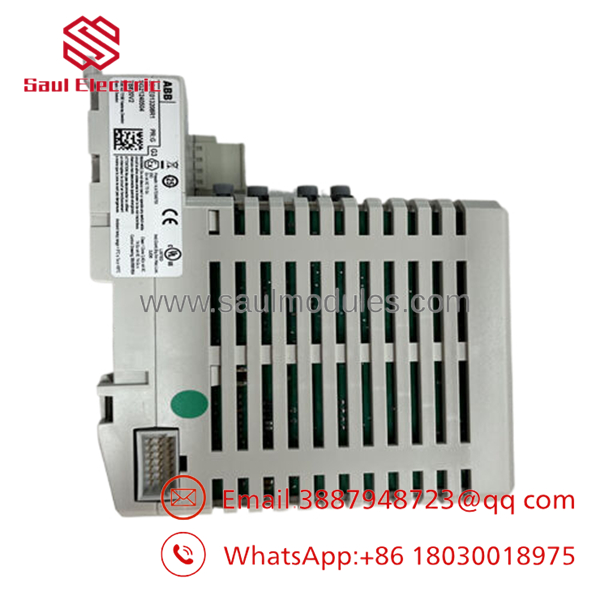
- TB820V2
Installation & Configuration Guide
Stage 1: Pre-Installation (Prep & Safety)
- De-energize the 24 V DC power distribution rail feeding the target mounting slot.
- Put on a grounded ESD wrist strap and clamp its reference clip to the copper cabinet grounding bar.
- Inspect the clean optical fiber tips; ensure you have lint-free wipes and isopropyl alcohol handy to clean the fiber connectors before insertion.
Stage 2: Removal
- Unplug the 24 V DC power supply connector block from the module’s faceplate.
- Carefully disconnect the optical fiber cables from ports RX and TX, placing protective dust caps over the cable tips and the modem’s optical barrels immediately.
- Pull the module retention latch forward and slide the modem straight off the DIN rail assembly.
Stage 3: Installation (Clone & Seat)
- Use a small screwdriver to set the front-panel rotary switch on the new surplus TB820V2 to match the exact cluster number (1 through 7) of the old module.
- Hook the top of the modem housing onto the DIN rail and snap the lower latch closed to secure it.
- Remove the dust caps and firmly connect the optical fiber lines into their designated RX and TX ports. Plug the 24 V DC power connector back into place.
Stage 4: Power-On & Testing
- Reapply 24 V DC power to the distribution rail.
- Observe the front-panel diagnostic LEDs; the green power indicator should stay on steadily, and the optical port indicators should flash or stay solid, confirming an active network handshake.
- Access your System 800xA hardware tree console to verify that the remote node communicates clearly without throwing frame errors or timing faults.
Firmware/Software Versions & Upgrade Notes
The operates as a hardware-level optical-to-electrical modem and signal manager. It does not run independent high-level application software or require manual firmware flashing during fields swaps.
However, because this is the enhanced “V2” version of the legacy TB820 series, you must check your controller’s hardware definitions. The V2 module is fully backwards compatible with original TB820 layouts, but you should verify that your Control Builder project matches the exact physical hardware profile. If your documentation shows an original TB820 but you install this new surplus V2 unit, the system will integrate seamlessly, but updating the hardware configuration files to “” is highly recommended to unlock advanced internal diagnostic and supervisory monitoring features.
Frequently Asked Questions (FAQ)
Is this module an original new item or a rebuilt part?
This module is a guaranteed New Surplus item. It has never been deployed in an active control panel, run in a live field rack, or rebuilt. It is clean inventory from strategic storage, and every module undergoes comprehensive quality testing before shipment. We do not provide used or refurbished parts.
Why does a new surplus modem cost more than a standard refurbished model?
Refurbished communication modems carry serious hidden liabilities because their internal optical transceiver diodes age under high ambient operating temperatures and degrade silently over time. A refurbished modem might pass a quick bench test but fail weeks later under full thermal strain inside an unconditioned field cabinet. Sourcing a new surplus component completely eliminates this risk, providing a fresh 10–15 year operational life and protecting your plant from expensive unplanned downtime.
What is the exact purpose of the rotary switch on the front panel?
The rotary switch is used to assign the hardcoded cluster address (selectable from position 1 to 7) for that specific remote S800 I/O rack on the optical ModuleBus link. This address must match your controller’s software configuration file exactly for data packets to route correctly.
Does the package include the module terminator and power connectors?
Yes. Our New Surplus modules ship complete with their essential installation accessories, including one 3BSE013208R1 modem assembly, the pluggable 24 V DC input power terminal block, and one TB807 ModuleBus terminator block to cap off the electrical bus tail.
What type of warranty protection covers this hardware?
We provide a comprehensive 1-year warranty on this New Surplus cluster modem, starting from the day it leaves our warehouse. This matches standard OEM warranty frameworks, giving your engineering and maintenance teams complete peace of mind.

 Start Chat


