





Description
Key Technical Specifications
| Parameter | Value |
|---|---|
| Manufacturer | ABB |
| Model Designation | TVOC-2-240 |
| Product ID / Part Number | 1SFA664001R1001 |
| Auxiliary Supply Voltage (Us) | 100 to 240 V AC (50/60 Hz) or 100 to 240 V DC |
| Power Consumption | 5 W / 11 VA typical operational draw |
| Optical Inputs Base Configuration | 10 discrete optical fiber sensor inputs (Channels 1–10) |
| Maximum Expansion Capacity | Up to 30 optical channels using 2 × TVOC-2-E1 extension modules |
| High-Speed Tripping Outputs | 3 independent, solid-state IGBT electronic outputs (Trip 1, Trip 2, Trip 3) |
| Signal Relay Outputs | 4 internal potential-free micro-relays (Change-over contacts for signaling/alarms) |
| Internal Reaction Time | < 1 ms (Optical sensor strike to IGBT output conduction) |
| Total Tripping Response | < 2 ms when paired with ABB current sensing units (CSU) |
| Human-Machine Interface | Integrated 3-line textual graphic LCD screen & navigation configuration pad |
| Mounting Configuration | Wall mount or standard 35 mm DIN Rail |
| Environmental Parameters | IP20 enclosure rating |
Product Introduction & Supply Chain Strategy
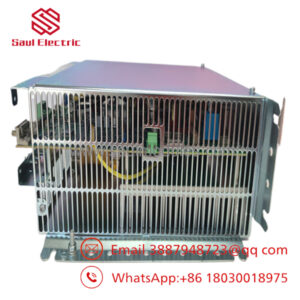
The ABB TVOC-2-240 (1SFA664001R1001) is the central diagnostic unit of ABB’s premium Arc Guard System, trusted for over four decades to deliver optical arc flash protection across low-voltage (LV) and medium-voltage (MV) switchgear assemblies. Operating under deterministic logic, the device utilizes a network of strategically located fiber-optic point sensors to monitor internal busbars, breaker cubicles, and cable terminations.
When an internal short-circuit fault creates an electrical arc, the TVOC-2-240 detects the sudden flash of light in less than 1 millisecond. It immediately fires its high-speed IGBT solid-state outputs to trip upstream feeder circuit breakers before destructive thermal expansion or blast overpressure can occur.
From an engineering and safety compliance standpoint, sourcing this module as an absolute New Surplus item ensures strict adherence to facility risk metrics while lowering your Total Cost of Ownership (TCO). Because an arc flash monitor functions as a critical life-safety and asset-protection safety net, there is zero margin for component degradation.
Refurbished alternatives carry extreme legal and structural liabilities: aged optical receivers can experience thermal drift, desensitizing them to light or causing sluggish trip signals. A delay of just 10 milliseconds can turn a safely contained event into an explosive switchgear failure that destroys the entire enclosure line. Securing zero-hour, verified new surplus inventory guarantees original OEM factory response curves and maintains continuous protection for your electrical infrastructure.
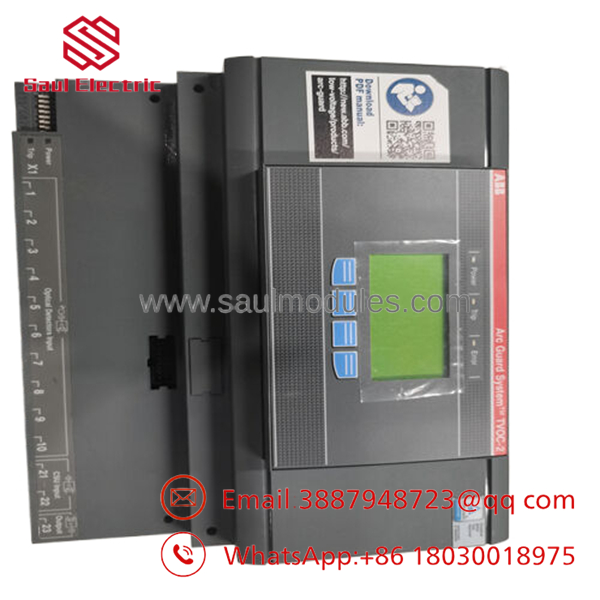
- TVOC-2-240
Installation & Configuration Guide
Stage 1: Pre-Installation (Prep & Safety)
- Completely isolate all primary auxiliary power inputs supplying the mounting cabinet slot. Check that incoming power terminal lines read 0 V with a voltmeter.
- Put on a grounded ESD wrist strap and snap its terminal lead to the panel chassis ground bar.
- Prepare the fiber-optic point sensor cables (such as TVOC-2-DP series lenses). Ensure the fiber face tips remain clean and free of dust during handling.
Stage 2: Removal
- Unplug the auxiliary power block and disconnect the control wires running to the IGBT tripping lines and diagnostic alarm relays.
- Label and carefully pull the individual fiber-optic sensor lines out of the 10 terminal ports on the top face of the unit. Fit protective dust caps over any exposed cable tips.
- Release the plastic locking catch on the base of the frame and slide the failing main unit off the 35 mm DIN rail.
Stage 3: Installation (Clone & Seat)
- Snap the new surplus TVOC-2-240 unit firmly onto the DIN rail, verifying that the physical frame is level and securely locked into place.
- Remove the protective dust plugs from the top ports and insert each optical fiber sensor line back into its matching designated channel port (1 through 10) until it clicks.
- Reconnect the wire harnesses for the IGBT high-speed trip loops, alarm indicators, and the 100–240 V AC/DC primary power line block.
Stage 4: Power-On & Testing
- Apply auxiliary control voltage. The unit will run its internal self-supervision sequence, and the front panel LCD screen will illuminate green to signal normal operation.
- Use the front keypad to navigate through the display menus to map your trip configurations (assigning specific optical input groups to fire designated IGBT outputs).
- Activate the device’s diagnostic “Test Mode” to verify signal routing to upstream breakers without executing a live physical trip. You can use an approved handheld optical test flash tool at the sensor head locations to check full loop calibration before putting the switchgear online.
Firmware/Software Versions & Upgrade Notes
The TVOC-2-240 runs embedded monitoring firmware developed by ABB to comply with functional safety standards like SIL2 (IEC 61508) and Performance Level d (ISO 13849-1). This firmware drives continuous internal diagnostic loops, tracking optical channel alignment, internal temperature variables, and IGBT circuit health.
When deploying a new surplus module to replace an older revision, check the firmware version shown on the LCD screen during boot-up. If your network integrates the into an overarching supervisory system via a Modbus RTU communication module (such as the TVOC-2-COM unit), verify that the register parameters match your existing SCADA map. Modern firmware iterations provide enhanced error tracking codes for optical line calibration, but they retain full backwards-compatible functionality with all legacy TVOC-2-DP point-sensor installations.
Frequently Asked Questions (FAQ)
Is this unit brand new or a repaired component from a dismantled panel?
This module is a guaranteed New Surplus item. It has never been installed in a working facility, configured for field service, or subjected to electrical repair. It is clean inventory preserved in original packaging within a climate-controlled warehouse and opened solely for our inbound physical quality checks. We enforce a strict policy against supplying used or refurbished safety items.
Why does a new surplus arc monitor cost more than a standard refurbished unit?
Arc guard monitors are life-safety protection systems. Refurbished units frequently suffer from invisible wear, such as degraded optical transceivers, dried power capacitors, or heat-stressed IGBT switching arrays. If an old component fails to fire under fault conditions, the resulting arc flash can destroy multi-million dollar switchgear lineups and put personnel at severe risk. Sourcing a new surplus unit provides a fresh, zero-hour factory asset that eliminates these performance liabilities.
What is the primary difference between the and the TVOC-2-48 model?
The primary difference is the required auxiliary power supply voltage. The model runs on a universal high-voltage range of 100 to 240 V AC or DC. The alternative TVOC-2-48 model is engineered strictly to handle low-voltage industrial DC control networks ranging from 24 to 48 V DC.
Can I expand this module to monitor more than 10 optical sensor points?
Yes. The base unit is equipped with 10 optical channel inputs. If your switchgear installation requires broader coverage, you can insert up to two TVOC-2-E1 extension modules directly into the slots on the right side of the main unit housing. Each extension adds 10 extra channels, allowing a single module to manage up to 30 independent sensor lenses.
What type of warranty protection covers this safety hardware?
We provide a comprehensive 1-year warranty on this New Surplus main unit, starting from the day it leaves our warehouse. This matches standard OEM protection parameters, giving your maintenance team complete peace of mind.

 Start Chat


