





Description
Key Technical Specifications
| Parameter | Value |
|---|---|
| Manufacturer | ABB |
| Model Designation | UAC317AEV1 |
| Product ID / Part Number | HIEE300725R1 |
| Application Framework | UNITROL Excitation Systems / Automatic Synchronizing Device (ASS) |
| Operating Voltage | 24 V DC system base power |
| Core Processing Function | High-speed real-time algorithm synchronization and multi-channel I/O balancing |
| Signal Input Handling | Multi-channel digital and precise analog measurement tracking |
| Communication Layer | Proprietary internal high-speed system bus interface |
| Protection Profile | Open-card form factor (Requires localized cabinet IP54 housing environment) |
| Operating Temperature | −20 to +60 °C continuous |
| Coating Protection | Industrial conformal coating variant for harsh environment stability |
Product Introduction & Supply Chain Strategy
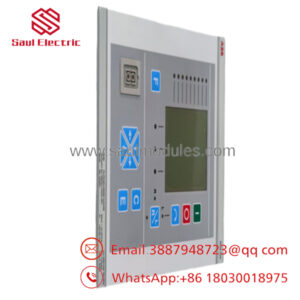
The ABB UAC317AEV1 (HIEE300725R1) is a high-performance control and signal-processing processor board belonging to ABB’s high-power electronics and generator control frameworks. Most commonly deployed within UNITROL excitation systems and dedicated Automatic Synchronizing Systems (ASS), this specialized card sits directly in the critical control loop. It processes high-speed parameters, performing real-time mathematical calculations on voltage, phase angles, and system frequencies to ensure safe, arc-free connection between large-scale generators and synchronous power distribution grids.
For sourcing specialists and asset managers keeping aging power generation platforms running, securing the UAC317AEV1 as a New Surplus unit minimizes your Total Cost of Ownership (TCO). Because this unit dictates physical governor and voltage matching parameters, any calculation delay or component drift introduces catastrophic operational risk.
Refurbished or second-hand processing boards often carry invisible liabilities, including thermal degradation on their microchips or hairline cracks in their multi-layer PCBs caused by operational heat and vibration. A silent failure during grid paralleling can result in an out-of-phase connection event, causing severe mechanical damage to generator shafts and stator bars. Sourcing factory-clean, zero-hour surplus hardware guarantees original performance curves and ensures long-term station reliability.
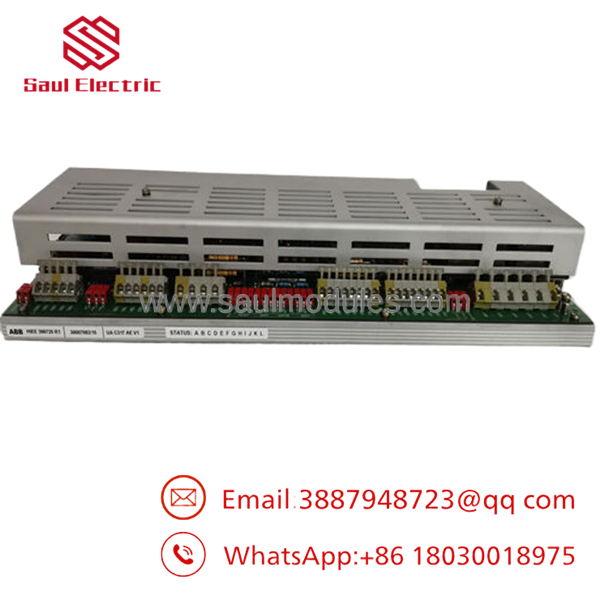
- UAC317AEV1
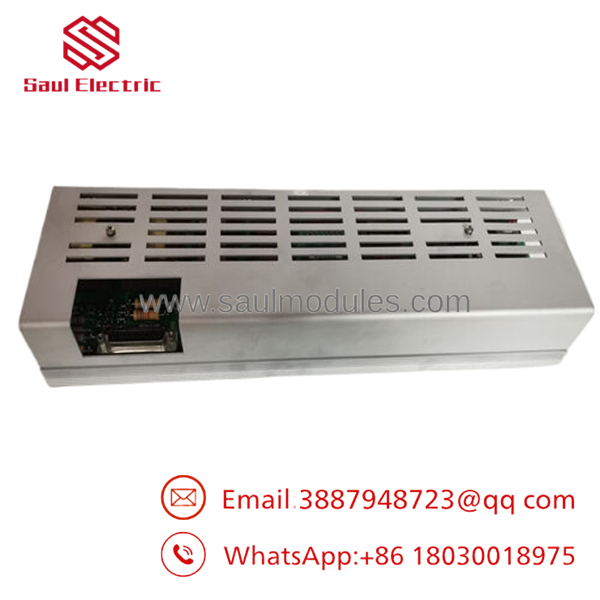
- UAC317AEV1
Installation & Configuration Guide
Stage 1: Pre-Installation (Prep & Safety)
- Completely de-energize the host control sub-rack assembly. Verify that all auxiliary 24 V DC power connections and secondary transformer inputs read 0 V with a multimeter.
- Put on a grounded ESD wrist strap and connect its reference clip directly to the unpainted section of the master copper chassis grounding bar.
- Extract the original configuration settings profile and firmware addresses from your connected plant engineering station.
Stage 2: Removal
- Unplug the structural faceplate wiring bundles and disconnect all high-speed serial interface lines.
- Unfasten the top and bottom card retention screws anchoring the board to the internal metal slot guide rails.
- Grip the extraction handle and pull the UAC317AEV1 card straight out along its tracks, taking care not to rub against neighboring active slots. Immediately transfer the removed module into an static-shielding bag.
Stage 3: Installation (Clone & Seat)
- Configure all physical address jumper matrices and onboard DIP switches on the new surplus module to exactly match the hardware configuration of the removed part.
- Line up the top and bottom circuit edges with the designated sub-rack guide channels and push the board smoothly backward until its backplane pin sockets engage completely.
- Hand-tighten the retention screws on the front panel and re-attach all network communication blocks and signal lines.
Stage 4: Power-On & Testing
- Re-energize the sub-rack auxiliary power lines. Observe the front panel status lights; the green run/active LED should light up steadily without initiating an error loop.
- Open your system configuration interface to confirm that the central processor detects the newly integrated card node.
- Conduct an isolated simulation sequence to test active voltage and frequency output matching loops before re-introducing primary breaker control wires for live power generation.
Firmware/Software Versions & Upgrade Notes
The relies on precise embedded system microcode to run its complex phase detection and signal-balancing algorithms. This firmware coordinates register access directly with the active system platform.
When dropping a new surplus card into place, verify that the physical board version suffix (such as EV1) matches the configuration mapping defined in your local programming utility. If there is a revision mismatch, the controller logic may block configuration downloads or flag a persistent hardware fault code. Ensure all register mappings are double-checked using your native ABB system engineer toolkit prior to finalizing commissioning.
Frequently Asked Questions (FAQ)
Is this module factory new or a refurbished pull?
This component is a guaranteed New Surplus item. It has never been deployed in an active field panel, integrated into a live facility setup, or repaired. Every unit is kept in temperature-controlled storage and opened exclusively for our internal inbound physical quality verification check. We do not provide used or refurbished parts.
Why should we prioritize a New Surplus processor card over a lower-priced refurbished alternative?
Control processor cards handle high-consequence system logic. Refurbished boards can hide microprocessing trace fatigue, faded components within their communication transceiver layers, or deteriorated multi-layer ceramic capacitors. A sudden drop in performance on a refurbished processor can blind your synchronization unit or crash your excitation logic, causing an immediate, unplanned facility shutdown. Sourcing a new surplus asset provides a fresh 10–15 year operational life and ensures reliable grid connection precision.
Does the module manage both analog and digital I/O lines?
Yes. The card features a versatile multi-function architecture designed to process precise, low-latency analog measuring lines (critical for tracking AC voltage and frequency waveforms) alongside high-speed discrete digital signals used for system commands and breaker status tracking.
Can the board be hot-swapped while the sub-rack is active?
No. Pulling or inserting the while the control rack is energized can generate localized voltage spikes across the backplane data bus, risking corruption to the system registers or damaging adjacent microprocessors. Always completely power down the sub-rack before performing a hardware swap.
What warranty terms apply to this legacy control card?
We provide a comprehensive 1-year warranty on this New Surplus module, starting from the day it leaves our warehouse facility. This policy aligns with standard factory parameters, giving your maintenance team complete peace of mind.

 Start Chat


