





Description
Product Introduction
The Adept 10350-00104 is a legacy AWCII-040 module associated with Adept industrial robot control systems. It uses the 6U VME form factor and is intended for integration within Adept’s controller architecture rather than general-purpose PLC applications.
This distinction matters during replacement. The 10350-00104 is tied to the AWCII platform, so compatibility depends on the controller chassis, backplane, firmware, robot configuration, and associated motion hardware. It should not be treated as a generic VME CPU simply because it uses a VME mechanical format.
Key Technical Specifications
| Parameter | Value |
|---|---|
| Manufacturer | Adept Technology |
| Part Number | 10350-00104 |
| Product Family | AWCII |
| Model Designation | AWCII-040 |
| Product Type | VME controller / motion interface module |
| VME Format | Single-slot 6U VME |
| System Application | Adept industrial robotics |
| Controller Platform | Adept AWCII |
| Installation | AWCII VME chassis/backplane |
| Primary Function | Robot motion-control system interface |
| Legacy Status | Legacy / obsolete-market component |
| Documentation | Verify against applicable Adept AWCII documentation |
Adept product listings specifically identify the part as “AWCII-040 SINGLE SLOT 6U VME CPU MODULE PART 10350-00104.”
There is conflicting secondary-market information about this part. Some vendors describe it as an AWCII motion interface module, while another listing incorrectly presents it as a standalone servo drive. Those descriptions should not be treated as equivalent. The AWCII/VME identification is better supported by the Adept product-range listing.
Application Scenarios & The “Trench” Experience
The failure usually does not happen at a convenient time.
An older robot cell runs for years, then the controller starts throwing intermittent VME or motion-system faults. You replace cables. You check the I/O. You reboot the controller. Eventually, the suspect board becomes the only realistic explanation—and production is waiting.
The 10350-00104 is relevant to applications such as:
- Industrial Robotics — Adept AWCII Robot Controller — Provides the legacy VME-based controller hardware required by compatible AWCII systems.
- SCARA Automation — Automated Assembly — Supports controller architecture used in Adept robotic assembly cells.
- Pick-and-Place Systems — High-Speed Robot Cells — Maintains the original Adept control platform where replacement with a modern controller would require substantial engineering changes.
- Legacy Manufacturing Lines — Obsolete Controller Maintenance — Provides a replacement path when the installed AWCII hardware must remain operational.
- Machine Retrofit Support — Like-for-Like Board Replacement — Avoids unnecessary changes to robot programs, wiring, and surrounding automation hardware when a compatible board is available.
Field case — a plausible replacement scenario:
A packaging cell has been running an older Adept robot for years. During startup, the controller begins reporting a board-level fault. The robot itself passes its mechanical checks, but the controller cannot complete its normal initialization sequence.
The maintenance team has two choices: replace the complete robot-control architecture or locate the correct legacy VME module.
The second option can be much less disruptive—but only if the replacement is actually the correct hardware revision. On these older systems, a physically compatible VME card is not automatically a functionally compatible card.
That is where part-number verification matters.
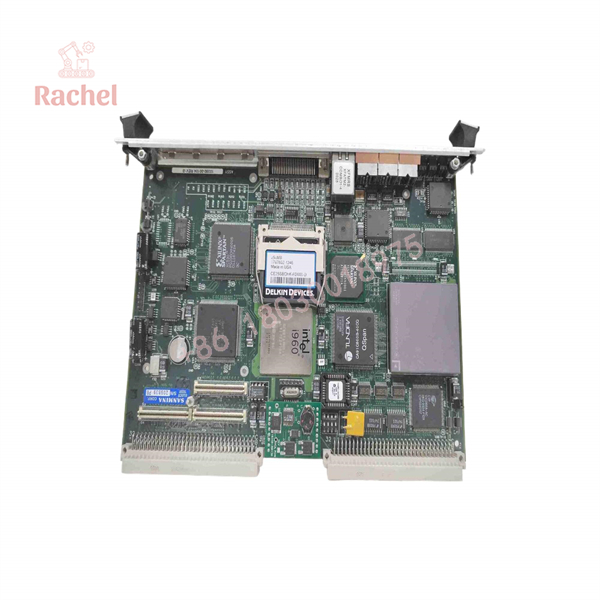
10350-00104
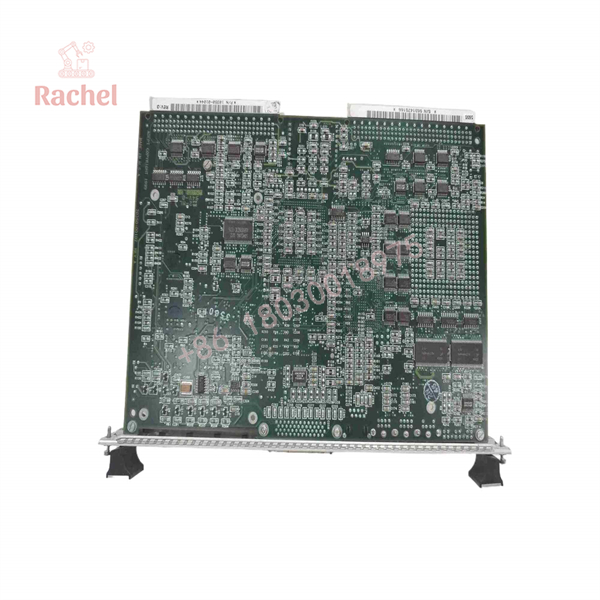
10350-00104
Transparency SOP: Quality Assurance & Testing
For New Surplus or refurbished 10350-00104 inventory, the testing process should include:
- Inbound Inspection
- Verify the exact 10350-00104 part number.
- Photograph the nameplate, PCB markings, revision identifiers, and connector area.
- Inspect VME card-edge contacts for oxidation, contamination, or mechanical damage.
- Check for evidence of previous repair work.
- VME Hardware Inspection
- Inspect the backplane connector and card guides.
- Check mounting hardware and front-panel condition.
- Examine the PCB for cracked components, corrosion, burned areas, or previous solder work.
- Live Rig Testing
- Install the module into a compatible Adept AWCII test chassis where available.
- Verify power-up behavior and controller initialization.
- Confirm VME backplane communication.
- Check system diagnostics and module status indicators.
- System Compatibility Verification
- Verify the AWCII controller configuration.
- Check installed firmware and software revisions where accessible.
- Confirm that the module initializes correctly with the intended controller hardware.
- Final QC & Anti-Static Packaging
- Clean and inspect the card-edge connector.
- Package the PCB in ESD-safe material.
- Protect the board against shock and moisture.
- Record the serial number and test result before shipment.
For a legacy VME module, a simple continuity test is not enough. The meaningful test is whether the board actually initializes in the intended Adept controller environment.
The Veteran’s Tech Trap Guide
⚠️ Do not confuse mechanical VME compatibility with system compatibility.
A 6U VME board can physically fit the chassis and still be completely wrong for the AWCII system. Verify the exact Adept part number and controller configuration.
❗ Photograph the old board before removal.
Get the part number, revision marking, switch settings, connectors, and cable routing. Legacy robot controllers often contain hardware that has accumulated undocumented field changes.
⚠️ Watch the VME backplane connector.
Do not force the card into the rack. Inspect the card guides and connector alignment first. A damaged VME backplane can create a fault that looks like a failed controller board.
❗ Do not erase or overwrite configuration data casually.
If the existing controller still boots, capture the available configuration and software information before installing replacement hardware. A replacement board may be electrically correct while still requiring the correct system configuration.
⚠️ ESD is not optional.
Handle the board using proper anti-static procedures. Avoid touching the card-edge contacts or exposed IC pins. Legacy boards are particularly poor candidates for unnecessary handling.
Frequently Asked Questions (FAQ for Conversion)
Q1: What is Adept 10350-00104?
It is identified in Adept product listings as an AWCII-040 single-slot 6U VME CPU module, associated with Adept robotic control systems.
Q2: Is 10350-00104 a servo drive?
The available sources conflict on this point. Some secondary-market sellers describe it as a servo-related module, while the Adept product-range listing identifies it specifically as an AWCII-040 6U VME CPU module. For procurement and engineering purposes, verify the board label and the installed AWCII documentation rather than relying on a generic online product description.
Q3: Can any 6U VME CPU replace 10350-00104?
No. VME defines the physical and electrical bus architecture; it does not make different controller boards functionally interchangeable. The Adept AWCII software, backplane requirements, firmware, I/O architecture, and robot configuration all matter.
Q4: Is the 10350-00104 hot-swappable?
Do not assume so. VME systems generally require the controller to be powered down before board removal unless the specific chassis and board combination explicitly supports hot-swap operation. Follow the Adept service procedure for the actual AWCII system.
Q5: Is this part discontinued?
It is a legacy Adept component and is primarily encountered through the industrial surplus and obsolete-parts market. Current availability should therefore be checked by exact part number and condition rather than assuming normal OEM production stock.
Q6: Is a surplus 10350-00104 necessarily refurbished?
No. Surplus can mean unused excess inventory, removed-from-service equipment, or professionally refurbished stock. Ask for photographs of the actual board, revision markings, serial number, and test evidence. A stock photograph is not enough for a legacy VME board.
Q7: Why can a surplus 10350-00104 cost less than replacing the entire robot controller?
Because a board-level replacement can preserve the existing AWCII chassis, wiring, robot program, and surrounding cell architecture. That does not mean every used board is suitable. Verify part number, revision, condition, firmware, controller compatibility, and functional test results before putting the module back into production.

 Start Chat


