





Description
Product Introduction
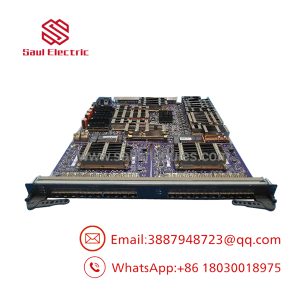
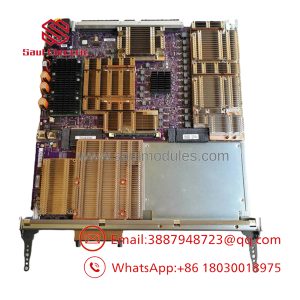
The Nokia / Alcatel-Lucent 8DG60352AA 03 (designated as the WSC-50 module) is an optical routing and wavelength-coupling card engineered for the flagship 1830 PSS (Photonic Service Switch) DWDM transport platform. Operating within 50 GHz spaced C-band dense wavelength-division multiplexing architectures, the WSC-50 module enables dynamic ROADM (Reconfigurable Optical Add-Drop Multiplexer) routing without requiring physical fiber patch re-terminations.
Equipped with integrated power monitoring sensors, low-loss optical coupling networks, and backplane control communication interfaces, the 8DG60352AA 03 manages optical signal splitting, combining, and channel power balance across long-haul and regional metro transport networks. Its hot-swappable form factor allows network operators to expand wavelength capacity or perform maintenance without interrupting co-propagating optical channels.
Key Technical Specifications
| Parameter | Specification / Value |
| Manufacturer | Nokia / Alcatel-Lucent (ALU) |
| Part / Item Code | 8DG60352AA / 8DG60352AA 03 |
| CLEI Code | WUC6AWMJAL |
| Card Nomenclature | WSC-50 (Wavelength Selective Coupler – 50 GHz) |
| Platform Family | 1830 PSS (PSS-32, PSS-16, PSS-8) Photonic Service Switch |
| Wavelength Grid | ITU-T C-Band 50 GHz Channel Spacing |
| Optical Connector Type | High-Density LC/UPC Front Panel Interfaces |
| Functions | Optical power balancing, wavelength coupling/splitting, ROADM add/drop support |
| Management Interface | Integrated 1830 PSS Backplane Bus (Managed via Nokia NFM-P / Engineering Support System) |
| Operating Temperature | Standard Central Office Conditions (0°C to 45°C) |
Application Scenarios & The “Trench” Experience
Picture this: It’s 2:00 AM on a scheduled optical network expansion at a tier-1 telecom central office. A field technician is adding an 80-channel 100G/200G transponder line card to an active 1830 PSS-32 ROADM shelf. Adding channels to an existing DWDM route without balanced optical coupling causes gain tilt on downstream EDFA optical amplifiers, triggering optical signal-to-noise ratio (OSNR) degradation and bit-error alarms across all co-propagating wavelengths. Installing the 8DG60352AA 03 (WSC-50) wavelength selective coupler module ensures stable channel power splitting and clean add/drop integration, allowing new 50 GHz channels to turn up smoothly without disturbing live traffic.
- 50 GHz Dense DWDM Backbone Networks – Combines and splits C-band wavelength signals on high-capacity long-haul terrestrial fiber links.
- ROADM Add/Drop Node Expansion – Serves as the selective coupling interface connecting transponder banks (e.g., 11QP200 / 130SCX10) to central optical amplifier panels.
- Metro Core Photonic Mesh Networks – Provides flexible wavelength routing across multi-degree mesh nodes to support dynamic link restoration.
Transparency SOP: Quality Assurance & Testing
Every module undergoes a strict optical bench test before dispatch:
- Optical Connector & End-Face Audit: Microscopic inspection of all front-panel LC/UPC optical ports to verify zero surface scratches, pits, or contamination.
- Chassis Boot & EEPROM Verification: Module inserted into a test 1830 PSS-32 shelf to verify clean shelf-controller communication, serial number reporting, and CLEI code matching (
WUC6AWMJAL). - Insertion Loss & Optical Return Loss (ORL) Test: Optical Time-Domain / Power Meter testing across all coupling ports to verify insertion loss remains well within factory specification.
- C-Band Wavelength Sweep Test: Continuous laser sweep across 50 GHz ITU-T channels to confirm uniform power attenuation and zero channel tilt.
- ESD Cleaning & Protective Packaging: Optical ports fitted with clean dust caps, static charge dissipated, unit sealed in anti-static ESD bags, and packed in high-density foam shipping boxes.
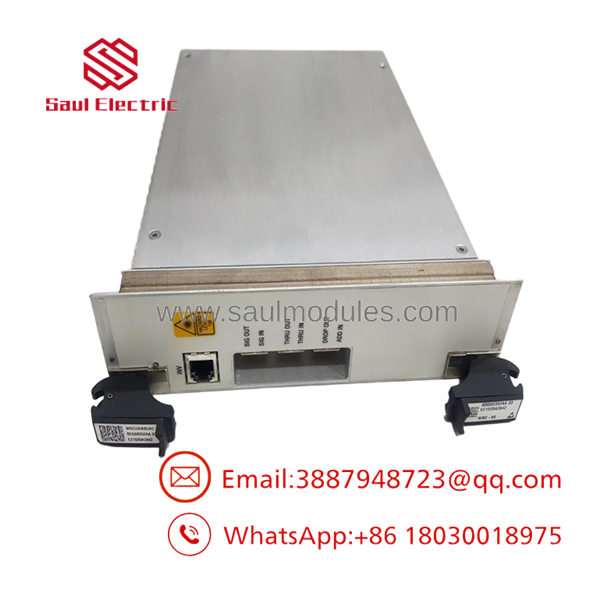
8DG60352AA 03
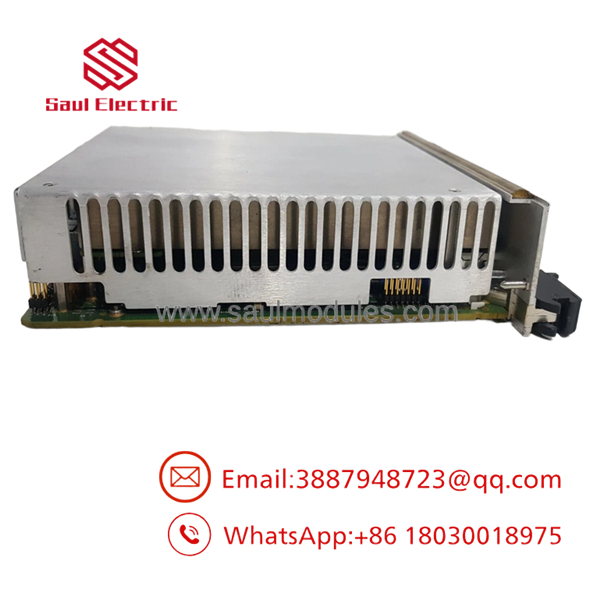
8DG60352AA 03
The Veteran’s Tech Trap Guide (Crucial Value-Add)
- ⚠️ Clean Fiber End-Faces with Cletop / Reel Cleaners BEFORE Insertion!
Optical pass-through modules operating on the 1830 PSS system handle concentrated multi-wavelength laser light. Even microscopic dust particles on LC/UPC connectors can burn or pit the fiber face under high laser power, leading to elevated insertion loss. Always inspect and dry-clean fiber jumpers before inserting them into the front ports of the 8DG60352AA 03.
- ❗ Verify Module Revision Compatibility (03 vs. Earlier Revisions)
Ensure that your active 1830 PSS software release (e.g., Release 8.x / 10.x or higher) supports revision
03of the 8DG60352AA card. Installing a newer card revision into older node controller software may result in aCard Type MismatchorProvisioning Failurealarm. - ⚠️ Do Not Leave Unused Optical Ports Uncapped
Unused LC ports on the WSC-50 front panel must remain fitted with protective rubber dust caps. Airborne dust inside central office HVAC systems quickly settles inside precision optical ferrules, leading to signal degradation over time.
- ❗ Observe Safe Handling & Bend-Radius Limits
Maintain proper fiber slack in the chassis cable management tray. Bending incoming optical fiber jumpers tighter than the manufacturer’s minimum bend radius (R < 30 mm) will introduce macrobending optical loss, causing unexpected low-power alarms on the WSC-50 card.
Frequently Asked Questions (FAQ)
Q: What does the “” designation mean on part number 8DG60352AA 03?
A: stands for Wavelength Selective Coupler – 50 GHz. It denotes that the card is engineered to route and split optical wavelengths spaced on the standard ITU-T 50 GHz DWDM grid.
Q: Which chassis models accept the 8DG60352AA 03 board?
A: This board is compatible with Nokia / Alcatel-Lucent 1830 PSS (Photonic Service Switch) subracks, including the PSS-32, PSS-16, and PSS-8 systems.
Q: Does this module require standalone power wiring?
A: No. Power, telemetry, and control signals are supplied directly through the 1830 PSS backplane connectors when the card is latched into its assigned slot.
Q: Can this unit be hot-swapped into an active system?
A: Yes. The 1830 PSS platform supports hot-swappable line cards. However, since the handles live optical channels, removing an active module will drop all DWDM wavelengths routed through that specific card. Ensure traffic is rerouted or protection paths are active before removal.

 Start Chat


