





Description
Product Introduction & Engineering Value
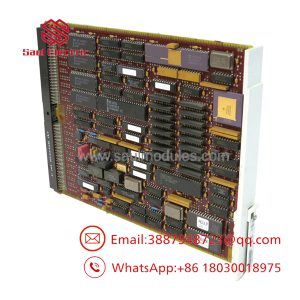
The Alcatel-Lucent 8DG63207AA S13X100R is a 100G coherent transport card for the 1830 PSS platform. It combines a tunable 100G WDM line interface with multiple client-side interfaces, allowing 10G, 40G, and 100G services to be consolidated onto a 100G optical transport channel.
For replacement work, the exact suffix matters. The S13X100R / 8DG63207AA is the standard version; S13X100E / 8DG63988AA is the encryption variant. Treating those two as interchangeable can create a configuration problem even when the hardware looks similar.
Technical Specifications
| Parameter | Specification |
|---|---|
| Unit Name | S13X100R |
| Part Number | 8DG63207AA |
| Platform | Nokia 1830 PSS |
| Line Port | 1 × 100G WDM coherent |
| Coherent Modulation | PDM-QPSK |
| C-Band Tuning | Full C-band tunable |
| 100G Client | CFP4 or QSFP28 — 100GbE / OTU4 |
| 40G Clients | 2 × QSFP+ — 40GbE / OTU3 |
| 10G / FC Clients | 10 × SFP+ — 10GbE, OTU2/2e, OC-192/STM-64, FC800/1200/1600 |
| FEC | SD-FEC 25%; HD-FEC |
| OTN Switching | Integrated OTN switch with ODU0/ODU1/ODU2 grooming |
| Physical Format | Full-height, 1 slot |
The S13X100R supports both standard 50 GHz channel spacing and flexible-grid operation. Nokia’s documentation also identifies integrated PRBS testing, loopback functions, G.709 latency measurement, OTN overhead processing, and performance monitoring.
Environmental and Power Data
- Normal operating temperature: 5°C to 40°C (41°F to 104°F)
- Short-term temperature: -5°C to 50°C (23°F to 122°F)
- Humidity: 5% to 85%
- Typical power, Add/Drop 100GE/OTU4: 145 W
- Typical power, muxponder configuration: 155 W with all 10 clients
- Supported shelves: 1830 PSS-32, PSS-16ii, and PSS-8
Field Application & the “Trench” Experience
A realistic maintenance situation is a 1830 PSS node carrying several legacy 10G services plus a newer 100GbE connection. The S13X100R is valuable here because the card can accept multiple client rates and consolidate them onto a coherent 100G WDM transport path.
The replacement engineer’s first check should not be the optical connector. It should be the complete BOM and card identity. Confirm 8DG63207AA, S13X100R, shelf compatibility, software requirements, and the intended client-port configuration before disturbing the live optical path.
Specific deployment scenarios
- Metro DWDM aggregation — consolidate multiple 10GbE and 40GbE services onto a 100G coherent wavelength.
- Data center interconnect — transport 100GbE/OTU4 traffic between geographically separated 1830 PSS nodes.
- Legacy-to-100G migration — continue carrying FC, OC-192/STM-64, and 10GbE services while moving the optical backbone toward 100G.
- OTN grooming — use the integrated OTN switch for ODU0/ODU1/ODU2 service aggregation rather than dedicating a separate card to every service.
Nokia’s portfolio documentation specifically describes the S13X100 as a multi-service muxponder supporting 10G, 40G, and 100G client services.

8DG63207AA S13X100R
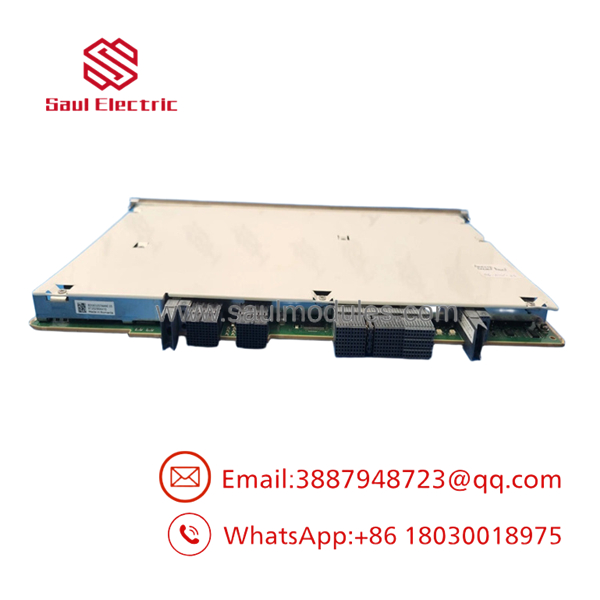
8DG63207AA S13X100R
Transparency SOP — QA & Testing
For a New Surplus or refurbished 8DG63207AA, I would use the following receiving sequence:
1. Identity check
Verify the manufacturer label, complete 8DG63207AA part number, designation, serial number, and any applicable hardware revision.
2. Physical inspection
Inspect the faceplate, optical interfaces, client cages, backplane connector, ejectors, PCB condition, and protective packaging. Pay particular attention to bent contacts and contamination around high-speed optical interfaces.
3. Platform verification
Confirm that the card is intended for the applicable 1830 PSS shelf. Nokia documentation identifies the S13X100 family for PSS-32, PSS-16ii, and PSS-8 shelves.
4. Functional test
Where a suitable test shelf is available, verify card recognition, line-side operation, client-port operation, optical tuning, alarms, loopback/PRBS functions, and applicable OTN performance measurements.
5. Final documentation
Record serial number, test date, condition, firmware/software information where available, and test results.
This distinction is important commercially: a seller’s “new” description does not by itself establish whether the board is factory-new, new surplus, unused pull, or refurbished. Current secondary-market listings show both refurbished and new-condition examples for this part.
The Veteran’s Tech Trap Guide
⚠️ Trap #1 — Ordering the encryption variant by mistake
8DG63207AA is . The encryption version is 8DG63988AA, designated S13X100E. They are related products, but the R and E suffixes should not be casually substituted.
PRO TIP: Put both the part number and unit name on the purchase request: 8DG63207AA / .
⚠️ Trap #2 — Forgetting the client-port mix
This card can handle a surprisingly broad collection of client services. A replacement check should account for the actual service configuration, not just the 100G line rate. Nokia specifies SFP+, CFP4, and QSFP+/QSFP28 client interfaces with different supported protocols and rates.
⚠️ Trap #3 — Treating the optical wavelength as fixed
The line interface is full C-band tunable. Do not assume the replacement card should be configured at the same wavelength before checking the network’s channel plan, grid configuration, and protection arrangement.
⚠️ Trap #4 — Ignoring power and thermal conditions
At approximately 155 W typical consumption in a fully populated muxponder configuration, thermal planning matters in a densely populated shelf. Check the shelf’s actual operating conditions rather than assuming every card has the same thermal profile.
Dynamic FAQ
Q1. What is Alcatel-Lucent 8DG63207AA?
It is the Nokia/Alcatel-Lucent , a 100G coherent transponder/muxponder designed for the 1830 PSS optical transport platform.
Q2. What is the difference between and S13X100E?
The uses part number 8DG63207AA. The S13X100E uses 8DG63988AA and adds low-latency, 100G wire-speed AES-256 encryption.
Q3. Which 1830 PSS shelves support the S13X100 family?
Nokia’s data sheet lists PSS-32, PSS-16ii, and PSS-8 as supported shelves.
Q4. Can it handle both 10G and 100G services?
Yes. The documented client interfaces include ten SFP+ ports for multiple 10G/FC/OTN services, plus CFP4 and QSFP-based interfaces for 40G and 100G services.
Q5. Is 8DG63207AA still available as a replacement part?
Secondary-market sources currently list the part in new and refurbished conditions. Availability and condition vary by supplier, so procurement should specify the required stock condition rather than relying on a generic “available” designation.
Q6. What should be verified before purchasing a replacement?
Confirm 8DG63207AA, , the 1830 PSS shelf model, hardware revision if applicable, required client interfaces, optical configuration, and the required condition—New OEM, New Surplus, or Refurbished. Also obtain the supplier’s written warranty and DOA/return terms.

 Start Chat


