





Description
Product Introduction
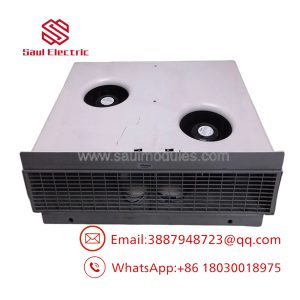
The TCPR-3U-24-1432 is a specialized 3U rack-mount DC power shelf manufactured by Tectrol (now part of Advanced Energy / CUI) and custom-integrated for Alcatel-Lucent wireless base stations, central office subracks, and network transmission racks. Acting as the foundational power backbone, this subrack converts incoming AC utility grid power (via modular hot-swappable rectifier modules) into a regulated 24V DC supply required by sensitive network hardware.
Engineered with heavy-gauge industrial metal housing, high-current rear copper busbars, and integrated alarm/telemetry backplanes, the TCPR-3U-24-1432 ensures continuous 24/7 uptime. Its internal architecture supports N+1 hardware redundancy, allowing rectifiers to be hot-swapped while connected to live floating battery banks without interrupting power to the downstream load.
Key Technical Specifications
| Parameter | Specification / Value |
| Original Manufacturer | Tectrol (Advanced Energy / CUI) |
| System Integrator | Alcatel-Lucent (ALU) / Nokia |
| Model / Part Code | TCPR-3U-24-1432 |
| Form Factor | 3U Rack-Mount Height (19-Inch Standard Telecom Rack) |
| Nominal Output Voltage | 24V DC Bus System (Adjustable Float / Charge Voltages) |
| Input Architecture | Dual / Single AC Line Inputs (110V/220V AC Auto-Sensing) |
| Bus Topology | High-Current Solid Copper Busbar Rear Output Terminals |
| Redundancy Support | N+1 Modular Power Redundancy |
| Cooling | Forced Air Convection (Front-to-Rear via Rectifier Fan Trays) |
| Operating Temperature | Extended Industrial Telecom Range (-40°C to +65°C) |
Application Scenarios & The “Trench” Experience
Picture this: It’s 3:00 AM during a severe thunder and lightning storm. AC utility power at a remote rural cellular base station drops unexpectedly. The site’s primary transmission subracks rely on the 24V DC bus powered by a Tectrol TCPR-3U-24-1432 power shelf connected to a floating lead-acid battery bank. The TCPR shelf seamlessly holds the 24V DC line voltage steady from the batteries without a single millisecond drop out. When utility power returns, the shelf’s rectifiers resume driving the DC load while managing a controlled recharge current to the battery bank—preventing thermal runaway.
- Cellular Base Transceiver Stations (BTS) – Supplies clean, ripple-free 24V DC power to macro base station amplifiers, radios, and microwave backhaul units.
- Central Office DC Distribution Racks – Houses parallel rectifier modules to build high-amperage 24V DC power plants for optical transport and switching frames.
- Industrial Control & Substation Power – Provides redundant DC power for SCADA controllers, protection relays, and industrial telemetry cabinets requiring battery-backed power.
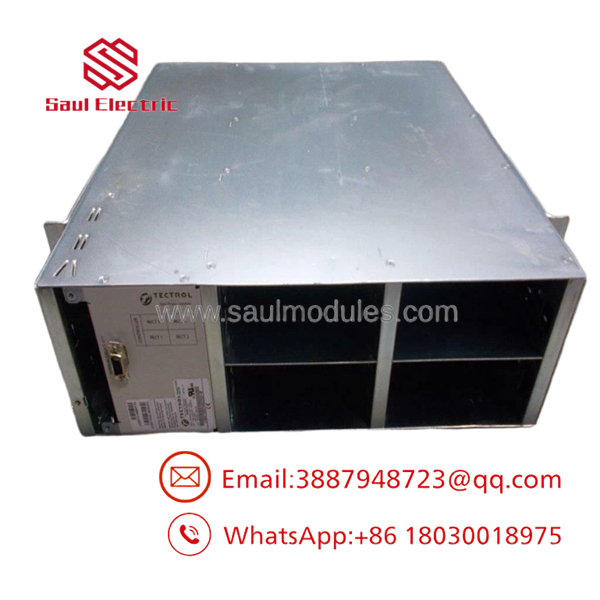
TCPR-3U-24-1432
Transparency SOP: Quality Assurance & Testing
Every TCPR-3U-24-1432 power shelf undergoes a rigorous physical and electrical bench audit prior to dispatch:
- Chassis & Terminal Inspection: Comprehensive visual check of internal backplane pins, mounting ears, sheet metal structure, and heavy copper busbar threads for zero physical wear, stripped threads, or oxidation.
- Insulation & Hi-Pot Testing: Dielectric voltage withstand test (Hi-Pot) performed between AC input terminals, DC busbars, and chassis ground to verify zero dielectric breakdown or short circuits.
- Rectifier Engagement & Hot-Swap Test: Test rectifiers loaded into all slots to confirm smooth mechanical latching, blind-mate connector alignment, and clean EEPROM/telemetry signaling.
- Full-Load Busbar Burn-In: High-current DC load bank connected to rear copper terminals to verify stable voltage delivery and normal thermal performance across busbar joints.
- Alarm Loop & Dry-Contact Audit: All alarm relay contacts (AC Fail, Rectifier Fail, Low Voltage Disconnect / LVD) tested with a digital multimeter to confirm proper switching under fault simulation.
- Anti-Static & Heavy-Duty Packaging: Unit cleaned, static-neutralized, wrapped in heavy protective barrier plastic, and packed inside reinforced double-wall foam containers to prevent damage during transport.
The Veteran’s Tech Trap Guide (Crucial Value-Add)
- ⚠️ Verify System Bus Polarity (+24V vs -24V Grounding)!
Telecom equipment can run on either +24V Grounded or -24V Grounded topologies depending on the specific equipment standard (e.g., legacy legacy wireless vs. central office specs). Before making cable connections to the rear busbars of the TCPR-3U-24-1432, double-check your rack’s system grounding scheme to prevent massive short-circuit sparks.
- ❗ Torque Rear Busbar Bolts to Factory Specs
When connecting heavy gauge DC output cables or battery copper lugs to the rear terminals, use a calibrated torque wrench. Loose high-current connections cause high contact resistance, leading to extreme heat build-up and potential terminal melting under heavy current loads.
- ⚠️ Do Not Block Front Intake or Rear Exhaust Vents!
The relies on unrestricted front-to-rear airflow generated by the installed rectifier modules. Ensure that cable management arms or blanking panels in the 19-inch rack do not restrict the front intake or block the rear heat exhaust.
- ❗ Confirm LVD (Low Voltage Disconnect) Trip Points
If using this shelf with deep-cycle stationary batteries, verify the set point for the Low Voltage Disconnect circuit. Setting the LVD cutoff too low will over-discharge and ruin expensive battery banks during prolonged AC power outages.
Frequently Asked Questions (FAQ)
Q: Does the shelf include internal rectifier modules?
A: Typically, the refers to the 3U power subrack/shelf chassis assembly. Rectifier modules are modular plug-in units that are populated separately based on the total amperage requirements of your installation.
Q: Can this power shelf be mounted in standard 19-inch equipment racks?
A: Yes. The unit features standard 3U-height (5.25 inches / 133.3 mm) front mounting flanges designed for 19-inch telecom and server racks.
Q: What is the primary function of the alarm connector on the backplane?
A: The alarm header provides dry-contact relay outputs (such as AC Mains Failure, Rectifier Module Fault, and System DC Voltage Low) that wire directly into remote monitoring units (NOC / SCADA) for real-time site alarm management.

 Start Chat


