





Description
Product Introduction & Engineering Value
Expanding an SLC 500 control system often doesn’t require replacing the processor—it requires additional chassis capacity. The Allen-Bradley 1746-A13 offers thirteen slots for processors, communication modules, specialty cards, and digital or analog I/O, making it a common choice for medium- to large-scale SLC 500 installations.
Although the SLC 500 family has reached the end of its commercial lifecycle, thousands of production lines continue to rely on this platform. The 1746-A13 remains an important replacement component for maintaining legacy automation systems while avoiding costly control system migrations. Rockwell Automation discontinued the product on March 31, 2024, with no planned direct replacement.
Technical Specifications
| Parameter | Specification |
|---|---|
| Manufacturer | Allen-Bradley / Rockwell Automation |
| Model | 1746-A13 |
| Product Family | SLC 500 (Bulletin 1746) |
| Product Type | Modular PLC Chassis |
| Number of Slots | 13 |
| Cooling Method | Natural Convection |
| Mounting | Back-Panel Mount |
| Compatible Power Supplies | 1746-P1, P2, P3, P4 and compatible 1746 power supplies |
| Compatible Modules | SLC 500 CPUs, Digital I/O, Analog I/O, Communication and Specialty Modules |
| Operating Temperature | 0…60°C (32…140°F) |
| Storage Temperature | -40…85°C (-40…185°F) |
| Enclosure Size (Minimum) | 17.1 × 50.2 × 14.5 cm |
| Approximate Weight | 1.9 kg (4.2 lb) |
| Lifecycle Status | Discontinued (No Planned Replacement) |
Field Application & The “Trench” Experience
A beverage bottling facility planned to add new inspection cameras and reject stations to an existing SLC 5/05 system. The processor still had sufficient memory, but the original 7-slot chassis had reached its physical capacity.
Rather than replacing the PLC, engineers installed a 1746-A13 chassis and migrated the existing modules during a scheduled shutdown. The larger chassis accommodated additional analog inputs, high-speed counters, and DeviceNet communication modules without requiring application software changes. Production resumed the following shift, and the expansion was completed within a single maintenance window.
Typical applications include:
- High-density packaging machine control panels
- Water and wastewater treatment systems
- Material handling systems with distributed I/O
- Batch processing and mixing equipment
- Legacy manufacturing cells requiring additional I/O capacity
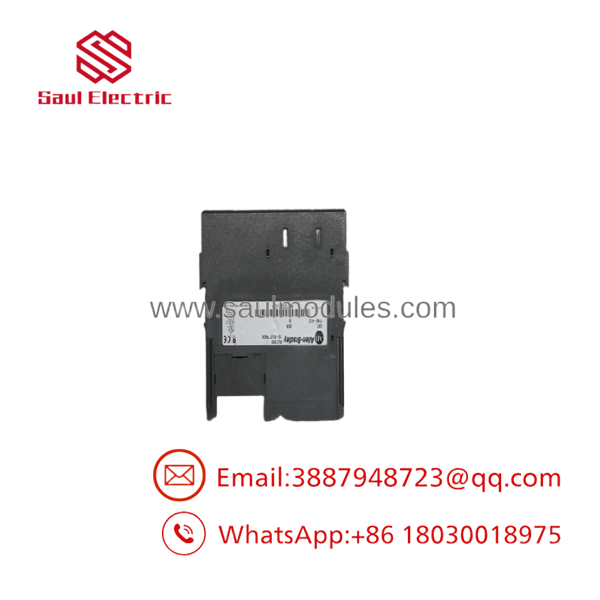
- 1746-A13
Transparency SOP: QA & Testing
Every New Surplus or professionally Refurbished 1746-A13 undergoes a documented inspection procedure.
- Verify the catalog number, serial number, and hardware revision.
- Inspect all 13 backplane connectors for bent contacts, corrosion, and wear.
- Check chassis alignment and module guide rails.
- Install a compatible SLC 500 power supply and processor.
- Verify communication across every slot using known-good I/O modules.
- Confirm backplane voltage stability under load.
- Package in anti-static, impact-resistant materials with complete traceability documentation.
The Veteran’s Tech Trap Guide
⚠️ A backplane failure can imitate multiple module failures. If several modules begin reporting communication errors or disappear intermittently, inspect the chassis before replacing expensive CPUs or I/O cards.
⚠️ Watch the power supply loading. Expanding from a 7-slot chassis to a 13-slot chassis often increases the total backplane current demand. Verify the selected 1746 power supply has sufficient capacity before adding new modules.
PRO TIP: Before transferring modules, label every slot and record the existing chassis layout. Some specialty modules depend on fixed slot assignments configured within the PLC program.
PRO TIP: During preventive maintenance, inspect the backplane connectors for discoloration or oxidation. Years of vibration and thermal cycling can create intermittent communication faults that are difficult to diagnose.
Dynamic FAQ
Q1. What is the primary function of the 1746-A13?
The 1746-A13 is a 13-slot SLC 500 chassis that provides the mechanical frame, communication backplane, and power distribution for SLC 500 processors, power supplies, and I/O modules.
Q2. Which modules are compatible with the 1746-A13?
The chassis supports 1746-series SLC 500 processors, digital I/O, analog I/O, communication modules, specialty modules, and compatible 1746 power supplies.
Q3. Can the 1746-A13 be used to expand an existing SLC 500 system?
Yes. The 13-slot chassis is frequently used in system expansions where additional I/O or communication modules are required without changing the existing SLC 500 processor, provided the power supply and system configuration support the added load.
Q4. Is the 1746-A13 still manufactured?
No. Rockwell Automation officially discontinued the 1746-A13 on March 31, 2024, and has announced no planned Rockwell replacement. Most replacement units are supplied as New Surplus, professionally Refurbished, or repaired inventory.
Q5. How is New Surplus authenticity verified?
Each chassis undergoes catalog number verification, backplane inspection, slot-by-slot communication testing, power distribution verification, grounding continuity checks, and functional testing with compatible SLC 500 hardware before shipment.
Q6. What should be checked before replacing a 1746-A13?
Verify the installed power supply capacity, record all module slot assignments, inspect wiring harnesses, and confirm that the replacement chassis matches the original mounting dimensions. These steps minimize commissioning time and help avoid unnecessary troubleshooting after installation.

 Start Chat


