





Description
Product Introduction
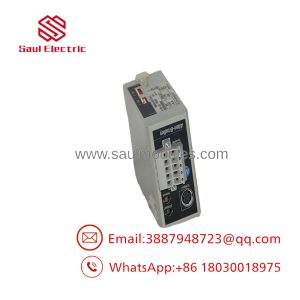
The Allen-Bradley 1746-HSCE is a high-speed counter module designed for the SLC 500 processor chassis (such as the 1746-A10 backplane). It processes high-frequency electrical pulses from incremental optical encoders, pulse generators, and proximity switches up to 50 kHz.
Because processor scan times are typically too slow to catch rapid pulse trains, the 1746-HSCE executes high-speed counting and local output triggering independently of the SLC CPU scan cycle. Featuring internal DIP switches for signal level selection (5V, 12V, or 24V DC) and onboard transistor outputs, it allows for real-time position control, length measurement, and speed tracking on packaging and converting lines.
Key Technical Specifications
| Parameter | Specification |
| Manufacturer Part Number | 1746-HSCE |
| Max Counting Frequency | 50 kHz (Quadrature x1, x2, x4 or Pulse/Direction) |
| Operating Voltage (Field Side) | 5V DC, 12V DC, or 24V DC (DIP Switch Selectable) |
| Input Signal Types | Quadrature (A, B, Z Index), Up/Down, Pulse/Direction |
| Backplane Current Draw | 320 mA at 5V DC / 0 mA at 24V DC |
| Onboard Fast Outputs | 4 Sourcing Transistor Outputs (5–24V DC) |
| Output Response Time | < 100 microseconds (Hardware Triggered) |
| Operating Temperature | 0°C to 60°C (32°F to 140°F) |
| Configuration Software | RSLogix 500 / SLC 500 M0/M1 Data Files |
Application Scenarios & The “Trench” Experience
It is 2:15 AM on a flying-shear metal cutting line. The rotary encoder riding on the web feeds position pulses to the PLC, but the cutoff blade is consistently overshooting by 1/2 inch because the SLC 5/04 CPU scan time (18ms) can’t trigger the solenoid fast enough. Installing a 1746-HSCE allows the encoder A/B/Z channels to wire directly into the module. The module’s hardware-triggered onboard outputs trip the shear solenoid in under 100 microseconds the moment the pulse count target is hit—achieving millimeter-accurate cuts regardless of main PLC ladder scan times.
- High-Speed Material Cut-to-Length – Flying Shear & Rotary Knives – Triggers onboard transistor outputs directly upon reaching position setpoints.
- Flow Meter & Turbine Pulse Totalizing – Fluid Batching Systems – Accurately counts rapid pulse trains from turbine meters without missing counts during long PLC routine scans.
- Conveyor Tracking & Web Speed Monitoring – Bottle Labeling & Inspection – Measures encoder quadrature count rates to calculate precise line velocity.
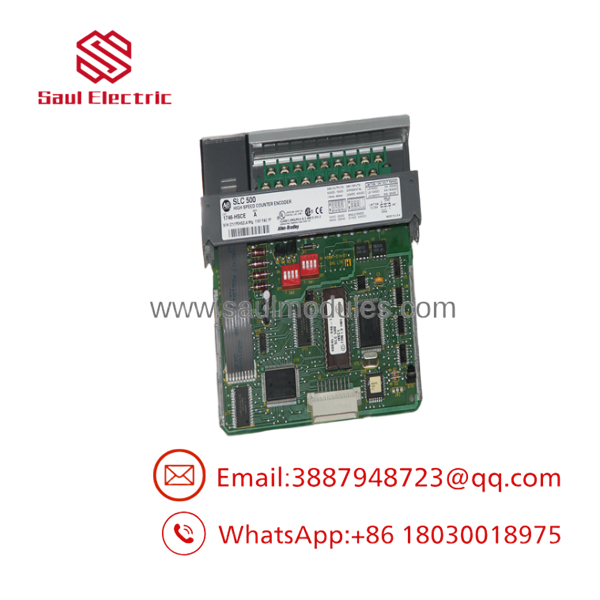
- 1746-HSCE
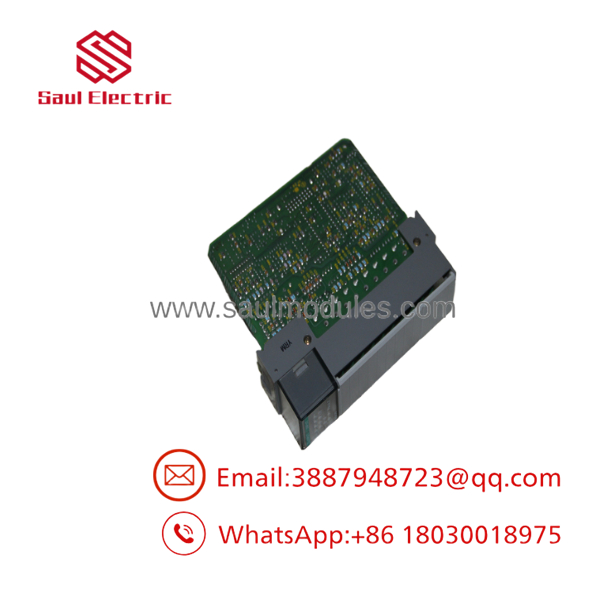
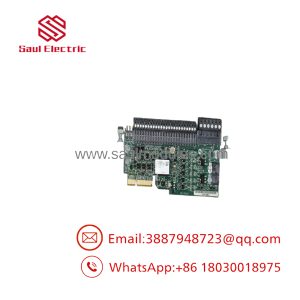
- 1746-HSCE
Transparency SOP: Quality Assurance & Testing
We don’t just ship boxes; every 1746-HSCE card undergoes signal generator and live encoder testing prior to dispatch.
- Inbound Mechanical & Header Check: Checked backplane edge pins for wear, verified front terminal block screw tightness, and inspected internal DIP switches.
- Frequency Input & Quadrature Test: Connected to a function generator / quadrature encoder simulator; verified clean channel A, B, and Z index pulse counting up to 50 kHz across x1, x2, and x4 multiplier modes.
- Onboard Fast Output Trip Test: Verified that all 4 transistor output channels fire within specs when target count presets are reached.
- Voltage Select Range Check: Verified circuit operation under 5V TTL, 12V DC, and 24V DC input signal levels.
- ESD Protection & Packaging: Cleaned, sealed in static-shielding wrap, and packed inside padded protective shipping cartons.
The Veteran’s Tech Trap Guide (Crucial Value-Add)
- ⚠️ Set Internal DIP Switches BEFORE Mounting!
The 1746-HSCE uses internal physical DIP switches located on the circuit board to select input voltage thresholds (5V TTL vs. 12V DC vs. 24V DC) and input type (differential vs. single-ended). Installing the module with default 5V settings while connecting a 24V DC HTL encoder will damage the input optocouplers!
- ❗ Mind M0/M1 File Programming Structure in RSLogix 500
Unlike standard digital cards, the 1746-HSCE exchanges configuration, preset limits, and counter modes with the SLC CPU via M0 and M1 data files. Ensure your ladder code includes copy (
COP) instructions to transfer data to the module during initialization (First Scan S:1/15). - ⚠️ Use Shielded Twisted-Pair Cable for Encoder Runs
At 50 kHz, induced electrical noise from neighboring VFD cables or motor leads can cause false pulse counts. Always use individual shielded twisted-pair cables for Encoder A, B, and Z signals, and ground the shield at the panel ground bar only.
- ❗ Never Hot-Swap in 1746 Chassis
Just like all SLC 500 cards, inserting or removing the 1746-HSCE from a live 1746 chassis backplane will corrupt module memory or damage backplane ICs. Always turn off main 120/230V power to the chassis power supply before swapping modules.
Frequently Asked Questions (FAQ for Conversion)
Q: What is the difference between 1746-HSCE and 1746-HSCE2?
A: The 1746-HSCE is a single-channel counter supporting speeds up to 50 kHz. The 1746-HSCE2 is an upgraded version that supports higher counting frequencies (up to 250 kHz) and provides additional module configuration options.
Q: Can I use a standard 24V DC NPN or PNP encoder with the 1746-HSCE?
A: Yes! By configuring the internal module DIP switches for 24V DC single-ended operation, you can wire standard open-collector (NPN) or sourcing (PNP) 24V incremental encoders directly to the terminal block.
Q: Does the module require an external power supply for the encoder?
A: The 1746-HSCE does not provide loop power to run the encoder. You must supply external DC power (5V, 12V, or 24V DC depending on encoder specs) to power the encoder sensor itself.
Q: Are 1746-HSCE modules still manufactured by Allen-Bradley?
A: The SLC 500 platform has matured into legacy status by Rockwell Automation. We maintain inventory of certified New Surplus and fully bench-tested, refurbished original 1746-HSCE modules.
Q: What warranty comes with this module?
A: Every Allen-Bradley 1746-HSCE module comes with a full 12-month replacement warranty. If any input channel or output circuit experiences failure within one year under normal operating conditions, we replace it immediately from stock.

 Start Chat


