





Description
Product Introduction & Engineering Value
When expanding an SLC 500 system across multiple physical enclosures, running individual field conductors back to a central rack wastes installation time and cabinet space. The Allen-Bradley 1747-ASB mounts directly in slot 0 of a remote SLC chassis, converting the local backplane into a node on an Allen-Bradley Remote I/O (RIO) network.
By acting as a remote gateway, the 1747-ASB allows a central SLC 5/02, 5/03, 5/04, 5/05, or PLC-5 processor to scan remote digital and analog I/O cards over a single twinaxial “blue hose” cable. Control system technicians rely on this adapter to preserve legacy drop architectures while keeping network response fast and deterministic.
Technical Specifications
| Specification | Parameter Value |
| Slot Location | Slot 0 only (replaces CPU in remote rack) |
| Communication Network | Allen-Bradley Remote I/O (RIO) |
| Supported Baud Rates | 57.6 kbps, 115.2 kbps, 230.4 kbps |
| Maximum Distance | 10,000 ft @ 57.6k baud / 2,500 ft @ 230.4k baud |
| Maximum Image Size | Up to 30 logical racks per scanner link |
| Backplane Current (5V DC) | 375 mA |
| Backplane Current (24V DC) | 0 mA |
| Addressing Modes | 1-slot, 2-slot, or 1/2-slot rack addressing |
| Isolation | 500V DC continuous network-to-backplane |
| Operating Temperature | 0°C to 60°C (32°F to 140°F) |
Field Application & The “Trench” Experience
During an outage at a beverage canning plant, a remote palletizer rack lost communication with the main PLC rack when a legacy 1747-ASB module suffered backplane interface degradation following a line power surge. Swapping in a replacement 1747-ASB into slot 0 restored the drop within twenty minutes. The technician transferred the DIP switch settings for RIO rack address, baud rate, and rack size from the failed unit, reattached the 3-pin blue hose phoenix connector, and verified full scanner sync immediately upon rack power-up.
- Grain Terminal Conveyor Towers: Interfacing remote motor starter panels to a central control room processor across 2,000 feet of twinax cable.
- Automotive Body Shop Tooling Skids: Scanning remote pneumatic solenoid manifolds and proximity sensors on modular robotic welding cells.
- Wastewater Treatment Clarifiers: Collecting remote analog level and flow telemetry from field enclosures across large municipal plant footprints.
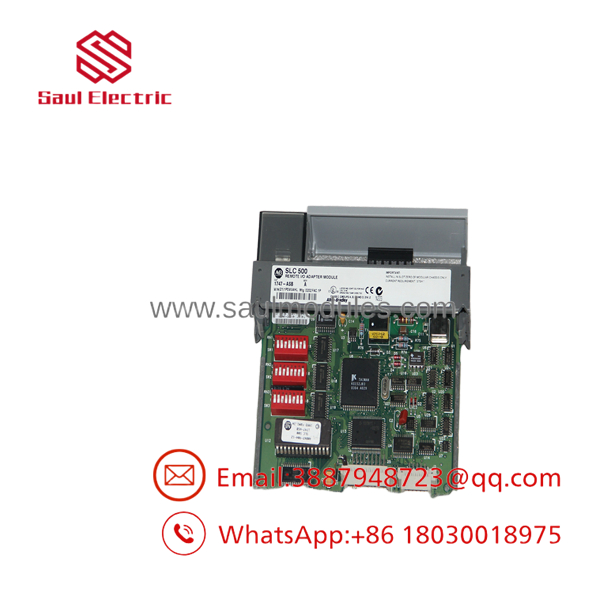
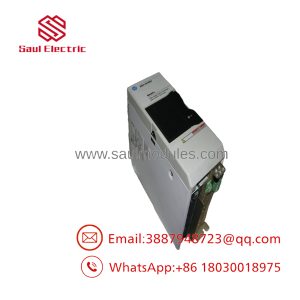
- 1747-ASB
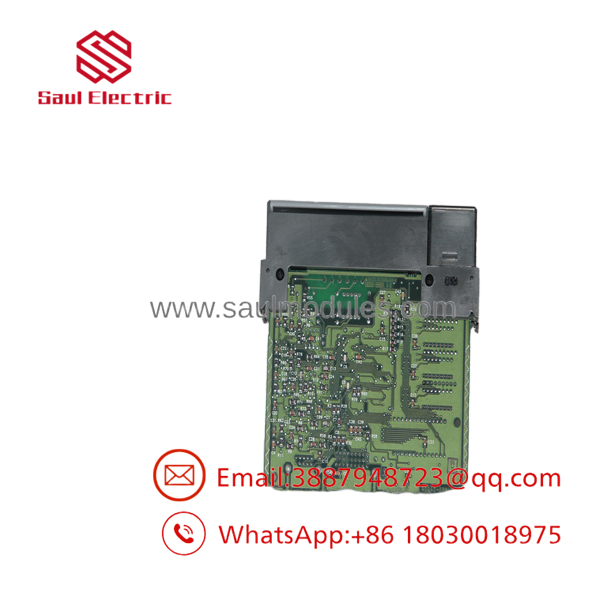
- 1747-ASB
Transparency SOP: QA & Testing
- DIP Switch & Board Inspection: Checking DIP switch bank contacts, verifying backplane connector gold fingers, and auditing onboard termination resistor circuits.
- Network Physical Layer Test: Powering the module in slot 0 of an active test rack and verifying signal transmission across all three standard RIO baud rates (57.6k, 115.2k, 230.4k baud).
- Scanner Handshake & Data Transfer: Interfacing the 1747-ASB with an active 1747-SN scanner module and exchanging test I/O data words to ensure zero packet drop or CRC frame errors.
- Thermal Burn-In: Running continuous RIO scanner polling cycles across digital and analog I/O modules in a thermal chamber for 12 hours.
The Veteran’s Tech Trap Guide
- ⚠️ DIP Switch Matching Required: The 1747-ASB reads its network address, baud rate, rack size, and starting group configuration from physical DIP switch banks on the printed circuit board. If you do not mirror the exact switch positions from the old module to the replacement card before powering up, the scanner will report a rack fault or map I/O data into incorrect controller addresses.
- PRO TIP: Blue Hose Termination Resistors: A classic mistake on RIO networks is leaving end-of-line termination resistors missing or incorrectly sized. Ensure a proper termination resistor (150 Ω for 57.6k/115.2k baud or 82 Ω for 230.4k baud) is installed across the blue hose terminals on the physically first and last nodes of the trunk cable.
- ⚠️ Slot 0 Placement Only: The 1747-ASB must strictly be installed in Slot 0 of the remote SLC 500 rack (where a CPU normally resides). Inserting it into any other slot will result in a backplane communication error and unpopulated remote rack scan files.
Dynamic FAQ
Q: Can I use a 1747-ASB to connect SLC 500 I/O to a PLC-5 or ControlLogix system?
A: Yes. The 1747-ASB speaks standard Allen-Bradley RIO protocol, allowing an SLC I/O rack to be scanned by a PLC-5 RIO port or a ControlLogix system equipped with a 1756-RIO scanner module.
Q: Does the 1747-ASB require external power?
A: No separate field power connector is required. The 1747-ASB draws its operating power (375 mA @ 5V DC) directly from the SLC chassis backplane power supply (e.g., 1746-P1, P2, or P4).
Q: What is the difference between 1-slot, 2-slot, and 1/2-slot addressing on the 1747-ASB?
A: Addressing modes dictate how I/O module words map into the controller’s image table relative to physical slot locations. DIP switches on the module determine which addressing mode is active for the chassis.
Q: Are replacement 1747-ASB modules verified for network communication prior to shipment?
A: Yes. Every unit undergoes live network testing on an active SLC 500 backplane linked to a 1747-SN scanner to guarantee baud-rate synchronization and error-free data transfer.

 Start Chat


