





Description
Product Introduction & Engineering Value
A ControlLogix system is only as reliable as the chassis carrying its modules. The 1756-A13 provides the mechanical structure, power distribution path, and high-speed communication backplane required for large-scale Logix automation systems. It is commonly installed in applications requiring multiple communication modules, redundant I/O networks, or distributed control architectures.
For plants maintaining existing ControlLogix installations, a spare chassis can reduce recovery time after cabinet damage, backplane faults, or system expansion projects. The 1756-A13 remains widely referenced in legacy and active ControlLogix environments because many industrial facilities continue operating mature 1756 hardware platforms.
Technical Specifications
| Specification | Details |
|---|---|
| Manufacturer | Allen-Bradley (Rockwell Automation) |
| Catalog Number | 1756-A13 |
| Product Family | ControlLogix 1756 Series |
| Chassis Type | Standard ControlLogix Chassis |
| Slot Count | 13 slots |
| Module Compatibility | ControlLogix 1756 modules |
| Backplane Communication | ControlLogix high-speed backplane |
| Power Supply Type | Requires separate 1756 power supply |
| Mounting Method | Horizontal panel mounting |
| Operating Temperature | 0–60 °C (32–140 °F) |
| Certifications | UL, CSA, CE (system dependent) |
| Application | Centralized and distributed Logix control systems |
The 1756-A13 chassis is part of the ControlLogix modular hardware family, providing 13 module positions for processors, communication cards, and I/O modules. The chassis requires an external 1756 power supply installed separately.
Field Application & The “Trench” Experience
A chemical manufacturing site operated a ControlLogix-based batch control system with multiple Ethernet/IP communication modules, analog I/O cards, and remote I/O interfaces. After years of operation, a cabinet cooling failure caused heat damage around the controller rack area.
The processor and I/O modules remained functional, but the chassis backplane showed signs of thermal stress. Instead of replacing the entire automation platform, the maintenance team installed a verified 1756-A13 chassis, transferred the existing modules, checked module addressing, and returned the batch system to operation.
Common application scenarios include:
- Batch Process Control Systems
Large ControlLogix racks containing processors, analog I/O, and communication modules. - Remote I/O Network Concentrators
Central chassis assemblies supporting EtherNet/IP, ControlNet, or DeviceNet interfaces. - Machine Automation Cells
Multi-module Logix systems requiring additional I/O and communication capacity.
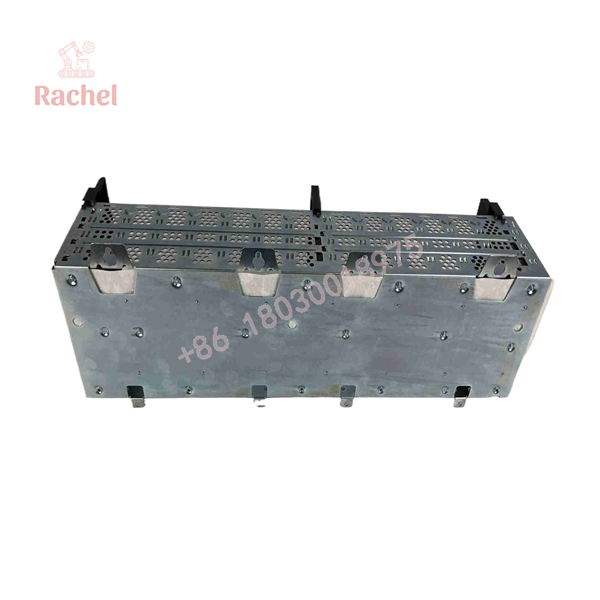
1756-A13
Transparency SOP: QA & Testing
A professional 1756-A13 inspection process includes:
1. Mechanical Inspection
- Verify catalog number and chassis markings.
- Inspect module slots and locking tabs.
- Check backplane connector condition.
- Confirm mounting hardware integrity.
2. Electrical Verification
- Inspect backplane contacts.
- Verify power supply connection points.
- Test module recognition with compatible ControlLogix hardware.
3. Final Preparation
- Protect connectors with ESD-safe packaging.
- Record chassis revision information.
- Document inspection results before shipment.
The Veteran’s Tech Trap Guide
⚠️ Do not forget the power supply rating.
The 1756-A13 is only the chassis. It does not include a power supply. The installed module combination determines the required 1756 power supply capacity.
⚠️ Backplane faults can look like module failures.
A damaged chassis can create communication errors, module dropouts, or intermittent controller faults that appear to be caused by individual I/O modules.
PRO TIP:
Before transferring modules into a replacement chassis, document the original slot arrangement. ControlLogix projects often rely on specific module locations, electronic keying settings, and communication paths.
⚠️ Check firmware compatibility after migration.
Although the chassis is passive hardware, installed ControlLogix modules may have firmware requirements that affect system startup behavior.
Dynamic FAQ
1. What is the Allen-Bradley 1756-A13 used for?
The 1756-A13 is a 13-slot ControlLogix chassis used to mount processors, communication modules, and I/O modules in Allen-Bradley Logix control systems.
2. Does the 1756-A13 include a power supply?
No. The chassis requires a separate 1756 power supply selected according to the installed module power requirements.
3. How many modules can be installed in the 1756-A13?
The chassis supports up to 13 ControlLogix modules.
4. Can the 1756-A13 replace other ControlLogix chassis models?
Yes, provided the application requires a 13-slot chassis and cabinet space, power budget, and system architecture are compatible.
5. What should be checked before replacing a 1756-A13?
Verify:
- Existing chassis model
- Installed module count
- Power supply capacity
- Cabinet dimensions
- ControlLogix firmware compatibility
6. Are New Surplus 1756-A13 chassis tested before shipment?
Qualified industrial suppliers typically inspect chassis condition, connector integrity, and mechanical functionality before shipment. Warranty coverage depends on supplier testing procedures and commercial terms.
7. Is the 1756-A13 still available from Rockwell Automation?
The availability of specific ControlLogix chassis models depends on lifecycle status and regional inventory. Many legacy chassis units are sourced through industrial surplus and refurbished channels.

 Start Chat


