





Description
Product Introduction & Engineering Value
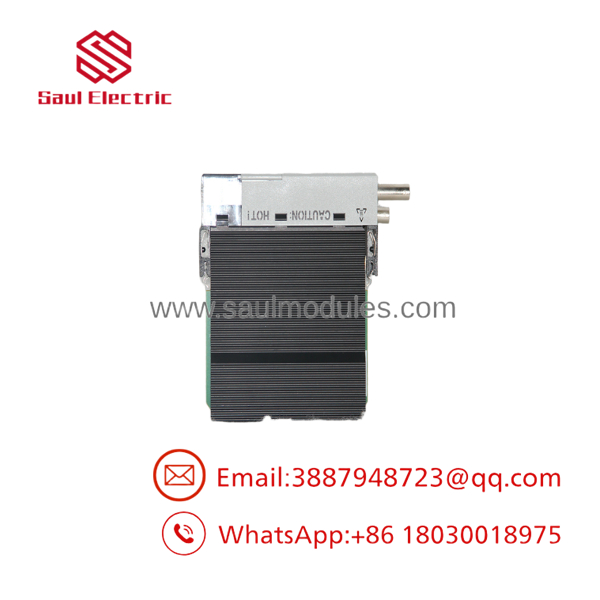
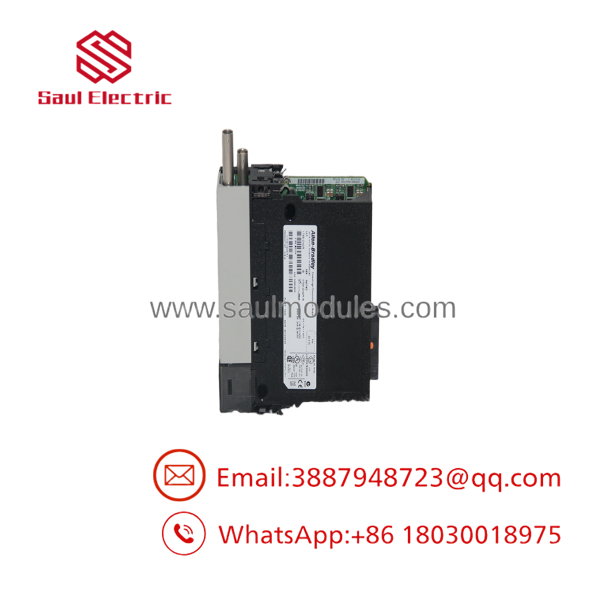
The Allen-Bradley 1756-CN2R is an enhanced performance, dual-media redundant ControlNet bridge module engineered for mission-critical ControlLogix applications. By offering dual BNC physical connectors (Channel A and Channel B), the 1756-CN2R maintains continuous, uninterrupted network transmission by automatically switching channels if a cable fault, signal attenuation, or physical break occurs on one media leg.
Compared to legacy standard-capacity modules (such as the 1756-CNBR), the 1756-CN2R features upgraded internal processing power and supports up to 128 CIP connections. This makes it the ideal interface card for large-scale distributed ControlLogix control networks, high-density I/O drops, redundant controller chassis architectures, and demanding process-safety environments where network downtime is not an option.
Technical Specifications
| Specification | Parameter Value |
| Protocol / Network | ControlNet (CIP over coax physical layer) |
| Media Redundancy | Dual RG-6 Coax BNC Ports (Channel A and Channel B) |
| Communication Rate | 5.0 Mbps (Deterministic) |
| CIP Connections | Up to 128 CIP Connections |
| Network Node Capacity | Up to 99 ControlNet nodes per trunkline |
| Backplane Current (5.1V DC) | 1.0 A (1000 mA) |
| Backplane Current (24V DC) | 3.0 mA |
| Power Dissipation | 5.1 Watts |
| Diagnostic Display | 4-character alphanumeric LED display & Status LEDs |
| Operating Temperature | 0°C to 60°C (32°F to 140°F) |
Field Application & The “Trench” Experience
In a continuous chemical treatment plant, a severed RG-6 coaxial cable on an outdoor cable tray damaged Channel A of an active ControlNet trunkline. Thanks to the 1756-CN2R’s media redundancy, network traffic instantly failed over to Channel B without dropping a single CIP connection or interrupting process logic.
During the next scheduled maintenance window, technicians swapped a failing bridge card with a bench-tested 1756-CN2R replacement module. By setting the front two rotary switches to match the existing network node address, inserting the card into the chassis slot, and attaching both BNC connectors, the bridge rejoined the ControlNet scheduled network automatically upon power-up—restoring full redundant channel health within minutes.
- Mission-Critical Process Redundancy: Pairing with redundant ControlLogix controller chassis pairs (1756-RM2 / L7x) for zero-downtime process control.
- High-Density Remote I/O Drops: Transferring scheduled I/O data between central ControlLogix CPUs and remote 1756 or 1794 Flex I/O racks.
- Deterministic Controller-to-Controller Interlocking: Managing precise, repeatable peer-to-peer interlocks across complex manufacturing lines without Ethernet jitter.
Transparency SOP: QA & Testing
- Dual BNC Connector & Hardware Inspection: Inspecting both Channel A and Channel B coax connectors, front-panel rotary node switches, status LEDs, and backplane gold edge contacts.
- Dual-Channel Media Failover Test: Placing the 1756-CN2R into an active ControlNet network loop with two physical cable paths; disconnecting Channel A while actively transmitting scheduled I/O to confirm seamless failover to Channel B.
- 128 Connection Load & RSNetWorx Audit: Polling the module under heavy CIP connection loads using RSNetWorx for ControlNet to verify keeper schedule loading and memory integrity.
- Thermal Chamber Burn-In: Running full-speed packet communication in an environmental test chamber at 60°C for 12 hours under load while monitoring backplane current draw and transceiver stability.
- 1756-
- 1756-
The Veteran’s Tech Trap Guide
- ⚠️ Matching Hardware Rotary Node Address Switches: The 1756- uses two physical rotary switches on top of the module to set its decimal ControlNet node address (01 to 99). Before inserting a replacement card into a live rack, ensure these rotary switches are set to match the exact node address of the card being replaced. Inserting a card with an incorrect node address will cause network configuration errors or duplicate node conflicts.
- PRO TIP: Upgrading from 1756-CNBR to 1756-: The 1756- is a direct drop-in replacement for older 1756-CNB and 1756-CNBR modules. However, because the supports double the connection capacity (128 vs 64 CIP connections), update the module type in your RSLogix 5000 / Studio 5000 I/O tree to
1756-to unlock the expanded connection limits and diagnostic features. - ⚠️ ControlNet Network Schedule Rescheduling: If you only swap a defective 1756- with a new one set to the same node address, the network will run normally using the existing schedule stored in the network Keeper. However, if you add new scheduled connections or change NUT (Network Update Time) parameters, you must re-run RSNetWorx for ControlNet to save and lock the updated network schedule.
Dynamic FAQ
Q: What is the difference between the 1756-CN2 and the 1756-?
A: The 1756-CN2 features a single BNC connector for non-redundant ControlNet networks, while the features dual BNC connectors (Channel A and Channel B) for media-redundant ControlNet network architectures.
Q: Can I run a 1756- on a single coaxial cable if I don’t use redundancy?
A: Yes. You can connect a single ControlNet coax cable to Channel A. The module will function normally, though the Channel B status LED will indicate that the secondary media link is offline or disconnected.
Q: Do I need special tools to adjust the node address on a 1756-?
A: No. The front/top of the module features two standard small rotary switches (tens and ones digit) that can be adjusted using a small flathead screwdriver.
Q: Are replacement 1756- modules fully bench-tested before shipping?
A: Yes. Every 1756- card undergoes dual-channel BNC failover testing, active RSNetWorx schedule sync verification, 128-connection stress testing, and thermal burn-in on a live ControlLogix test bench.

 Start Chat


