





Description
Product Introduction
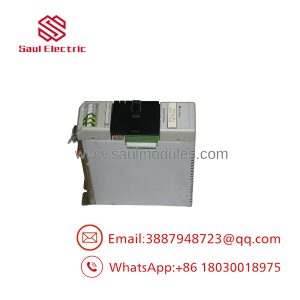
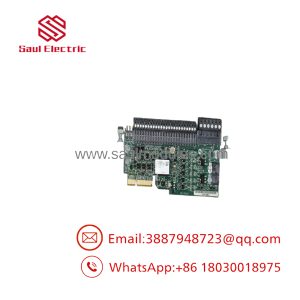
The Allen-Bradley 1756-CNB is a ControlLogix communication module that provides a bridge between the ControlLogix backplane and a ControlNet network. It allows ControlLogix controllers to exchange data with remote I/O chassis, drives, PLC controllers, and other ControlNet-compatible devices. The module uses a single ControlNet BNC connection and supports scheduled and unscheduled communication.
In our field experience, the 1756-CNB remains common in older ControlLogix installations where ControlNet was selected for deterministic I/O communication. It is no longer a preferred choice for new designs, but many production systems still depend on it. The main replacement path is the newer 1756-CN2 family, which requires engineering review before migration.
Key Technical Specifications
| Parameter | Value |
|---|---|
| Manufacturer | Allen-Bradley / Rockwell Automation |
| Catalog Number | 1756-CNB |
| Product Family | ControlLogix |
| Module Type | ControlNet Bridge Module |
| Communication Protocol | ControlNet |
| ControlNet Port | 1 × BNC Connector |
| NAP Port | 1 × RJ45 Network Access Port |
| Communication Speed | 5 Mbps |
| Maximum Nodes Supported | 99 ControlNet nodes |
| Maximum Connections | 64 connections |
| Logix Communication Connections | 40–48 range |
| ControlNet Cable Type | 1786-RG6 Quad Shield Coaxial Cable |
| Slot Width | 1 Slot |
| Backplane Current Draw | 970 mA @ 5.1 VDC / 1.7 mA @ 24 VDC |
| Power Dissipation | 5.1 W |
| Operating Temperature | 0°C to +60°C |
| Mounting | ControlLogix chassis, any slot |
| Compatible Software | RSLogix 5000 / Studio 5000 Logix Designer |
| Lifecycle Status | Discontinued December 31, 2024 |
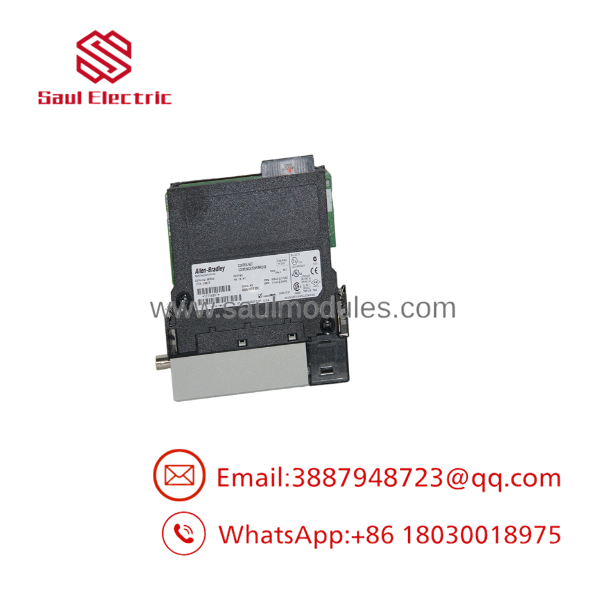
- 1756-CNB
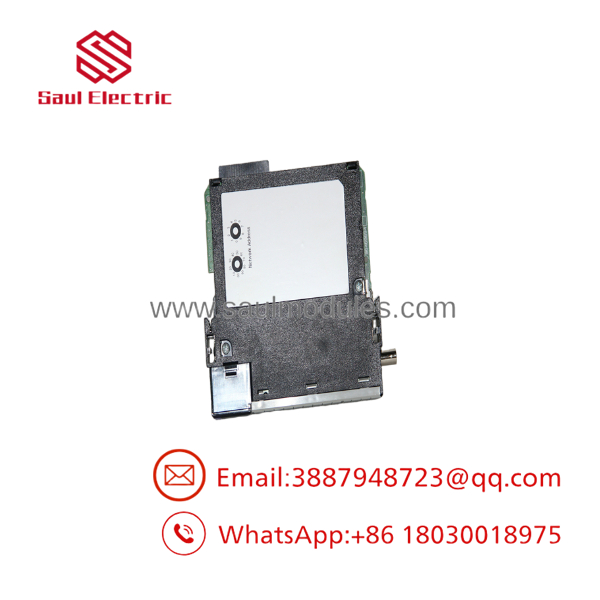
- 1756-CNB
Application Scenarios & The “Trench” Experience
A familiar maintenance call:
“The PLC is running, but the remote racks disappeared.”
The controller is healthy. The I/O modules are healthy. The fault points to communication.
Someone swaps the processor first.
Wrong move.
With ControlNet systems, the communication module, coax network, taps, terminators, and scheduled network configuration all need to be checked.
The 1756-CNB sits right in the middle of that architecture.
Typical applications include:
- Automotive Manufacturing – Remote ControlLogix I/O racks and robotic cells – The 1756-CNB provides deterministic ControlNet communication for distributed control systems.
- Process Automation – Chemical, water, and utility systems – Used where predictable network timing matters for analog and discrete control.
- Material Handling – Conveyor systems and sorting equipment – Connects remote chassis installed across large facilities.
- Power Generation – Auxiliary control systems – Supports legacy ControlNet networks connecting monitoring and control equipment.
- OEM Machinery – Large automated equipment – Maintains existing ControlNet-based designs without redesigning validated software.
Field Case
A packaging facility experienced intermittent remote I/O faults on a ControlLogix system using multiple 1756-CNB modules.
The first replacement module did not solve the issue.
The problem was traced to the ControlNet network schedule. The replacement module had different configuration information, and the network required rescheduling through RSNetWorx for ControlNet.
After downloading the correct schedule and verifying node configuration, the system returned to normal operation.
The hardware was fine. The network configuration was the issue.
Transparency SOP: Quality Assurance & Testing
We don’t just ship boxes; we test them on actual Allen-Bradley ControlLogix racks.
- Inbound Inspection
- Verify Allen-Bradley label, catalog number, series, and hardware revision.
- Inspect ControlNet BNC connector, NAP port, and chassis contacts.
- Check for corrosion, damaged housings, or unauthorized repairs.
- Live Rack Testing
- Install module in a ControlLogix chassis.
- Verify controller recognition through Studio 5000.
- Establish ControlNet communication with test nodes.
- Confirm network status indicators.
- Electrical Parameter Checks
- Measure backplane current consumption.
- Verify stable module operation.
- Check communication diagnostics and LED status.
- Firmware Verification
- Record exact firmware revision.
- Confirm compatibility with existing ControlNet schedules.
- Verify module identity information.
- Final QC & Anti-static Packaging
- Complete functional communication testing.
- Protect BNC and backplane connections.
- Package with anti-static protection.
The Veteran’s Tech Trap Guide
⚠️ Do not replace a 1756-CNB and assume the network will immediately run. ControlNet is scheduled communication. Some replacements require network verification or rescheduling using RSNetWorx for ControlNet.
❗ Check the firmware revision before installation. Older ControlNet modules may not behave exactly the same across firmware versions.
⚠️ Do not ignore the coax network. A bad tap, loose BNC connection, incorrect terminator, or damaged 1786-RG6 cable can look like a failed communication module.
⚠️ Do not confuse 1756-CNB with 1756-CNBR. The CNBR version supports ControlNet redundancy features. The standard CNB does not.
❗ Save the existing network file before replacement. Losing the ControlNet schedule can turn a quick module swap into a longer recovery.
Take screenshots of RSNetWorx settings before removing the old module. Five minutes of documentation can save an entire shift.
Frequently Asked Questions (FAQ)
Q1. What is the Allen-Bradley 1756-CNB used for?
The 1756-CNB is a ControlLogix ControlNet Bridge Module used to connect a ControlLogix chassis to a ControlNet network for communication with remote I/O and other ControlNet devices.
Q2. What is the difference between 1756-CNB and 1756-CNBR?
The standard 1756-CNB provides ControlNet communication through one ControlNet channel. The 1756-CNBR adds ControlNet redundancy capability using redundant network paths.
Q3. Does the 1756-CNB support EtherNet/IP?
No. The 1756-CNB is a ControlNet module. EtherNet/IP communication requires a different module family such as the 1756-ENBT, 1756-EN2T, or newer Ethernet modules.
Q4. Is the 1756-CNB still manufactured?
No. Rockwell Automation discontinued the 1756-CNB effective December 31, 2024. The listed engineering replacement is the 1756-CN2 family. Migration should be reviewed because ControlNet network design and configuration may require changes.
Q5. Can the 1756-CNB be hot-swapped?
ControlLogix supports certain energized module replacement procedures, but communication module replacement should follow Rockwell Automation guidelines. Verify the system design before removing an active module.
Q6. Why is a surplus 1756-CNB cheaper than buying directly from Rockwell?
The module is discontinued, so available units usually come from industrial surplus channels, spare inventory, and equipment retirement programs. The important factor is testing history, firmware verification, and communication testing.
Q7. Can I replace a 1756-CNB directly with a 1756-CN2?
Not always. The replacement requires checking firmware compatibility, ControlNet configuration, Studio 5000 project settings, and network scheduling requirements.
Q8. What warranty is typically provided?
Qualified automation suppliers commonly provide a 12-month warranty on tested new surplus and refurbished 1756-CNB modules. Warranty terms should be confirmed before purchase.

 Start Chat


