





Description
Product Introduction
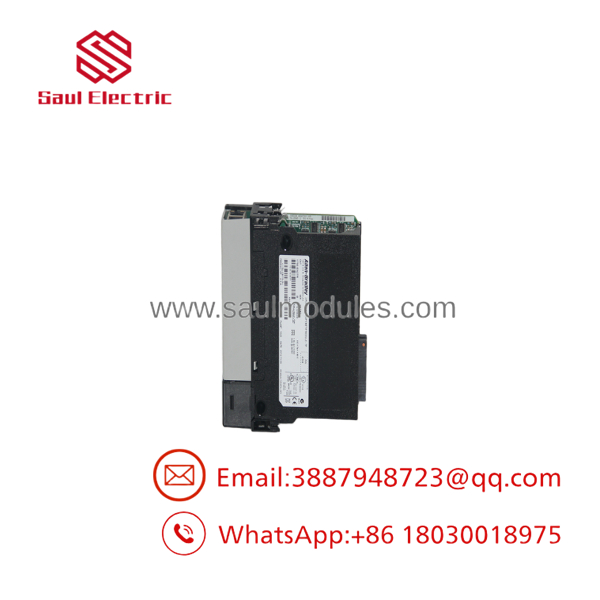
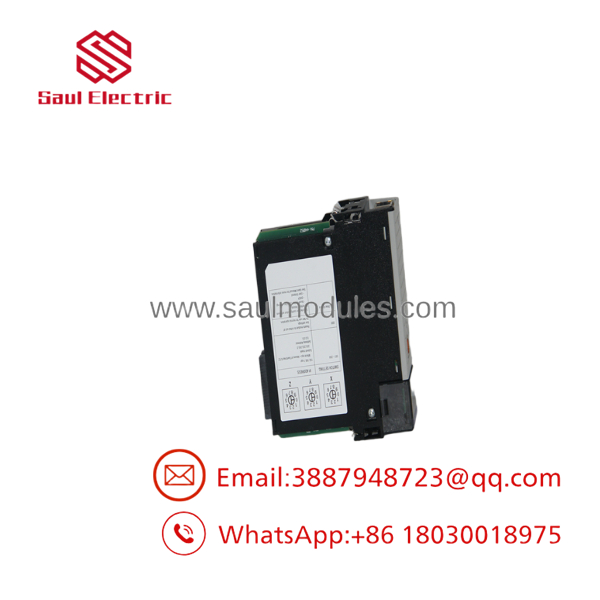
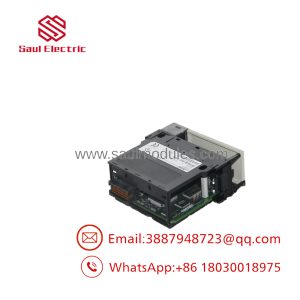
The Allen-Bradley 1756-EN2TR is a ControlLogix EtherNet/IP communication module designed for industrial Ethernet applications requiring network redundancy capability. It provides two copper RJ45 Ethernet ports and enables communication between ControlLogix controllers, remote I/O racks, HMIs, drives, and other EtherNet/IP devices.
In our field experience, the 1756-EN2TR is commonly installed in production systems where a communication failure creates a direct production risk. It supports higher availability architectures compared with standard single-port Ethernet modules, but it does not fix poor network design. Switch configuration, topology, IP management, and firmware alignment still determine system behavior.
Key Technical Specifications
| Parameter | Value |
|---|---|
| Manufacturer | Allen-Bradley / Rockwell Automation |
| Catalog Number | 1756-EN2TR |
| Product Family | ControlLogix |
| Module Type | EtherNet/IP Communication Module |
| Communication Protocol | EtherNet/IP |
| Ethernet Ports | 2 × RJ45 Copper Ports |
| Ethernet Speed | 10/100 Mbps |
| Ethernet Standard | IEEE 802.3 |
| Network Redundancy | Supported |
| TCP Connections | 128 maximum |
| CIP Connections | 256 maximum |
| CIP Unconnected Messages | 128 + 128 (Backplane + Ethernet) |
| Cable Type | Category 5 Ethernet Cable |
| Slot Requirement | 1 ControlLogix Slot |
| Backplane Current Draw | 1 A @ 5.1 VDC, 3 mA @ 24 VDC |
| Power Dissipation | 5.1 W |
| Ethernet-to-Backplane Isolation | 30 V continuous |
| Operating Temperature | 0°C to +60°C |
| Mounting | ControlLogix Chassis |
| Software Support | Studio 5000 Logix Designer |
Application Scenarios & The “Trench” Experience
A control room operator reports:
“The PLC is running, but half the plant network disappeared.”
The controller is still executing logic. Field devices are powered. The problem is communication.
Engineers often start replacing I/O modules.
Wrong target.
A ControlLogix Ethernet architecture depends on many pieces working together: communication modules, managed switches, fiber or copper links, IP addressing, and network topology.
The 1756-EN2TR is used where communication availability matters.
Typical applications include:
- Automotive Manufacturing – Robotic production cells – The module supports Ethernet communication between controllers, remote I/O, safety devices, and HMIs where downtime affects production schedules.
- Process Industries – Continuous process control systems – Used for controller communication, SCADA integration, and distributed I/O architectures.
- Power Generation – Plant auxiliary control systems – Provides Ethernet connectivity where communication interruptions require fast recovery planning.
- Water Treatment – Remote station automation – Connects ControlLogix systems with geographically distributed Ethernet devices.
- OEM Machinery – High-availability machine platforms – Allows machine builders to design Ethernet architectures with redundancy considerations.
Field Case
A chemical processing facility had a ControlLogix system controlling a critical production skid. The existing network used a 1756-EN2TR communication module connected through redundant Ethernet paths.
During maintenance, one network path failed.
Production continued.
The failure investigation found a damaged Ethernet cable caused by cabinet work nearby. Because the communication architecture had been designed with redundancy, the plant avoided an immediate shutdown.
The important point: redundancy reduces the impact of a single communication failure. It does not replace proper maintenance practices.
- 1756-EN2TR
Transparency SOP: Quality Assurance & Testing
We don’t just ship boxes; we test them on actual Allen-Bradley ControlLogix racks.
- Inbound Inspection
- Verify Allen-Bradley label, catalog number, series, and hardware revision.
- Inspect both RJ45 Ethernet ports and backplane connector.
- Check for damaged housings, corrosion, or counterfeit markings.
- Live Rack Testing
- Install module in a ControlLogix chassis.
- Verify module recognition through Studio 5000 Logix Designer.
- Configure test IP addresses.
- Confirm Ethernet communication through both ports.
- Electrical Parameter Checks
- Measure backplane current consumption.
- Verify Ethernet link status.
- Check diagnostic LED operation.
- Confirm stable communication under load.
- Firmware Verification
- Record exact firmware revision.
- Verify Add-On Profile compatibility.
- Confirm compatibility with existing Logix projects.
- Final QC & Anti-static Packaging
- Complete communication testing.
- Protect Ethernet connectors.
- Package using anti-static materials.
The Veteran’s Tech Trap Guide
⚠️ Do not confuse 1756- with 1756-EN2T. They look similar, but the includes two Ethernet ports and redundancy capability. Verify the exact catalog number before installation.
❗ Save the old IP configuration before removal. A replacement module with the wrong IP address can create duplicate address faults across the plant network.
⚠️ Check firmware compatibility. A module may physically install correctly but fail to communicate if the Studio 5000 project expects a different firmware revision.
⚠️ Do not assume redundancy is active because two cables are connected. The network architecture, switch configuration, and controller setup must support the intended redundancy method.
⚠️ Check managed switch settings. VLANs, IGMP settings, port configuration, and ring settings can create communication problems that appear to be module failures.
Take screenshots of the Ethernet module properties before pulling the old card. Trust me. Those screenshots save hours during emergency replacement work.
Frequently Asked Questions (FAQ)
Q1. What is the Allen-Bradley 1756-?
The is a ControlLogix EtherNet/IP communication module with dual Ethernet ports designed for industrial communication applications requiring higher network availability.
Q2. What is the difference between 1756-EN2T and 1756-?
The main difference is Ethernet redundancy capability. The 1756-EN2T uses a single Ethernet port, while the provides two RJ45 Ethernet ports and supports redundancy applications.
Q3. Does the 1756- support EtherNet/IP I/O communication?
Yes. It supports EtherNet/IP communication for ControlLogix systems, including controller messaging and I/O communication applications.
Q4. Can the 1756- replace a 1756-ENBT?
It may replace some 1756-ENBT applications, but the migration requires checking firmware, Studio 5000 configuration, IP settings, and network design.
Q5. Does the 1756- support hot swapping?
ControlLogix supports certain module replacement procedures, but the correct method depends on the application design and system requirements. Follow Rockwell Automation installation procedures before removing an active module.
Q6. Why is a surplus 1756- cheaper than buying directly from Rockwell Automation?
Industrial surplus units usually come from excess plant inventory, spare parts programs, system upgrades, and equipment retirement stock. The important factor is documented testing and verification.
Q7. Is the 1756- still available?
Yes. Rockwell Automation currently lists the 1756- ControlLogix EtherNet/IP communication module as an available product.
Q8. What warranty is typically provided?
Qualified automation suppliers commonly provide a 12-month warranty on tested new surplus and refurbished 1756- modules. Warranty coverage should be confirmed before purchase. Rockwell Automation lists a standard one-year warranty for this product.

 Start Chat


