





Description
Product Introduction
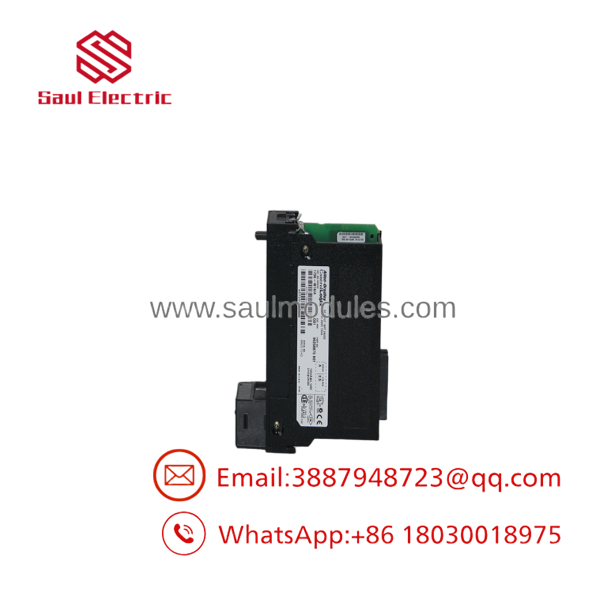
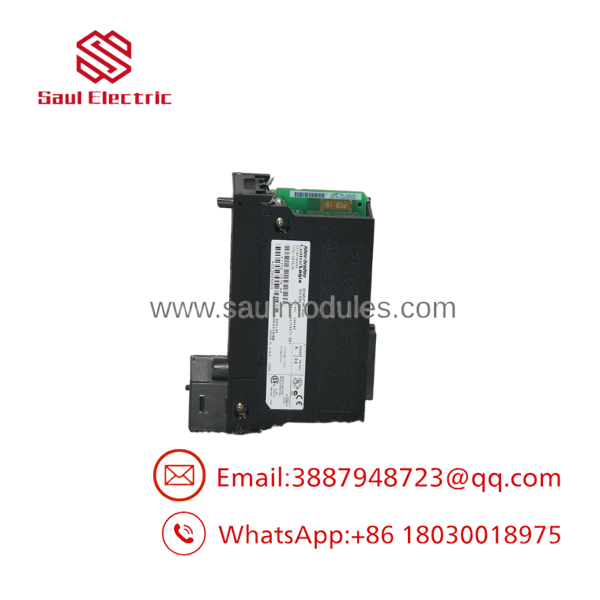
The Allen-Bradley 1756-IB16 is a ControlLogix 16-point DC digital input module designed to interface field devices such as proximity sensors, limit switches, pushbuttons, and auxiliary contacts with ControlLogix processors. It accepts 12/24VDC input signals across 16 channels and installs into a standard 1756 ControlLogix chassis.
In field applications, the 1756-IB16 is widely used because it provides a high-density input solution without consuming multiple chassis slots. The important detail is signal compatibility. This module is designed for DC discrete sensing, not analog measurement or high-speed pulse counting. Verify sensor type, polarity, and wiring before installation.
Key Technical Specifications
| Parameter | Value |
|---|---|
| Manufacturer | Allen-Bradley / Rockwell Automation |
| Catalog Number | 1756-IB16 |
| Product Family | ControlLogix |
| Module Type | Digital DC Input Module |
| Number of Inputs | 16 points |
| Input Voltage Range | 10–31.2 VDC |
| Nominal Input Voltage | 12/24 VDC |
| Input Type | DC Sinking Input |
| Input Grouping | 8 points per group |
| Input Current | 2 mA minimum @ 10 VDC / 10 mA maximum @ 31.2 VDC |
| Maximum Off-State Current | 1.5 mA |
| Input Delay OFF to ON | 290 µs typical, 1 ms maximum + filter |
| Input Delay ON to OFF | 700 µs typical, 2 ms maximum + filter |
| Isolation Voltage | 250 V continuous |
| Backplane Current | 120 mA @ 5.1 VDC / 2 mA @ 24 VDC |
| Maximum Power Dissipation | 5.1 W @ 60°C |
| Terminal Block Compatibility | 1756-TBCH / 1756-TBSH |
| Slot Requirement | 1 ControlLogix slot |
| Operating Temperature | 0°C to +60°C |
| Lifecycle Status | Active |
Application Scenarios & The “Trench” Experience
A machine stops.
The HMI shows a sensor fault. The operator says, “The sensor is good. We replaced it yesterday.”
The PLC input light is OFF.
Now the troubleshooting starts.
With digital input modules like the 1756-IB16, the fault can come from several places: field wiring, sensor power supply, common reference, terminal block connection, or the actual input channel.
The module is only one part of the circuit.
Typical applications include:
- Automotive Manufacturing – Fixture position sensing – The 1756-IB16 reads clamp switches, proximity sensors, and part-present detection signals in ControlLogix systems.
- Packaging Equipment – Machine sequence feedback – Used for photoeyes, cylinder reed switches, and safety relay status monitoring.
- Water Treatment – Pump and valve status monitoring – Collects discrete feedback signals from field equipment.
- Material Handling – Conveyor control – Monitors limit switches, jam sensors, and equipment status contacts.
- OEM Machinery – Automated equipment panels – Provides compact 16-channel DC input handling in standardized ControlLogix designs.
Field Case
A bottling facility experienced intermittent conveyor stops. Operators reported that a carton sensor would randomly disappear from the PLC input table.
The maintenance team replaced the sensor twice.
The problem remained.
During troubleshooting, technicians discovered a loose terminal connection at the 1756-IB16 removable terminal block. Vibration from the conveyor frame had slowly loosened the connection.
The input module was working correctly. The wiring was not.
Transparency SOP: Quality Assurance & Testing
We don’t just ship boxes; we test them on actual Allen-Bradley ControlLogix racks.
- Inbound Inspection
- Verify Allen-Bradley label, catalog number, series, and hardware revision.
- Inspect terminal block interface and chassis connector.
- Check for corrosion, damaged pins, or unauthorized repairs.
- Live Rack Testing
- Install module in a ControlLogix chassis.
- Verify module recognition through Studio 5000 Logix Designer.
- Apply simulated 12/24VDC input signals to all channels.
- Confirm input status indication and controller data updates.
- Electrical Parameter Checks
- Verify input threshold response.
- Test channel activation and dropout behavior.
- Check backplane current consumption.
- Firmware Verification
- Record exact firmware revision.
- Confirm Add-On Profile compatibility.
- Verify module identification data.
- Final QC & Anti-static Packaging
- Complete input channel testing.
- Protect backplane contacts from ESD.
- Package using anti-static materials.
The Veteran’s Tech Trap Guide
⚠️ Do not wire this like an output module. The 1756- is an input device. Confirm sensor polarity and current flow before connecting field wiring.
❗ Check the sensor type first. A PNP/NPN mismatch is one of the most common causes of “bad input card” complaints.
⚠️ Do not forget the removable terminal block. The module and RTB are separate components. Verify whether your spare includes the correct 20-pin terminal block.
⚠️ Check input filter settings in Studio 5000. A slow filter setting can make a fast sensor appear unreliable.
⚠️ Inspect the common terminals carefully. A loose DC common connection can make multiple input channels fail at once.
Take a photo of the old terminal block wiring before removing it. Trust me. A clear picture beats guessing from old drawings.
Frequently Asked Questions (FAQ)
Q1. What is the Allen-Bradley 1756-?
The is a ControlLogix 16-point 12/24VDC digital input module used to collect discrete field signals from industrial devices.
Q2. What voltage does the 1756- support?
The module accepts 10–31.2 VDC input signals, commonly used with 12VDC and 24VDC industrial sensors and switches.
Q3. Is the 1756- compatible with ControlNet and EtherNet/IP systems?
Yes. The module installs in a ControlLogix chassis and communicates with the controller through the ControlLogix backplane. The communication network depends on the separate ControlLogix communication module used in the system.
Q4. Can the 1756- replace a 1756-IA16?
No. The is a DC input module. The 1756-IA16 is designed for AC input applications. Verify field voltage before substitution.
Q5. Does the 1756- support high-speed counting?
No. It is a standard digital input module. Applications requiring precise high-frequency pulse measurement should use a dedicated high-speed counter module.
Q6. Can the 1756- be hot-swapped?
ControlLogix supports removal and insertion under specific conditions, but the correct procedure depends on the chassis configuration and application requirements. Follow Rockwell Automation procedures before removing an energized module.
Q7. Why is a surplus 1756- cheaper than buying directly from Rockwell Automation?
Industrial surplus units typically come from excess inventory, plant spare stock, system upgrades, and equipment retirement programs. The key factor is functional testing and verification, not only the external appearance.
Q8. What warranty is typically provided?
Qualified automation suppliers commonly provide a 12-month warranty on tested new surplus and refurbished 1756- modules. Rockwell Automation lists a standard one-year warranty for this product.

 Start Chat


