





Description
Product Introduction
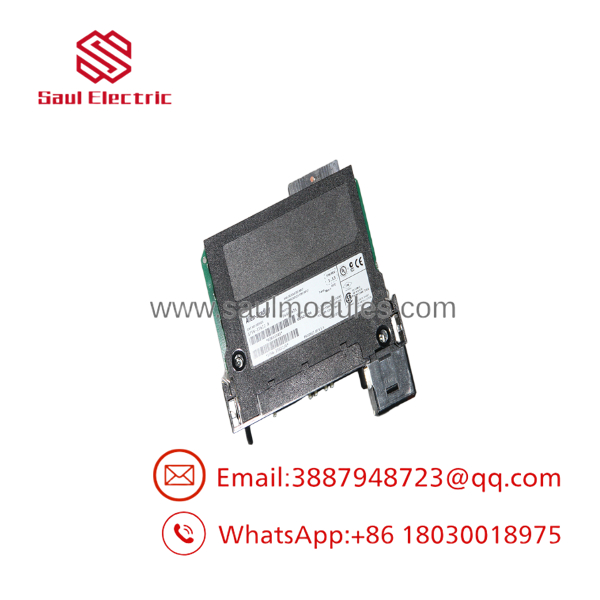
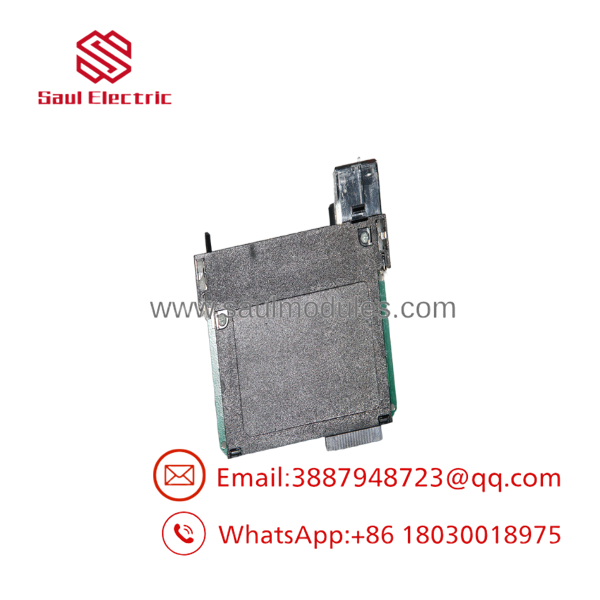
The Allen-Bradley 1756-IT6I2 is a ControlLogix enhanced isolated thermocouple input module designed for temperature measurement applications requiring individual channel isolation. It accepts thermocouple and millivolt signals from industrial temperature sensors used in process control, heating systems, and equipment monitoring applications.
In real plant environments, the 1756-IT6I2 is selected when standard analog inputs are not suitable for thermocouple measurement. The isolated channels help reduce problems caused by different ground references and electrical interference. However, this module is discontinued, so engineers should verify spare availability, firmware compatibility, and possible migration options before committing to long-term deployment.
Key Technical Specifications
| Parameter | Value |
|---|---|
| Manufacturer | Allen-Bradley / Rockwell Automation |
| Catalog Number | 1756-IT6I2 |
| Product Family | ControlLogix |
| Module Type | Enhanced Isolated Thermocouple Input Module |
| Number of Inputs | 6 isolated thermocouple inputs |
| Cold Junction Compensation | 2 CJC sensors |
| Input Signal Range | -12 to 78mV / -12 to 30mV |
| Input Resolution | 16-bit signed |
| Supported Thermocouple Types | B, C, D, E, J, K, L, N, R, S, T |
| Input Isolation | 250V continuous |
| Terminal Block | 20-pin removable terminal block |
| Compatible RTB | 1756-TBNH / 1756-TBSH |
| Data Format | Integer / Engineering Units |
| Backplane Current Draw | Approx. 200mA @ 5.1VDC |
| 24VDC Backplane Current | Approx. 120mA |
| Maximum Power Dissipation | Approx. 3.9W |
| Slot Requirement | 1 ControlLogix chassis slot |
| Configuration Software | RSLogix 5000 / Studio 5000 Logix Designer |
| Operating Temperature | 0°C to +60°C |
| Lifecycle Status | Discontinued |
Application Scenarios & The “Trench” Experience
The maintenance call sounds simple:
“The furnace temperature looks wrong, but the thermocouple was replaced.”
That statement usually starts a longer investigation.
Temperature measurement problems rarely come from one place. Sensor type, extension wire, cold junction compensation, grounding, configuration, and scaling all affect the final PLC value.
The 1756-IT6I2 was built for these demanding temperature measurement tasks.
Typical applications include:
- Heat Treatment – Furnace temperature monitoring – The module reads thermocouple signals from heating zones where temperature accuracy affects product quality.
- Chemical Processing – Reactor temperature control – Provides isolated thermocouple measurement for process vessels and thermal systems.
- Power Generation – Boiler and turbine auxiliary monitoring – Collects high-temperature measurement signals from critical equipment.
- Plastics Manufacturing – Extrusion temperature control – Handles multiple thermocouple inputs from heating barrels and dies.
- OEM Industrial Equipment – Multi-zone thermal systems – Provides compact temperature acquisition in ControlLogix platforms.
Field Case
A metal processing facility had intermittent temperature spikes on several furnace zones.
The operators blamed the thermocouples.
The maintenance team replaced sensors and extension cables. The issue continued.
During troubleshooting, engineers found that multiple temperature channels shared a noisy electrical reference. The original standard input design could not handle the installation conditions.
The plant changed the affected measurement points to isolated thermocouple inputs using the 1756-IT6I2.
The false temperature alarms stopped.
The lesson was clear: the sensor was not always the failure point. Signal architecture matters.
Transparency SOP: Quality Assurance & Testing
We don’t just ship boxes; we test them on actual Allen-Bradley ControlLogix racks.
- Inbound Inspection
- Verify Allen-Bradley label, catalog number, series, and hardware revision.
- Inspect thermocouple terminal connections and backplane contacts.
- Check for corrosion, damaged pins, or unauthorized repairs.
- Live Rack Testing
- Install module into a ControlLogix chassis.
- Verify module recognition through RSLogix 5000 / Studio 5000.
- Configure thermocouple channel types.
- Apply simulated millivolt temperature signals.
- Electrical Parameter Checks
- Verify thermocouple measurement response.
- Test channel isolation behavior.
- Confirm cold junction compensation operation.
- Firmware Verification
- Record exact firmware revision.
- Verify compatibility with existing Logix projects.
- Confirm module configuration profile.
- Final QC & Anti-static Packaging
- Complete channel-by-channel temperature testing.
- Protect terminal block and backplane connector.
- Package using anti-static materials.
- 1756-IT6I2
The Veteran’s Tech Trap Guide
⚠️ Do not replace this module with a standard analog input card. A thermocouple signal is a millivolt-level signal. It is not the same as a 4-20mA transmitter.
❗ Verify the thermocouple type in the project. A Type J sensor configured as Type K will produce believable but incorrect temperature values.
⚠️ Check extension wire material. Thermocouple circuits require matching extension cable. Standard copper wire can create measurement errors.
⚠️ Do not ignore cold junction compensation. Incorrect CJC configuration can shift readings across all temperature channels.
⚠️ Check firmware before replacement. Older ControlLogix temperature modules can have compatibility issues with newer RSLogix 5000 or Studio 5000 projects.
Take a picture of the thermocouple wiring before removing the module. Trust me. Six temperature channels with similar-colored wires are easy to mix up during a shutdown.
Frequently Asked Questions (FAQ)
Q1. What is the Allen-Bradley 1756-?
The is a ControlLogix 6-channel enhanced isolated thermocouple input module designed for temperature measurement using thermocouple and millivolt signals.
Q2. What thermocouple types are supported by the 1756-?
The module supports common thermocouple types including:
- Type B
- Type C
- Type D
- Type E
- Type J
- Type K
- Type L
- Type N
- Type R
- Type S
- Type T
Q3. What is the difference between 1756-IT6I and 1756-?
Both are isolated thermocouple input modules. The is the enhanced version with updated functionality and compatibility improvements compared with the earlier 1756-IT6I.
Q4. Does the 1756- provide channel isolation?
Yes. The module provides isolated thermocouple inputs with 250V continuous isolation between specified circuits.
Q5. Can the 1756- measure RTD sensors?
No. This module is designed for thermocouple and millivolt input signals. RTD applications require a dedicated RTD input module.
Q6. Is the 1756- still manufactured?
No. Rockwell Automation lists the 1756- as discontinued. Replacement planning should consider newer ControlLogix temperature input solutions or migration paths.
Q7. Can the 1756- be hot-swapped?
ControlLogix supports certain module replacement procedures, but temperature input modules should only be removed according to approved plant procedures. Removing live I/O without proper planning can interrupt process monitoring.
Q8. Why is a surplus 1756- cheaper than buying directly from Rockwell Automation?
Because it is a discontinued module. Available units usually come from industrial surplus inventory, spare parts programs, and retired equipment systems. The important factor is verification testing and condition records.
Q9. What warranty is typically provided?
Qualified automation suppliers commonly provide a 12-month warranty on tested new surplus and refurbished 1756- modules. Rockwell Automation lists a standard one-year warranty period for this product.

 Start Chat


