





Description
Product Introduction & Engineering Value
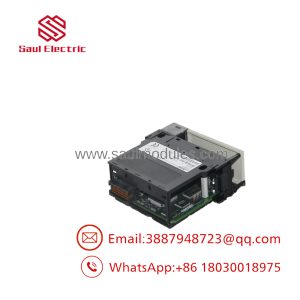
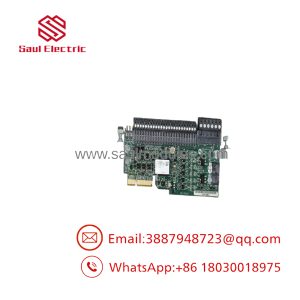
The Allen-Bradley 1756-L1M1 is a foundational ControlLogix 5550 series CPU module, combining the base 1756-L1 controller chassis with a factory-installed 1756-M1 512 KB SRAM memory expansion card. It introduced the industrial automation market to the high-speed ControlLogix producer/consumer backplane architecture.
Designed for standalone machine control or legacy process skid automation, the 1756-L1M1 executes task-based PLC routines created in RSLogix 5000. Because memory in the 5550 series is volatile SRAM dependent on battery backup, the processor maintains high-speed logic execution times for discrete assembly, packaging lines, and material handling systems.
Technical Specifications
| Specification | Parameter Value |
| Module Type | ControlLogix 5550 CPU Processor |
| Total Memory Capacity | 512 KB (via installed 1756-M1 daughterboard) |
| Logic & Data Memory | 500 KB |
| I/O Memory | 150 KB |
| Communication Port | RS-232 Serial (DF1 / DH-485 / ASCII via 1756-CP3) |
| Non-Volatile Memory | None (requires battery backup) |
| Backup Battery Type | 1756-BA1 (0.59g Lithium) |
| Backplane Current (5.1V DC) | 650 to 950 mA |
| Backplane Current (24V DC) | 20 mA |
| Power Dissipation (Max) | 4.6 to 5.33 Watts |
| Programming Software | RSLogix 5000 (Versions 1 through 13) |
| Operating Temperature | 0°C to 60°C (32°F to 140°F) |
Field Application & The “Trench” Experience
In an legacy automotive stamping facility operating on RSLogix 5000 v10, a main press line controller experienced a CPU hardware failure following a prolonged weekend power outage paired with a depleted backup battery.
Because the system was locked into legacy firmware and hardware dependencies, replacing the CPU with a modern L7 or L8 controller would have required a costly software migration and network overhaul. A pre-tested 1756-L1M1 module was installed directly into Slot 0, a fresh 1756-BA1 battery was inserted, and the original v10 ACD project was restored over the serial port via a 1756-CP3 cable. The stamping press resumed operation in under 45 minutes with zero PLC code modifications required.
- Legacy ControlLogix Rack Maintenance: Direct drop-in CPU replacement for legacy machines running RSLogix 5000 v13 or earlier.
- Standalone Material Handling & Conveyors: Controlling local I/O racks and communicating with EtherNet/IP (1756-ENBT) or ControlNet (1756-CNBR) bridge cards.
- OEM Equipment Legacy Spares: Maintaining critical industrial skids where machine re-validation or software upgrades are cost-prohibitive.
Transparency SOP: QA & Testing
- Memory & Card Connector Physical Audit: Inspecting the 1756-M1 memory daughterboard retention screws, backplane connector pins, battery compartment contacts, and keyswitch operation.
- Firmware & RSLogix 5000 Connection Check: Flashing and connecting across RSLogix 5000 (v10–v13) via 1756-CP3 serial cable to confirm communication handshake and memory allocation.
- Power-Cycle & Battery Backup Retention Test: Loading a full project file into logic memory, disconnecting 24V/5.1V backplane power for 2 hours, and confirming zero project corruptions or memory clear errors upon startup.
- Thermal Chamber Burn-In: Running continuous task execution cycles on a populated ControlLogix chassis at 60°C for 12 hours while monitoring backplane current consumption and thermal output.
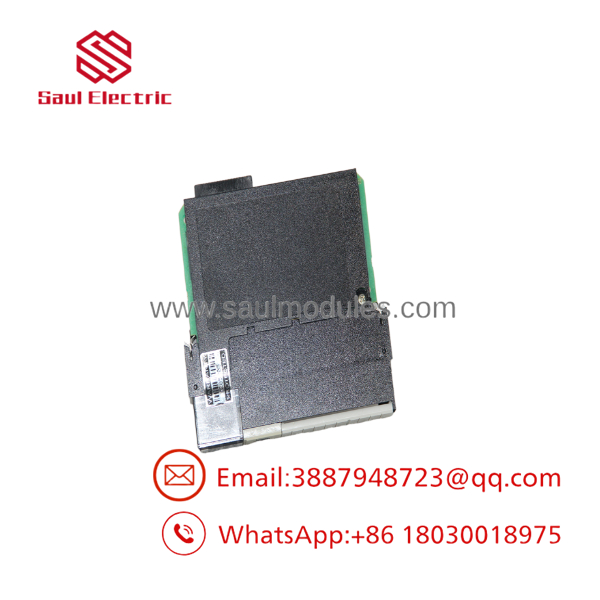
- 1756-L1M1
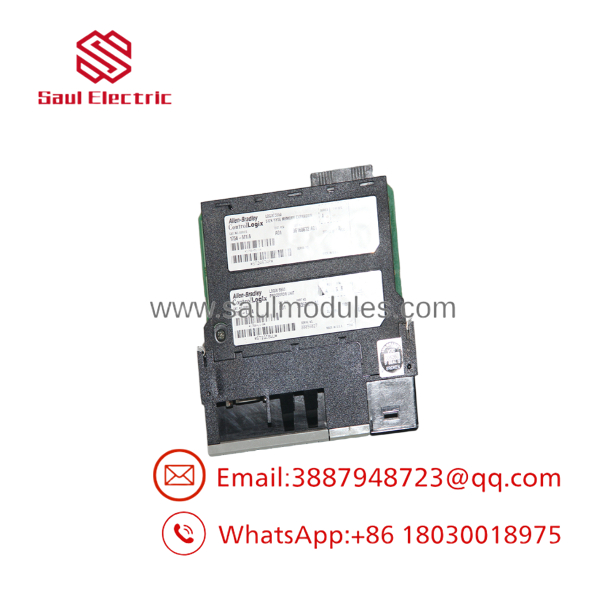
- 1756-L1M1
The Veteran’s Tech Trap Guide
- ⚠️ CRITICAL: Battery Dependency & Loss of Logic: Unlike newer L7x or L8x controllers that feature Energy Storage Modules (ESM) and non-volatile SD storage, the 1756-L1M1 relies entirely on its 1756-BA1 lithium battery to retain program memory when cabinet power is shut off. If the front
BATLED turns solid red, replace the battery immediately while power is ON to prevent total loss of program logic. - PRO TIP: Firmware Version Limit (Max v13): The 1756- / Logix5550 processor family cannot be upgraded beyond RSLogix 5000 Version 13. If your project file is written in Version 15 or higher (Studio 5000), you will need an L55 (e.g., 1756-L55M13) or L6x/L7x series processor.
- ⚠️ Serial Cable Requirement: Direct connection to the 1756- requires an Allen-Bradley 1756-CP3 or null-modem serial cable (DB9 female to DB9 female). Standard straight-through serial extension cables will not communicate with the CPU serial port.
Dynamic FAQ
Q: Can I upgrade the memory on a 1756- to a larger size?
A: Yes. The “M1” portion indicates a removable 1756-M1 (512 KB) memory expansion board. You can swap the memory board for a 1756-M2 (1 MB) or 1756-M3 (2 MB) board if your logic exceeds 500 KB.
Q: What programming software is used for the 1756-?
A: The 1756- is programmed using RSLogix 5000 (compatible with versions 1 through 13). It is not supported in Studio 5000 Logix Designer (v21+).
Q: What battery does the 1756- processor require?
A: It requires a single 1756-BA1 3V lithium battery assembly.
Q: Are replacement 1756- CPU modules fully bench-tested before shipping?
A: Yes. Every 1756- CPU undergoes full memory retention checks, 1756-CP3 serial port communication testing, backplane bus stress audits, and 12-hour thermal burn-in on a live ControlLogix rack.

 Start Chat


