





Description
Product Introduction & Engineering Value
The Allen-Bradley 1756-L72 is a core controller in the ControlLogix 5570 family, delivering double the memory capacity of the entry-level 1756-L71 (4 MB vs. 2 MB). It represents a major design overhaul compared to legacy L6x processors by eliminating lithium batteries entirely in favor of maintenance-free Energy Storage Modules (ESM) and replacing serial ports with a high-speed USB 2.0 programming interface.
Engineered for modern industrial processing plants, coordinated multi-axis motion control, and high-density EtherNet/IP topologies, the 1756-L72 supports Studio 5000 Logix Designer firmware from v20 up through v36+. It allows engineers to store complete controller projects—including tag documentation, ladder logic, and non-volatile backup images—directly onto an onboard SD card for fast field swaps without requiring a programming laptop.
Technical Specifications
| Specification | Parameter Value |
| Module Type | ControlLogix 5570 CPU Processor |
| User Logic & Data Memory | 4.0 MB |
| I/O Memory | 0.98 MB (980 KB) |
| Non-Volatile Memory | 1 GB SD Card Included (1784-SD1, supports up to 2 GB 1784-SD2) |
| Communication Port | USB 2.0 Full Speed (12 Mbps) for programming/diagnostics |
| Energy Storage (No Battery) | 1756-ESMCAP (Capacitor) or 1756-ESMNSE (No Stored Energy for mining/hazardous sites) |
| Backplane Current (5.1V DC) | 800 mA |
| Backplane Current (24V DC) | 5.0 mA |
| Power Dissipation (Max) | 2.5 Watts |
| Programming Software | Studio 5000 Logix Designer / RSLogix 5000 (Versions 20 through 36+) |
| Operating Temperature | 0°C to 60°C (32°F to 140°F) |
Field Application & The “Trench” Experience
In a automotive stamping line retrofit, an old 1756-L62 (RSLogix 5000 v19) was upgraded to a 1756-L72 to improve scan times and eliminate recurring maintenance calls caused by dead 1756-BA2 batteries.
Installing the 1756-L72 eliminated lithium battery replacements completely thanks to its internal ESM module. Connecting via the front-panel USB port allowed instant controller detection in RSLinx without configuring serial baud rates or COM ports. After converting the project file to Studio 5000 v32, the processing speed improvement cut execution time per task by over 60%, smoothing out synchronized servo motion on the press feed line.
- Multi-Axis Motion & Packaging: Orchestrating coordinated Kinetix servo drives over CIP Motion (EtherNet/IP).
- Process & Batch Control: Managing high-density PID control loops, alarm histories, and fieldbus instruments.
- Hazardous & Cleanroom Environments: Utilizing the 1756-ESMNSE (Non-Stored Energy) module in environments where lithium batteries or high-capacity capacitors are restricted due to safety regulations.
Transparency SOP: QA & Testing
- SD Card Socket & USB Interface Inspection: Checking the front USB port housing, SD card retention mechanism, key switch selector, faceplate LEDs, and backplane contact gold plating.
- Firmware & USB Communication Verification: Flashing firmware (v20 through v36+) and establishing connection over a standard USB A-to-B cable to verify communication handshake and memory allocation.
- Non-Volatile Boot & Energy Storage Retention Test: Loading project data into active memory, removing main chassis power without a battery, and verifying that the ESM module powers the memory transfer to the SD card for flawless reboot recovery.
- Thermal Chamber Burn-In: Running heavy ladder, function block, and motion execution routines inside a 60°C test chamber for 12 hours on a live ControlLogix backplane.
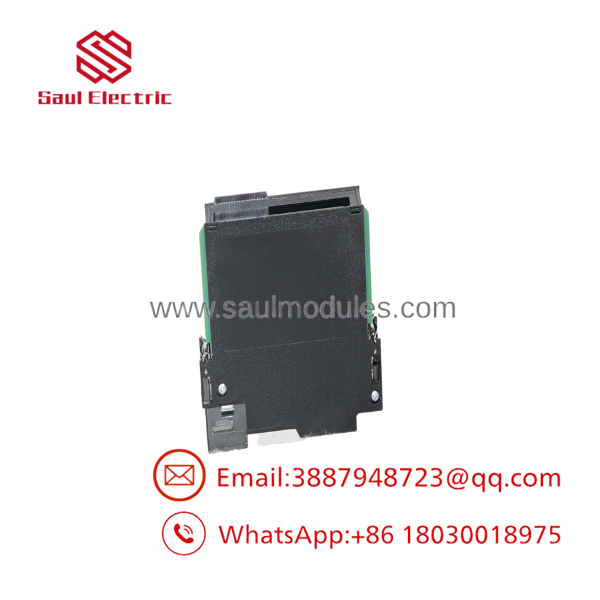
- 1756-L72
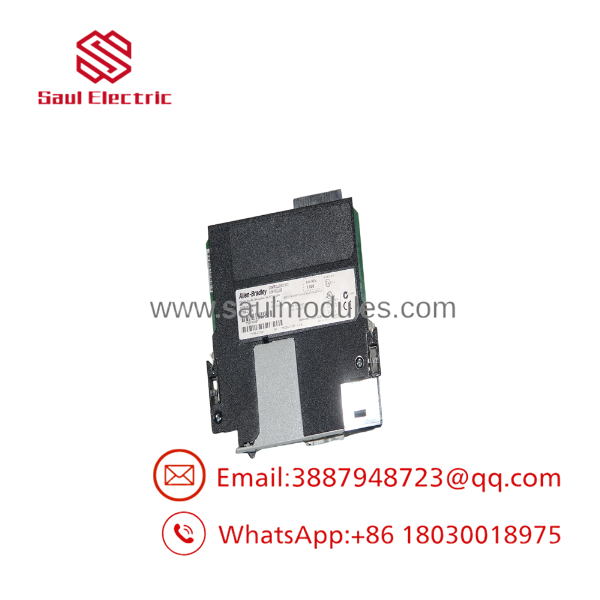
- 1756-L72
The Veteran’s Tech Trap Guide
- ⚠️ Firmware Version Support Starts at v20: The 1756-L72 requires RSLogix 5000 Version 20 or Studio 5000 Logix Designer (v21+). It cannot be flashed down to legacy firmware versions 13, 15, 16, 17, 18, or 19.
- PRO TIP: Industrial Grade SD Cards Only: Do NOT use commercial consumer-grade SD cards in the 1756-L72 slot. The controller requires industrial-grade SD cards (1784-SD1 or 1784-SD2) designed for extreme thermal cycles and high write-endurance. Standard consumer SD cards will cause project restoration failures during power-up.
- ⚠️ USB Port Is for Diagnostics/Programming Only: The front panel USB 2.0 port is designed strictly for local programming, firmware updates, and temporary diagnostic connections via Studio 5000. It is not intended for permanent HMI communication or continuous field data logging. Use an Ethernet module (e.g., 1756-EN2T) for industrial network communications.
Dynamic FAQ
Q: What is the main difference between the 1756-L62 and the 1756-L72?
A: The 1756-L62 uses serial programming (RS-232), CompactFlash cards, lithium batteries (1756-BA2), and maxes out at v20. The 1756-L72 features USB programming, SD card storage, battery-free Energy Storage Modules (ESM), faster scan times, and supports firmware up through Studio 5000 v36+.
Q: What software is used to program the 1756-L72 controller?
A: The 1756-L72 is programmed using Studio 5000 Logix Designer (v21+) or RSLogix 5000 (v20 only).
Q: Does the 1756-L72 require a battery to retain its program during power loss?
A: No. The 1756-L72 uses a capacitor-based Energy Storage Module (1756-ESMCAP) that holds enough charge during a power failure to write the active RAM contents onto the onboard SD card.
Q: Are replacement 1756-L72 processors fully bench-tested prior to shipment?
A: Yes. Every 1756-L72 processor undergoes 4MB RAM block verification, SD card read/write testing, USB communications checks, ESM power-down retention audits, and a 12-hour thermal burn-in at 60°C.

 Start Chat


