





Description
Product Introduction
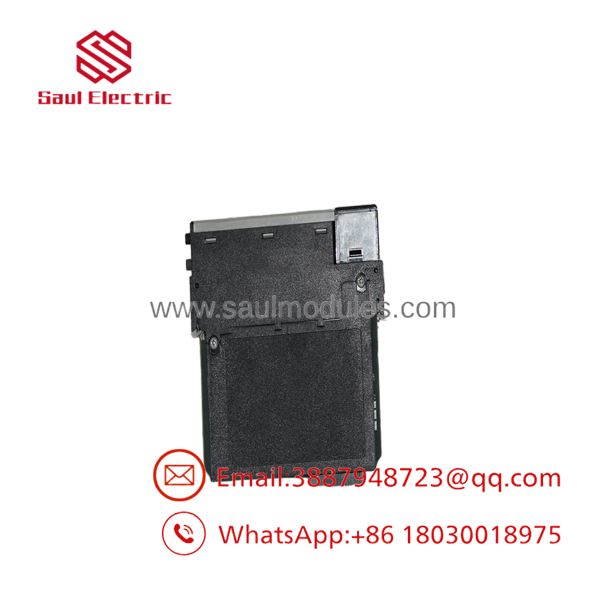
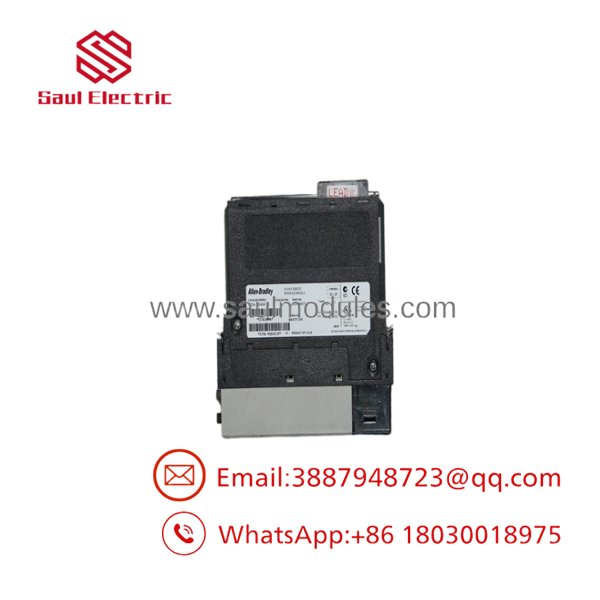
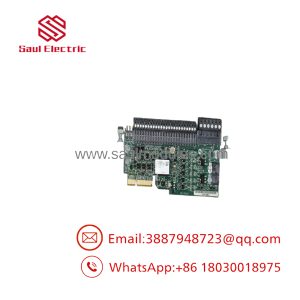
The Allen-Bradley 1756-M16SE is a 16-axis SERCOS II interface module designed for the ControlLogix system. Slotting directly into any standard 1756 backplane, it bridges the controller logic with digital drives like the Kinetix 6000, Kinetix 7000, and Ultra3000 over a closed noise-immune fiber-optic ring. It offloads real-time motion trajectory calculations from the main CPU, executing closed-loop position and velocity routines at the hardware level.
While smaller variants like the 1756-M08SE limit you to eight axes per slot, the high-density 1756-M16SE handles full sixteen-axis machine sections on a single card slot. This density slashes backplane power consumption and frees up chassis real estate for additional I/O or network bridges. Eliminating traditional +/-10V analog wiring harnesses, the optical ring resists heavy electrical noise generated by nearby variable frequency drives and high-voltage servo runs.
Key Technical Specifications
| Parameter | Value / Specification |
| Number of Axes | 16 Digital Axes |
| Interface Protocol | SERCOS II (IEC 61491) |
| Communication Medium | Optical Fiber Cable (650 nm wavelength) |
| Data Transmission Rate | 4 Mbps or 8 Mbps (Selectable) |
| Backplane Current (5.1V DC) | 760 mA |
| Backplane Current (24V DC) | 2.5 mA |
| Power Dissipation | 5.0 W |
| Thermal Dissipation | 17.0 BTU/hr |
| Max Fiber Distance | 32 meters (Plastic Fiber) / 200 meters (Glass Fiber) |
| Compatible Drives | Kinetix 6000, Kinetix 7000, Ultra3000 SERCOS |
| Chassis Location | Any local or remote 1756 ControlLogix slot |
Application Scenarios & The “Trench” Experience
A high-speed rotary carton packaging line drops out abruptly during the graveyard shift. The SERCOS ring communication LED on the motion module turns solid red, dropping drive ready signals across all sixteen axes. Diagnostics show a broken optical handshake. The line is stalled with hundreds of unfinished cartons jammed in the flight chains. The OEM quotes a 20-week wait time for a new replacement module. Replacing the faulted 1756-M16SE from spares stock gets the optical ring closed and the servo drives homed before product spoils on the line.
Target Application Scenarios
- High-Speed Packaging & Bottling: Synchronizes multi-lane indexing conveyors, star wheels, and rotary capping heads across 16 coordinated axes.
- Converting & Printing Equipment: Controls web tension, flying cutoffs, and registration rolls requiring tight microsecond position matching.
- Automotive Gantry & Transfer Lines: Coordinates multi-axis pick-and-place arms transferring engine blocks between machining cells.
- Material Handling & Sorting: Drives complex multi-axis sorter beds and automated storage and retrieval systems (ASRS).
Field Case Study
A tissue converting plant lost its main embossing roll section when a power transient damaged the optical receiver circuitry on their 1756-M16SE card. The line ran a complex RSLogix 5000 v16 motion group with custom electronic cam profiles. Installing our bench-tested new-surplus 1756-M16SE allowed the engineering team to plug in the existing fiber-optic pair, re-establish the ring handshake, and resume production in under two hours without altering a single line of drive configuration code.
Transparency SOP: Quality Assurance & Testing
We don’t just ship boxes; we test them on actual Allen-Bradley racks. Every 1756-M16SE module moving through our shop goes through a strict 5-step verification process:
- Inbound Inspection: Inspecting backplane edge connector pins, optical port dust caps, housing tabs, and anti-counterfeit markings under high magnification.
- Live Rig Chassis Test: Inserting the card into an active 1756 chassis to verify backplane boot routines and status LED sequencing.
- Fiber-Optic Transmitter & Receiver Audit: Measuring optical power output on both Tx and Rx ports using a specialized optical meter to ensure clean signal attenuation levels.
- Drive Ring Handshake Verification: Hooking up the module to a live test loop with three Kinetix 6000 drives over fiber-optic cable. We run multi-axis motion profiles to test axis synchronization under load.
- Final QC & ESD Packaging: Removing the card at an ESD-grounded station, re-fitting optical port protection caps, and vacuum-sealing it in anti-static ESD bags with desiccant.
The Veteran’s Tech Trap Guide (Crucial Value-Add)
⚠️ Mind the Fiber Cable Bend Radius: Never zip-tie your fiber-optic cables tightly to wire trays or bend them sharply. Bending plastic fiber beyond a 30mm radius fractures the inner core, causing intermittent SERCOS ring breaks that look like card failures.
❗ Optical Port Contamination: Leave protective dust caps on unused optical ports until the instant you plug in the fiber connector. A single microscopic speck of oil or airborne dust on the optical lens can drop receiver power levels below the operational threshold. Clean connectors with lint-free optical wipes before seating.
⚠️ Node Address Switches on Drives: The 1756- scans drives based on their physical SERCOS ring addresses set on the drive rotary switches. If you replace a failed drive, set its rotary address switches to match the exact axis number configured in RSLogix/Studio 5000 before closing the ring.
Frequently Asked Questions (FAQ for Conversion)
Q: Can I use a 1756- to replace a 1756-M08SE module?
A: Yes. The 1756- is backward compatible with the 1756-M08SE. However, you must update the module type inside your Studio 5000 / RSLogix 5000 project properties, re-assign your motion axes to the new card instance, and re-download the project to the controller.
Q: Is the 1756- module hot-swappable?
A: Yes, it supports RIUP (Removal and Insertion Under Power). However, removing a live SERCOS module immediately breaks the optical ring, causing all attached drives to execute an emergency stop fault. Only pull the module when the motion group is disabled and machine power is isolated.
Q: What fiber-optic cable types are compatible with this module?
A: The module accepts standard plastic optical fiber (POF) for short cabinet runs (up to 32 meters between nodes) and hard-clad silica / glass fiber for longer distances (up to 200 meters between nodes). Ensure your fiber connectors match the SMA or bayonet style used on your drives.
Q: Does this module require firmware flashing upon installation?
A: The firmware revision on the 1756- must match the major revision of your RSLogix 5000 or Studio 5000 controller project. If there is a mismatch, use ControlFLASH or ControlFLASH Plus to flash the card to the target major revision before adding it to the active motion group.
Q: What is the warranty coverage on this surplus 1756-?
A: We provide a full 12-month operational warranty on all New Surplus and Refurbished 1756- modules. If the unit develops hardware faults within one year under normal operating conditions, we replace it immediately or issue a full refund.

 Start Chat


