





Description
Product Introduction
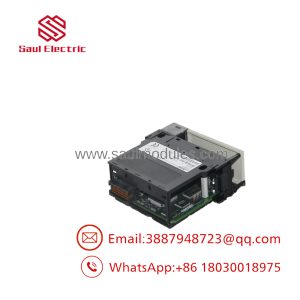
The Allen-Bradley 1769-L33ER is a high-performance CompactLogix 5370 L3 programmable automation controller (PAC) built for small to mid-sized machine control and process applications. Featuring 2 MB of embedded user memory and dual Ethernet ports supporting Device Level Ring (DLR) network topologies, this controller manages complex sequential, motion-adjacent, and batching tasks without requiring external communication adapter cards.
Unlike legacy controllers that rely on battery-backed RAM, the 1769-L33ER utilizes non-volatile energy storage technology (energy storage module) alongside a standard 1784-SD1 or 1784-SD2 Secure Digital memory card for reliable project retention during unexpected power outages. It acts as a central control hub capable of driving up to 32 EtherNet/IP nodes and 16 local 1769 Compact I/O expansion modules across two expansion banks.
Key Technical Specifications
| Parameter | Value |
| Part Number | 1769-L33ER |
| Manufacturer | Allen-Bradley / Rockwell Automation |
| Controller Family | CompactLogix 5370 L3 Platform |
| User Memory | 2 MB Non-Volatile Memory |
| EtherNet/IP Nodes | Supports up to 32 EtherNet/IP Nodes |
| Network Interfaces | Dual-Port EtherNet/IP (10/100 Mbps, DLR/Linear/Star topologies) |
| Local I/O Capacity | Up to 16 Local 1769 Modules (2 Banks, requires 1769-CRL/CRR cables) |
| Power Supply Distance Rating | 4 Modules (Must be within 4 slots of a 1769 power supply) |
| Programming Port | USB 2.0 Full Speed (Type B connector) |
| Supported SD Card | 1 GB (1784-SD1) included standard; supports up to 2 GB (1784-SD2) |
| Programming Software | Studio 5000 Logix Designer (V20 and later) |
| Operating Temp | 0°C to +60°C (32°F to 140°F) |
Application Scenarios & The “Trench” Experience
Picture this: It’s 3:00 AM on a high-speed bottling line, and an main line controller suffers an internal processor fault after a plant power surge. The entire line stops, idling upstream pasteurizers and downstream stretch wrappers. Downtime cost is mounting at $5,000 every 15 minutes. Replacing the PAC requires a unit that accepts the Studio 5000 project file over a USB cable without setting up IP addresses first, auto-formats its IP via DLR network rings, and restores production in minutes instead of hours.
- Packaging & Material Handling – High-speed cartoning, palletizing, and conveyor routing – Manages distributed PowerFlex drives and Point I/O drops over EtherNet/IP.
- Food & Beverage Processing – Clean-in-Place (CIP) systems and batch mixing – Handles analog PID temperature/flow loops alongside recipe control.
- Water & Wastewater Treatment – Pumping stations and chemical dosing systems – Leverages dual Ethernet ports for redundant ring topologies (DLR) to ensure high availability.
- OEM Custom Machinery – CNC loading cells and automated assembly stations – Integrates directly with PanelView Plus HMIs via implicit and explicit messaging.
Field Case Study
A pharmaceutical secondary-packaging site in New Jersey needed to upgrade a legacy SLC 500 rack driving a carton sleeve machine. The customer required high-speed vision inspection feedback and real-time drive synchronization without changing the 1769 I/O wiring. We provided a 1769-L33ER CPU along with a Studio 5000 project conversion. By dropping the 1769-L33ER into the existing 1769 bus footprint, the plant added 32 drive/HMI network nodes over EtherNet/IP while reducing cycle times by 35%.
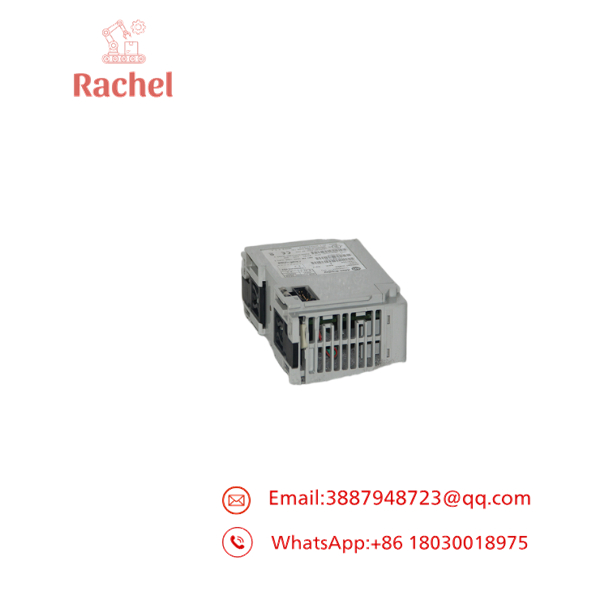
1769-L33ER
Transparency SOP: Quality Assurance & Testing
We don’t just ship boxes; we test them on actual Allen-Bradley CompactLogix test rigs:
- Inbound Mechanical Inspection: Check plastic chassis latches, terminal blocks, SD card door, USB port jack, and Ethernet port pins for wear or physical damage.
- Power Supply & Backplane Test: Mount unit into a 1769-PA4 rack assembly; verify internal DC rail boot cycle and front status LEDs (RUN, FORCE, SD, OK, LINK1, LINK2).
- USB & Dual Ethernet Audit: Establish active communication links over the USB console port and both Ethernet ports using RSLinx Classic / FactoryTalk Linx drivers.
- I/O Bus & Scan Test: Run complex Studio 5000 tasks scanning 16 local 1769 discrete and analog I/O modules while cycling test routines.
- DLR Network Ring Validation: Test dual Ethernet ports under active Device Level Ring (DLR) supervisor/node fault recovery modes.
- ESD & Protective Packaging: Flash factory default firmware or customer-specified revision, seal inside static-shielding wrap, and package in heavy-duty foam containers.
The Veteran’s Tech Trap Guide
- ⚠️ Observe the Power Supply Distance Rating (PSDR): The 1769-L33ER has a power supply distance rating of 4. This means the CPU must be installed within 4 slots of a 1769 expansion power supply (e.g., 1769-PA2, 1769-PA4, 1769-PB4). Installing the CPU 5 or more slots away from the power supply will result in erratic backplane communication and expansion bus faults.
- ❗ Do NOT Use Standard Consumer SD Cards: Always use Allen-Bradley industrial-grade SD cards (1784-SD1 or 1784-SD2). Standard commercial SD cards fail under industrial temperature swings and lack the wear-leveling endurance required for real-time fault logging and firmware execution.
- ⚠️ Differentiate Between L33ER and L33ERM: The 1769-L33ER supports standard EtherNet/IP I/O and drive communications, but it does not support integrated CIP Motion drives. If your application requires servo axis control (e.g., Kinetix 350 or 5500 over EtherNet/IP), you must use the 1769-L33ERM model instead.
- ❗ Set IP Address via USB or BOOTP First: Out of the box, the controller defaults to BOOTP/DHCP mode. If you don’t have a BOOTP server running, plug a USB Type-B cable into the front console port and set the static IP address directly inside Studio 5000 / RSLinx to avoid network communication dropouts.
Frequently Asked Questions
Q: What is the maximum number of local 1769 I/O modules the 1769-L33ER can support?
A: The 1769-L33ER supports up to 16 local 1769 I/O modules across a maximum of 2 expansion banks (connected via 1769-CRL1/CRL2 or 1769-CRR1/CRR2 bus expansion cables).
Q: What software version is required to program the 1769-L33ER?
A: The 1769-L33ER is supported in Studio 5000 Logix Designer (formerly RSLogix 5000) Version 20 and higher.
Q: Does the 1769-L33ER require a backup lithium battery?
A: No. CompactLogix 5370 controllers utilize an embedded Energy Storage Module (ESM) that maintains internal memory long enough to write project data to non-volatile memory during a power outage, eliminating the need for replacement lithium batteries.
Q: Can the dual Ethernet ports on the 1769-L33ER be configured with two separate IP addresses?
A: No. The dual Ethernet ports on the 1769-L33ER act as an embedded two-port unmanaged switch sharing a single IP address. They are designed for linear or Device Level Ring (DLR) network topologies, not for bridging two separate subnetworks.
Q: What warranty comes with this component?
A: All our Allen-Bradley 1769-L33ER controllers—whether New Factory Sealed or bench-tested Refurbished—come backed by a full 12-month operational warranty covering memory, backplane bus logic, USB, and Ethernet ports.

 Start Chat


