





Description
Product Introduction
The Allen-Bradley 1769-L33ER is a mid-tier CompactLogix 5370 L3 controller engineered for scalable machine control and distributed plant automation. Built around standard EtherNet/IP communication, it brings modern networking and higher memory capacity to mid-sized applications without requiring dedicated motion axes hardware.
Equipped with 2 MB of embedded user memory and dual RJ45 Ethernet ports with embedded switch technology, the 1769-L33ER supports Device Level Ring (DLR) and linear daisy-chain network topologies. It addresses up to 32 EtherNet/IP nodes and drives up to 16 local 1769 Compact I/O expansion modules, serving as a reliable backbone for high-performance plant machinery.
Key Technical Specifications
| Parameter | Value |
| User Memory | 2 MB SRAM / Flash |
| EtherNet/IP Ports | (2) RJ45 Ports with Embedded Switch (DLR, Linear, Star Topologies) |
| EtherNet/IP Node Limit | Up to 32 EtherNet/IP Nodes |
| Local I/O Expansion | Supports up to 16 1769 Compact I/O Modules (Across 3 Banks) |
| USB Programming Port | (1) USB 2.0 Full-Speed Port (Type B for configuration/download) |
| Power Distance Rating | 4 Modules (Must be mounted within 4 slots of power supply) |
| SD Memory Card | Ships with 1GB 1784-SD1 (Supports up to 32GB SDHC cards) |
| Energy Storage Module | Embedded ESM (Capacitor-based, maintenance-free, no battery required) |
| Power Supply Compatibility | Requires 1769-PA2, 1769-PB2, 1769-PA4, or 1769-PB4 |
| Programming Software | Studio 5000 Logix Designer / RSLogix 5000 (v20 through v36+) |
Application Scenarios & The “Trench” Experience
The Trench Story
It is 2:30 AM on a high-speed bottling line. An older single-port controller suffers a localized Ethernet transceiver failure, taking down communication to three remote POINT I/O drops and bringing bottling operations to a dead stop. In our field experience, trying to rewire a broken star network layout during an emergency shutdown is a recipe for frustration. Replacing the failed CPU with a 1769-L33ER lets you convert that single cable run into a fault-tolerant Device Level Ring (DLR) setup using its dual RJ45 ports. You restore communication, isolate cable faults automatically in the future, and get the bottling line back online before morning management arrives.
Specific Applications
- High-Throughput Material Handling: Manages multi-zone conveyor sortation systems using distributed 1734 POINT I/O drops and networked VFDs.
- Commercial Food Processing: Executes multi-recipe batching, CIP wash cycles, and temperature PID loops across 2 MB of structured memory registers.
- Municipal Lift Stations: Coordinates duplex pump staging, level transmitter scaling, and remote SCADA telemetry over industrial EtherNet/IP networks.
- Automated Packaging Cells: Coordinates carton erectors, product pushers, and case sealers over a continuous Device Level Ring topology.
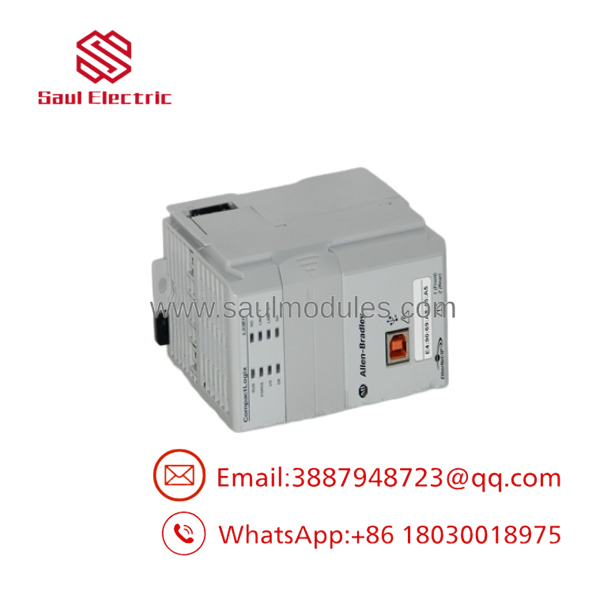
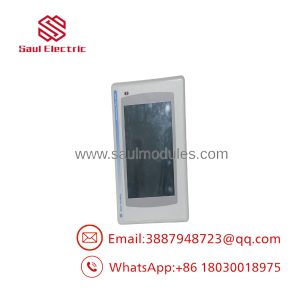
- 1769-L33ER
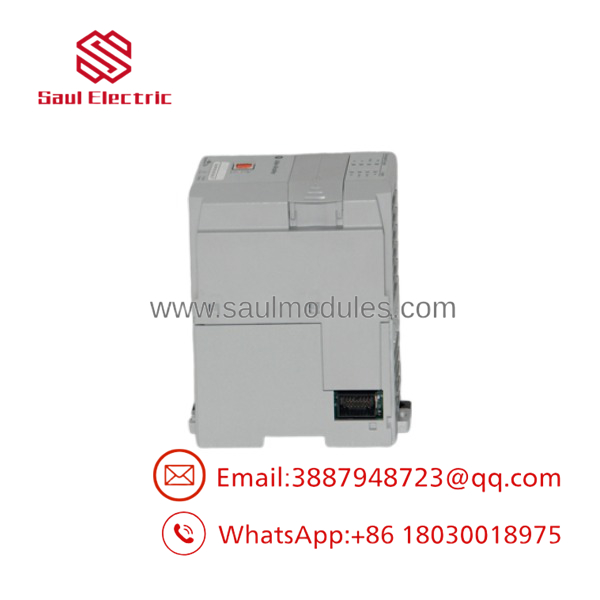
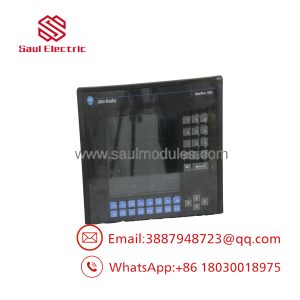
- 1769-L33ER
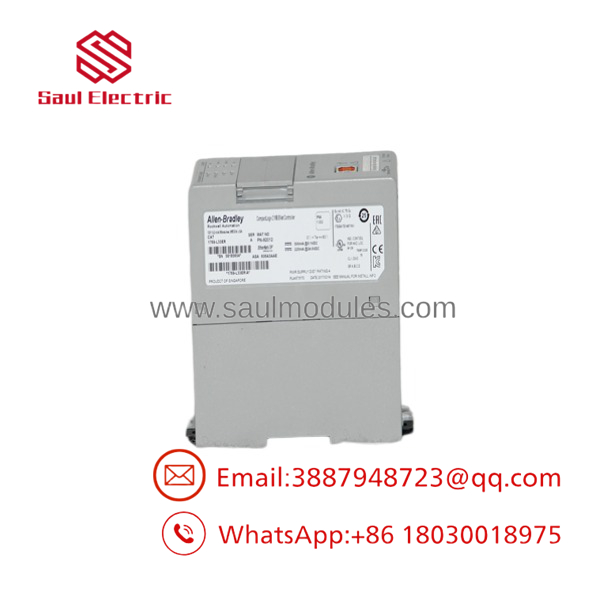
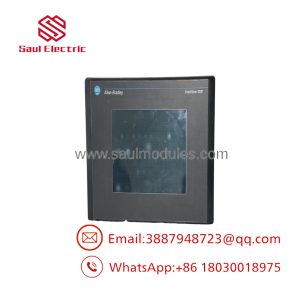
- 1769-L33ER
Transparency SOP: Quality Assurance & Testing
Every 1769- processor undergoes rigorous bench testing before it enters our ready inventory:
- Physical & Port Audit: We check plastic enclosure latches, inspect bus connector pins for micro-damage, and verify that both RJ45 ports and the front USB port are physically sound.
- Backplane & Bus Power Test: The module docks into a 1769 CompactLogix rack to confirm 5VDC backplane power distribution and local 1769 I/O card recognition.
- Dual Ethernet DLR Ring Stress Check: We wire both Ethernet ports into an active DLR network with remote I/O nodes, simulating physical cable breaks during continuous data polling to verify instant recovery times.
- Firmware Flashing & USB Communication Audit: We test firmware updates (e.g., v20 through v33) via the front USB 2.0 port, format the SD card, and run full-memory stress loads.
- Energy Storage Module (ESM) Audit: The controller is powered down after a test run to confirm the capacitor-based ESM holds memory long enough to write non-volatile flash data cleanly.
The Veteran’s Tech Trap Guide
- ⚠️ Do Not Confuse “ER” with “ERM” (No Motion Support): The 1769- supports standard EtherNet/IP nodes, but it does NOT support integrated CIP Motion axes. If your machine requires synchronized CIP Motion servos (like Kinetix 350 or 5500 drives), you MUST use the 1769-L33ERM controller instead.
- ❗ Mind the 4-Slot Power Distance Rule: The 1769- has a strict power distance rating of 4. Mount it within 4 slots of a 1769 system power supply (such as the 1769-PA4 or 1769-PB4). Installing the CPU further down the DIN rail causes backplane brownouts and intermittent CPU faults.
- ⚠️ Do Not Forget the 1769-ECR Bus End Cap: All 1769 CompactLogix racks require a 1769-ECR (or 1769-ECL) end cap installed on the far right end of the local I/O bank. If the end cap is missing, the 1769- will generate a major backplane fault and refuse to enter RUN mode.
- ❗ Verify Network IP Mode Settings: The dual Ethernet ports on the 1769- act as an embedded switch sharing a SINGLE IP address. Do not attempt to assign two separate IP subnets to Port 1 and Port 2; they are designed for linear or DLR single-subnet configurations.
Frequently Asked Questions
Q: What is the main difference between the 1769- and the 1769-L32E?
The 1769- is part of the 5370 series featuring 2 MB of memory (vs. 750 KB on the L32E), dual Ethernet ports supporting DLR rings (vs. a single port), a USB programming port (vs. RS-232 serial), an SD card slot (vs. CompactFlash), and a maintenance-free ESM module (eliminating the 1769-BA lithium battery).
Q: Does the 1769- require a battery to retain its program?
No. The 1769- uses an internal, capacitor-based Energy Storage Module (ESM). When line power drops, the ESM provides short-term power allowing the CPU to save its active RAM memory directly into non-volatile flash memory.
Q: What software version do I need to program the 1769-?
You need Studio 5000 Logix Designer (or RSLogix 5000) Version 20 or higher. The 1769- is fully supported through all current versions of Studio 5000 (up to v36+).
Q: Can I use the front USB port for continuous SCADA monitoring?
No. The front USB 2.0 port is intended strictly for temporary local maintenance, initial IP configuration, logic downloads, and firmware flashing. Continuous HMI or SCADA monitoring should be routed through the primary dual EtherNet/IP ports.
Q: What warranty covers your new surplus and refurbished 1769- processors?
Every 1769- unit we ship comes with a complete 12-month replacement warranty. If a hardware fault occurs within 365 days under standard operating conditions, we replace the CPU immediately from our stock or issue a full refund.
Q: How many total local I/O modules can I connect to a 1769-?
You can connect up to 16 local 1769 Compact I/O modules across up to 3 expansion banks (linked via 1769 expansion bus cables). Ensure you observe power supply distance ratings and power supply capacity across each bank.

 Start Chat


