





Description
Product Introduction
The Allen-Bradley 1769-L35ER is the high-capacity standard processing anchor of the CompactLogix 5370 L3 family. Designed for large-scale machine control and data-heavy plant automation, it offers the highest memory footprint (3.5 MB) and node allowance (48 nodes) among the non-motion L3 controllers.
Equipped with dual EtherNet/IP ports featuring an embedded switch, the 1769-L35ER seamlessly integrates into Device Level Ring (DLR) and linear topologies without requiring external network switches. It can manage up to 30 local 1769 Compact I/O expansion modules across three banks, making it an ideal choice for complex plant cells, large-scale batch processing, and high-density I/O architectures.
Key Technical Specifications
| Parameter | Value |
| User Memory | 3.5 MB SRAM / Flash |
| EtherNet/IP Ports | (2) RJ45 Ports with Embedded Switch (DLR, Linear, Star Topologies) |
| EtherNet/IP Node Limit | Up to 48 EtherNet/IP Nodes |
| Local I/O Expansion | Supports up to 30 1769 Compact I/O Modules (Across 3 Banks) |
| USB Programming Port | (1) USB 2.0 Full-Speed Port (Type B for configuration/download) |
| Power Distance Rating | 4 Modules (Must be mounted within 4 slots of power supply) |
| SD Memory Card | Ships with 1GB 1784-SD1 (Supports up to 32GB SDHC cards) |
| Energy Storage Module | Embedded ESM (Capacitor-based, maintenance-free, no battery required) |
| Power Supply Compatibility | Requires 1769-PA2, 1769-PB2, 1769-PA4, or 1769-PB4 |
| Programming Software | Studio 5000 Logix Designer / RSLogix 5000 (v20 through v36+) |
Application Scenarios & The “Trench” Experience
The Trench Story
It is 1:30 AM at a high-volume automotive stamping plant. An expanding production line hits a memory ceiling after adding extensive recipe arrays, diagnostic Add-On Instructions (AOIs), and multiple SCADA messaging tags to a lower-tier CPU. The controller goes into a low-memory fault, refusing new logic updates and halting line commissioning. You do not have time to rewrite or strip out essential diagnostic routines. Swapping in a 1769-L35ER provides an immediate jump to 3.5 MB of memory and increases the EtherNet/IP node capacity to 48 nodes. You download the expanded project file cleanly, re-verify the DLR ring, and hand over a fully functional line before the day-shift operators arrive.
Specific Applications
- Complex Food & Beverage Processing: Manages large recipe databases, automated CIP skid sequencing, and extensive PID loop processing across 3.5 MB of embedded memory.
- Large Conveyor & Sortation Systems: Drives up to 48 networked EtherNet/IP devices, including distributed POINT I/O drops, barcode readers, and PowerFlex drives.
- Water & Wastewater Treatment: Coordinates multiple filter beds, chemical dosing pumps, and remote SCADA telemetry drops with full ring redundancy.
- High-Density OEM Machines: Controls large machine footprints requiring up to 30 local 1769 expansion modules across multi-bank configurations.
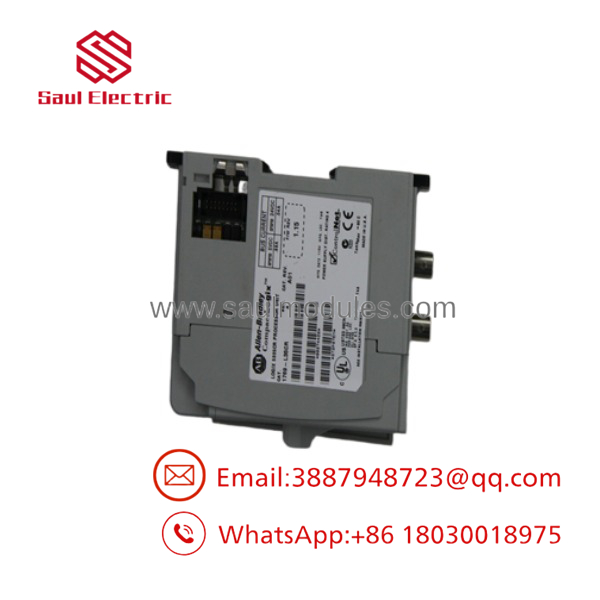
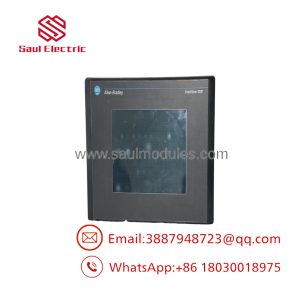
- 1769-L35ER
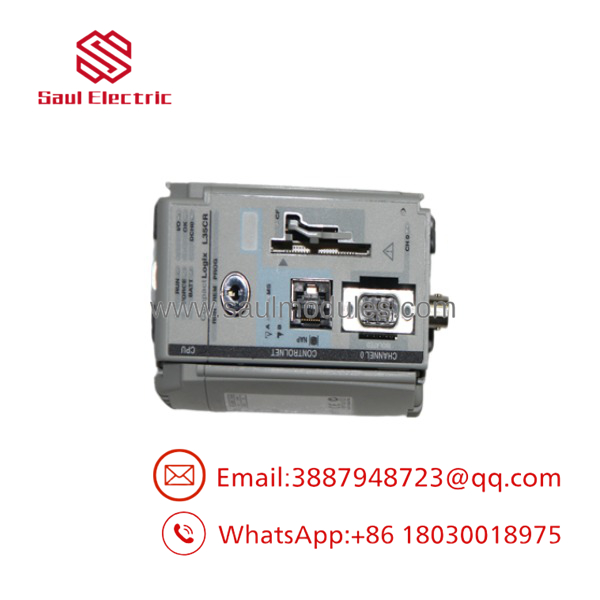
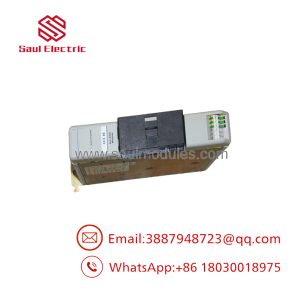
- 1769-L35ER
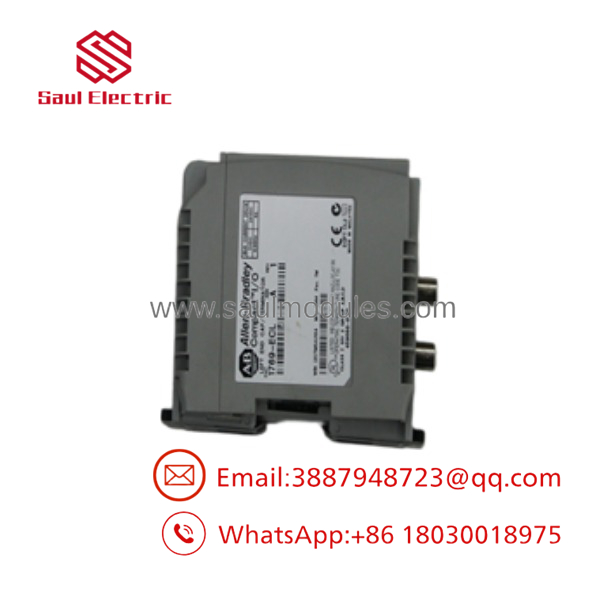
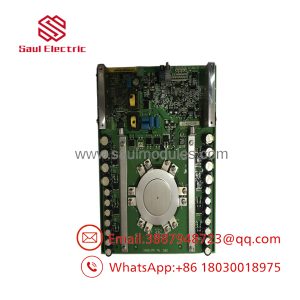
- 1769-L35ER
Transparency SOP: Quality Assurance & Testing
Every 1769- processor undergoes rigorous bench testing before it enters our ready inventory:
- Physical & Port Audit: We inspect plastic latching tabs, check bus connector pins for wear or micro-damage, and test the mechanical alignment of both RJ45 ports and the USB programming interface.
- Backplane & Bus Power Test: The module docks into a 1769 CompactLogix rack across multiple expansion banks to confirm 5VDC backplane power distribution and local I/O module recognition.
- Dual Ethernet DLR Ring Stress Check: We configure both Ethernet ports into an active DLR loop with field devices, simulating cable disconnects under heavy network polling to confirm millisecond-level ring recovery.
- Firmware Flashing & USB Communication Audit: We execute firmware flashing routines (v20 through v33+) over the USB port, format the SD card, and run full-memory stress loads across all 3.5 MB.
- Energy Storage Module (ESM) Audit: Power is cut to the controller after high-load testing to verify that the internal ESM cleanly saves active RAM to non-volatile flash memory without faulting.
The Veteran’s Tech Trap Guide
- ⚠️ Do Not Confuse “ER” with “ERM” (No Integrated Motion): While the 1769- offers a massive 3.5 MB memory capacity and 48 Ethernet nodes, it does NOT support integrated CIP Motion. If your system requires synchronized servo drives (e.g., Kinetix 350 or 5500 over Ethernet), you MUST use the 1769-L35ERM processor instead.
- ❗ Mind the 4-Slot Power Distance Rule: The 1769- has a strict power distance rating of 4. It MUST be installed within 4 slots of a 1769 system power supply (such as the 1769-PA4 or 1769-PB4) on every bank. Installing the CPU further down the DIN rail causes backplane voltage drops and unexpected CPU faults.
- ⚠️ Do Not Forget the 1769-ECR Bus End Cap: All 1769 CompactLogix racks require a 1769-ECR (or 1769-ECL) end cap installed on the far right end of the local I/O bank. If the end cap is missing, the 1769- will generate a major backplane fault and refuse to enter RUN mode.
- ❗ Single Subnet for Both Ports: The dual Ethernet ports on the 1769- function as an embedded switch sharing a SINGLE IP address. Do not attempt to assign two separate subnets to Port 1 and Port 2; they are designed exclusively for linear or DLR single-subnet network architectures.
Frequently Asked Questions
Q: What is the main difference between the 1769- and the 1769-L33ER?
The primary differences are user memory and EtherNet/IP capacity. The 1769- offers 3.5 MB of memory (vs. 2 MB on the L33ER), supports up to 48 EtherNet/IP nodes (vs. 32 on the L33ER), and can control up to 30 local 1769 I/O modules (vs. 16 on the L33ER).
Q: Does the 1769- require a battery to retain its program during power loss?
No. The 1769- utilizes an internal, maintenance-free Energy Storage Module (ESM). Upon loss of power, the ESM powers the CPU long enough to write all active memory registers into internal non-volatile flash memory.
Q: What programming software is required for the 1769-?
You need Studio 5000 Logix Designer (or RSLogix 5000) Version 20 or higher. The 1769- is supported through all current versions of Studio 5000 (v20 through v36+).
Q: Can I use the front USB port for continuous HMI communication?
No. The USB port is intended strictly for initial commissioning, firmware flashing, local maintenance, and IP address assignment. Continuous HMI, SCADA, or peer-to-peer data traffic should be routed through the dual EtherNet/IP ports.
Q: How many local I/O expansion banks can the 1769- support?
The 1769- supports up to 3 expansion banks linked via 1769 expansion bus cables, housing up to a maximum of 30 local 1769 Compact I/O modules total.
Q: What warranty comes with your surplus and refurbished 1769- units?
Every 1769- unit we ship includes a full 12-month replacement warranty. If a hardware fault occurs under normal operating conditions within 365 days of purchase, we replace the controller immediately from our stock or issue a full refund.

 Start Chat


