





Description
Product Introduction & Engineering Value
A digital output module often receives little attention until production stops because multiple actuators fail simultaneously. In many legacy PLC-5 systems, the processor continues running normally while the actual fault originates at the output interface responsible for driving field devices.
The Allen-Bradley 1771-OBN was designed for high-density DC output applications requiring reliable switching of 10–30V DC loads. With thirty-two sourcing outputs arranged in four isolated groups, it provides a practical solution for controlling solenoids, pilot lights, relays, and other DC-operated devices throughout a PLC-5 control system.
Technical Specifications
| Specification | Value |
|---|---|
| Manufacturer | Allen-Bradley / Rockwell Automation |
| Catalog Number | 1771-OBN |
| Product Family | 1771 PLC-5 I/O |
| Module Type | DC Digital Output Module |
| Output Type | High-True (Sourcing) |
| Number of Outputs | 32 (4 groups of 8) |
| Output Voltage | 10–30V DC |
| Maximum Current per Output | 0.5 A |
| Maximum Current per Output Group | 2 A |
| Maximum Current per Module | 8 A |
| Maximum Surge Current | 2 A per output for 10 ms |
| Output Delay | OFF→ON: 0.1 ms, ON→OFF: 2.0 ms |
| Isolation Voltage | 1500V AC RMS |
| Backplane Current | 330 mA @ 5V DC |
| Fusing | Four 4 A replaceable fuses (one per output group) |
| Field Wiring Arm | 1771-WN |
| Mounting | 1771 PLC-5 I/O Chassis |
Field Application & The “Trench” Experience
An automotive welding fixture began experiencing random failures where multiple pneumatic clamps refused to actuate during the same production cycle. The PLC processor showed no major faults, and DeviceNet diagnostics reported healthy communications.
A closer inspection found that one fuse protecting an output group on the existing 1771-OBN had opened after a damaged solenoid coil created an overcurrent condition. Replacing the failed field device, installing a tested output module, and verifying the remaining output groups restored production within the maintenance window.
Common applications include:
- Automotive body welding fixtures controlling pneumatic clamp valves.
- Bottle filling and packaging equipment operating DC solenoids and indicator lamps.
- Automated warehouse conveyor systems driving relay interfaces and diverter actuators.
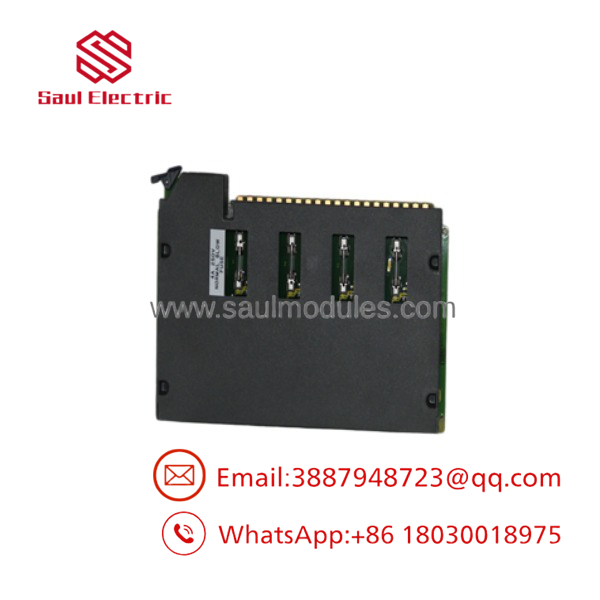
- 1771-OBN
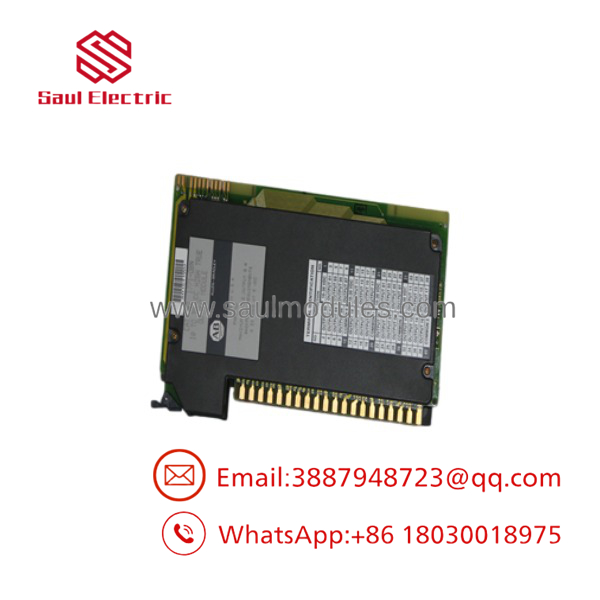
- 1771-OBN
Transparency SOP: QA & Testing
Every 1771-OBN module is evaluated using a documented inspection procedure before shipment.
- Confirm the catalog number, hardware series, and manufacturer identification.
- Inspect the edge connector, housing, fuse holders, and field wiring interface.
- Install the module in a verified 1771 PLC-5 chassis.
- Test all 32 output channels using calibrated DC loads.
- Verify fuse integrity, LED indication, output response time, and backplane communication.
- Archive the inspection record before releasing the unit as New Surplus or Refurbished.
The Veteran’s Tech Trap Guide
⚠️ Don’t Assume Every Dead Output Means a Failed Module
The 1771-OBN protects each group of eight outputs with an individual 4 A fuse. If exactly eight adjacent outputs stop operating, inspect the corresponding fuse before replacing the module.
⚠️ Watch the Group Current Limits
Although each output supports up to 0.5 A, each output group is limited to 2 A, and the entire module is limited to 8 A. Exceeding the group rating is a common cause of nuisance fuse failures during machine upgrades.
PRO TIP: Before commissioning, total the current draw of every load connected to each output group. Redistributing high-current solenoids across multiple groups often prevents repeated fuse replacement and improves long-term reliability.
Dynamic FAQ
Q1. What is the primary function of the 1771-OBN?
The 1771-OBN provides 32 high-true (sourcing) digital outputs for switching 10–30V DC field devices in PLC-5 and compatible 1771 I/O systems.
Q2. How are the outputs organized?
The module contains 32 outputs divided into four isolated groups of eight outputs, with each group protected by its own replaceable fuse.
Q3. What loads can the 1771-OBN control?
Typical loads include DC solenoid valves, relay coils, pilot lights, annunciators, and other 10–30V DC industrial control devices.
Q4. Is the module compatible with all chassis?
The module is designed for installation in 1771-A1B through 1771-A4B and later 1771 I/O chassis that support the family.
Q5. How is New Surplus inventory verified?
Each module undergoes identification verification, visual inspection, fuse testing, communication validation, and functional testing of all 32 output channels before shipment.
Q6. What causes the most frequent service calls on the 1771-OBN?
The most common issues are overloaded output groups, blown group fuses, shorted field wiring, and failed inductive loads. Before replacing the module, verify the fuse status and inspect the connected field devices for overcurrent conditions.

 Start Chat


