





Description
Product Introduction
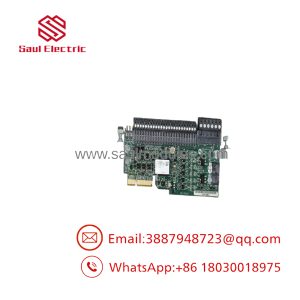
The Allen-Bradley 1771-OW16 is a 16-point electromechanical relay contact output module designed for the 1771 Universal I/O platform used with PLC-5 processors and 1771-ASB remote I/O chassis drops. Providing dry contact switching across 16 independent Form A (Normally Open) relays, it allows a single card to switch mixed voltage loads across different channels without requiring interposing relays.
Engineered for electrical isolation between channels and backplane logic, the 1771-OW16 supports switching voltages from 24 to 250 VAC and 24 to 125 VDC. It provides an ideal physical barrier when interfacing PLC-5 control systems to third-party equipment, motor starters, alarm horns, and external control circuits operating on isolated power sources.
Key Technical Specifications
| Parameter | Value |
| Outputs Per Module | 16 Form A (Normally Open) Relay Contacts |
| Operating Voltage Range | 24 to 250 VAC (47–63 Hz) | 24 to 125 VDC |
| Contact Current Rating | 2.0 A Continuous per channel @ 120VAC / 24VDC |
| Maximum Module Load | 1440 VA Continuous per module |
| Minimum Contact Load | 10 mA @ 5 VDC |
| Contact Response Time | Open to Close: 15 ms max | Close to Open: 15 ms max |
| Backplane Current Draw | 1.3 A @ 5 VDC |
| Isolation Rating | 1500 VAC (Field to Backplane) | 1500 VAC (Group to Group) |
| Contact Material | Silver-Cadmium Oxide |
| Field Wiring Arm | 1771-WF 40-Pin Field Wiring Arm |
Application Scenarios & The “Trench” Experience
The Trench Story
During a midnight troubleshooting call at a grain processing plant, a PLC-5 system controls a mix of 120VAC contactor coils, 24VDC status lamps, and a dry contact start/stop signal to a third-party MCC. A solid-state output card was suffering from off-state leakage currents that kept sensitive digital inputs on the MCC energized even when turned OFF. Swapping the solid-state card for a 1771-OW16 electromechanical relay module provides true physical open contacts, eliminating leakage currents entirely and allowing three different voltage sources (120VAC, 24VDC, and dry contact) to be safely controlled from a single slot.
Specific Applications
- Interfacing Mixed-Voltage Systems: Switches diverse field voltages (e.g., 24VDC, 120VAC, 230VAC) across different outputs on the same card.
- Dry-Contact Machine Safety Loops: Provides physical relay contact closure signals to third-party OEM skids and vendor controllers.
- Motor Starter & Contactor Control: Drives heavy interposing relay coils, main line contactors, and motor control center (MCC) starter circuits.
- Alarm & Annunciator Horns: Switches high-draw AC sirens, visual strobe lights, and control panel indicator arrays.
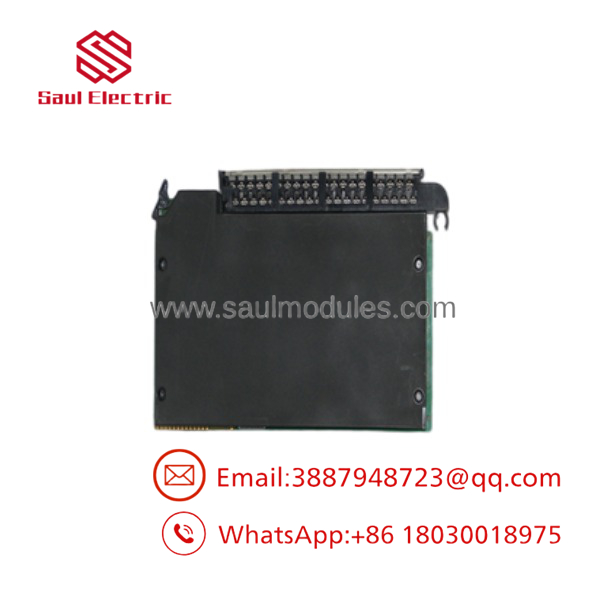
- 1771-OW16
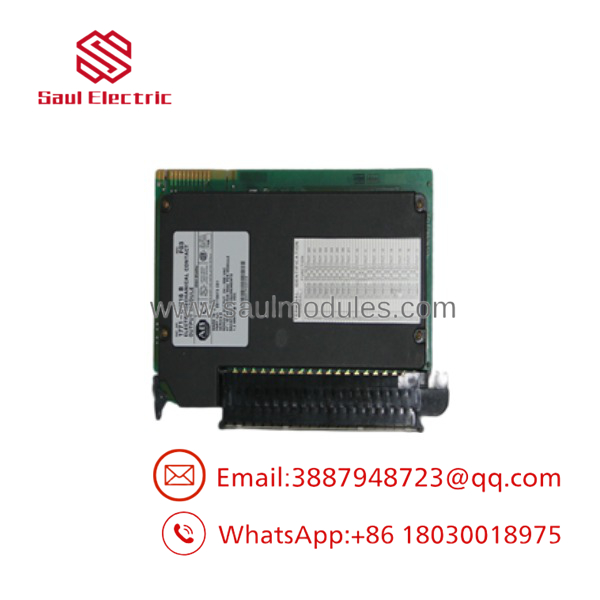
- 1771-OW16
Transparency SOP: Quality Assurance & Testing
Every 1771-OW16 relay contact module undergoes rigorous electromechanical and load bench testing prior to shipment:
- Physical & Relay Inspection: We inspect gold backplane card-edge contacts, check for signs of thermal stress, and verify all 16 internal relay enclosures for physical wear or contact pitting.
- Backplane & Logic Boot Test: The module is installed in a live 1771-A2B chassis with a PLC-5 controller to confirm logic power distribution and status LED activation.
- 16-Channel Relay Continuity & Load Test: Each relay output is individually actuated in sequence, verifying mechanical click action, contact resistance under load (<0.1\,\Omega), and open-contact breakdown voltage.
- Mixed-Voltage Stress Test: Channels are tested with both 120VAC and 24VDC loads at maximum rated continuous current (2.0 A) to verify thermal performance across the board.
- Leakage & Isolation Audit: Contacts are tested in the OFF state using an insulation resistance tester to confirm zero current leakage across open contacts and between field-to-backplane barriers.
The Veteran’s Tech Trap Guide
- ⚠️ Contact Life Depends on Load Suppression: Switching inductive loads (such as solenoid valves or heavy contactor coils) creates high back-EMF voltage spikes upon contact opening. Always install MOV surge suppressors (for AC loads) or flyback diodes (for DC loads) across field devices to prevent arc pitting and extend relay contact lifespan.
- ❗ Mind the 1440 VA Total Module Limit: Although each individual contact can carry up to 2.0 A, the entire 16-point module cannot exceed 1440 VA total continuous power across all channels simultaneously.
- ⚠️ Wiring Arm Compatibility (1771-WF Required): The 1771- requires the high-density 1771-WF 40-pin field wiring arm. Standard 20-pin arms (like the 1771-WH or 1771-WA) will not fit this module.
- ❗ Not Recommended for Micro-Current Logic Signals: Silver-cadmium oxide contacts require a minimum wetting current (~10 mA @ 5VDC) to break through surface oxidation. Using the 1771- to switch ultra-low current signals (<1 mA) can lead to intermittent signal loss over time; use gold-contact cards for micro-logic level switching.
Frequently Asked Questions
Q: What is the main difference between the 1771- and the 1771-OW10?
The provides 16 Form A (Normally Open) outputs using a 40-pin 1771-WF wiring arm. The 1771-OW10 provides 8 Form C (SPDT – Normally Open/Normally Closed) relay outputs using a 20-pin wiring arm.
Q: What field wiring arm is required for the 1771-?
The 1771- requires the 1771-WF 40-pin field wiring arm.
Q: Can I mix AC and DC voltages on different outputs of the same 1771- card?
Yes. Because each relay output contact is electromechanically isolated, you can switch 24VDC on Channel 0, 120VAC on Channel 1, and 230VAC on Channel 2 without cross-talk or short circuits.
Q: Are the relay outputs individually fused on the 1771-?
No. There are no internal user-replaceable fuses for individual contacts on the board. External terminal-block fuses should be installed in the field panel to protect individual circuits.
Q: Can the 1771- be used in a ControlLogix system?
Yes. It can be installed in a 1771 chassis connected via a 1771-ASB remote I/O adapter back to a ControlLogix chassis equipped with a 1756-RIO scanner module.
Q: What warranty covers your surplus and refurbished 1771- cards?
Every 1771- module we ship includes our full 12-month replacement warranty. If a mechanical relay failure or contact continuity fault occurs under normal operating conditions within 365 days of purchase, we replace the unit immediately from stock or issue a full refund.

 Start Chat


