





Description
Product Introduction
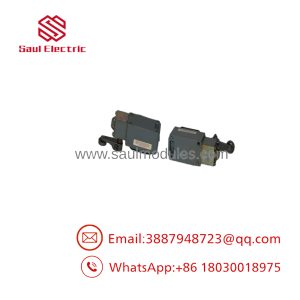
The Allen-Bradley 1771-OX is a 4-channel power contact output module designed for high-reliability switching in PLC-5 I/O chassis systems. Built with mercury-wetted relay contacts, the 1771-OX offers exceptionally low contact resistance, zero contact bounce, and long operational life under heavy AC and DC loads.
Each of the 4 channels is electrically isolated, permitting independent control of distinct AC (up to 250V) or DC (up to 175V) circuits without cross-channel interference. Onboard selectable jumpers allow each output to be configured as either Normally Open (N.O.) or Normally Closed (N.C.). Because this module utilizes physical mercury-filled glass bulb relays, strict orientation guidelines and pre-powerup conditioning procedures must be followed during installation.
Key Technical Specifications
Electrical & Environmental Specs
| Parameter | Specification |
| Backplane Power | 550 mA maximum @ 5V DC |
| Output Voltage Range | AC: 0–250V AC RMS | DC: 0–175V DC |
| Output Isolation | Channel-to-channel and channel-to-backplane optical/relay isolation |
| Signal Turn-Off Delay | Typical AC: 45 ms (±15 ms) | Typical DC: 50 ms |
| Protection Fuse | 7A, 250V 3AG slow-blow fuse (accessible under protective cover) |
| Status Indicators | 4 Red LED indicators (one per output channel indicating energized state) |
| Maximum Cable Length | 1,000 feet (304.8 meters) |
| Backplane Keying Position | Slots between pins 6 & 8 and 16 & 18 |
Application Scenarios & The “Trench” Experience
The 1771-OX is frequently deployed in demanding industrial environments where standard mechanical relays suffer from contact arc degradation or contact bounce:
- Inductive Load Control: Switching motor starters, heavy solenoids, and large contactor coils in automotive and metal stamping plants.
- High-Duty-Cycle Switching: Rapid or continuous load switching where non-wetted electromechanical contacts wear out prematurely.
- Low-Signal & Dry-Contact Bridging: Mercury wetting prevents oxidation buildup on contact surfaces, allowing consistent switching over long periods.
Transparency SOP: Quality Assurance & Testing
When commissioning or testing a surplus or refurbished 1771-OX module, rigorous verification is essential due to the physical nature of mercury switches:
- Physical & Orientation Inspection:
- Verify the module enclosure and internal glass bulbs (visible under cover) are undamaged and free of liquid mercury leaks.
- Confirm the module is mounted strictly within 30° of vertical in the 1771 I/O rack.
- Pre-Powerup Contact Conditioning (Crucial Step):
- Before applying system power, let the module rest vertically for at least 3 minutes, or manually actuate the relays 16 times. This ensures the mercury pools correctly inside the switch capsules.
- Continuity & Jumper Setup:
- Check internal jumper settings (N.O. vs. N.C.) for each output channel.
- Measure contact resistance across output terminals while cycling the channel on/off.
- Fuse Check:
- Inspect the 7A slow-blow fuse located under the module side cover to ensure continuity.
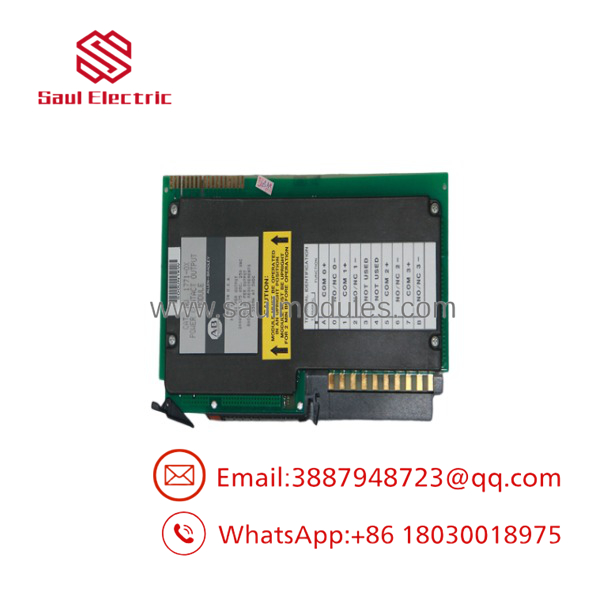
- 1771-OX
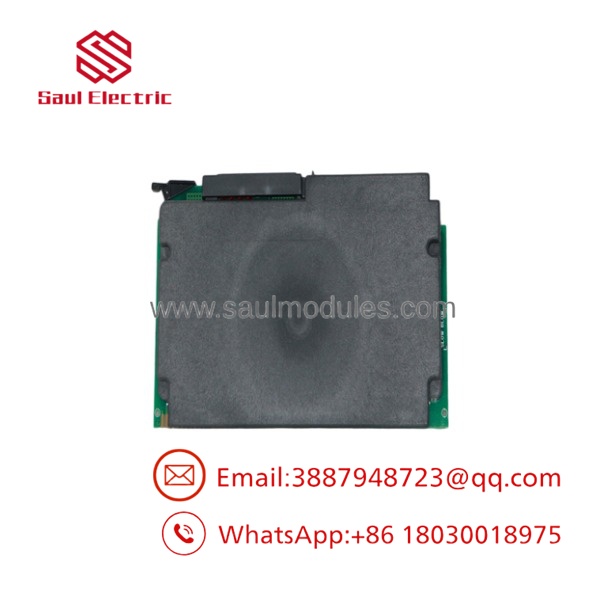
- 1771-OX
The Veteran’s Tech Trap Guide
⚠️ Critical Caution — Mercury Relays: The 1771-OX contains mercury-wetted relays. Do not drop, subject to severe vibration, or invert the module while powered. Handle and dispose of in compliance with local environmental regulations regarding mercury.
Common Pitfalls & Solutions
- Trap 1: Module Energizes but Output Contacts Short / Stuck Closed
- Cause: Mounting the chassis horizontally or tilted beyond 30° causes the internal mercury pool to short the contact contacts permanently.
- Fix: Ensure the 1771 I/O chassis is mounted upright in a standard vertical enclosure panel.
- Trap 2: Erratic Behavior on First Power-Up After Transport
- Cause: Transport vibration distributes mercury droplets across the glass envelope inside the relay.
- Fix: Always wait 3 minutes after inserting into a vertical chassis, or manually operate the output channels 16 times before applying power.
- Trap 3: Blown Fuse on Inductive Load Disconnect
- Cause: High voltage spikes back-EMF from large inductive loads (solenoids, coils).
- Fix: Install an RC arc suppressor (snubber) network across AC loads or a flyback diode across DC loads to protect the 7A internal fuse and contacts.
Frequently Asked Questions
Q: Can I use the 1771-OX in a chassis that is mounted horizontally?
No. Mercury-wetted relays rely on gravity to keep the liquid mercury at the bottom of the switch capsule. Operating the 1771-OX in a horizontal or tilted position exceeding 30° from vertical will cause incorrect contact closure or short circuits.
Q: Which field wiring arm is required for the 1771-OX?
The module uses the 1771-WC (or 1771-WH) wiring arm, which connects to the front terminal strip and allows module replacement without disturbing field wiring.
Q: How do I select Normally Open (N.O.) vs. Normally Closed (N.C.) contacts?
Remove the module side cover to access internal circuit board jumpers (JPR settings). Reposition the respective channel jumpers to the desired NO or NC position before installing the module.
Q: What is the replacement fuse for this module?
Use a 7A, 250V 3AG slow-blow fuse. Always disconnect chassis power before opening the module cover to replace the fuse.

 Start Chat


