





Description
Product Introduction & Engineering Value
The 0100-71313 appears to belong to the AMAT/AKT GMC control family, rather than being a generic industrial I/O card. Secondary technical records specifically describe it as the GMC Turbo version, with a 32-bit processor and 64K memory, and associate it with high-speed communication to Allen-Bradley SLC 5/03, 5/04, and 5/05 controllers.
That distinction matters during replacement. Public documentation does not establish a complete OEM datasheet for this exact part, and market listings use inconsistent descriptions. Treat the part number, board revision, installed machine, and connector configuration as the primary compatibility criteria.
Technical Specifications
| Specification | 0100-71313 |
|---|---|
| Manufacturer | Applied Materials (AMAT) |
| Equipment Family | AMAT / AKT |
| Control Family | GMC Turbo |
| Part Number | 0100-71313 |
| Board Type | Control / motion-control card |
| Processor | 32-bit, reported |
| Memory | 64K, reported |
| Controller Link | SLC 5/03, SLC 5/04, SLC 5/05, reported |
| Communication | High-speed controller link, configuration-dependent |
| Known Revision | Rev. 01 |
| Other Market Revision | Rev. E2 |
| Typical Application | Semiconductor equipment motion/control |
| Exact I/O Count | Not reliably established |
| Exact Supply Voltage | Not reliably established |
| Exact Current Rating | Not reliably established |
| Exact Connector Pinout | Must be verified against the target equipment |
The 32-bit/64K identification and SLC 5/03–5/05 compatibility come from secondary technical records describing the GMC Turbo version.
There is also a current listing for a physical 0100-71313 Rev. 01 card, providing useful evidence that this revision exists in the secondary market. Another supplier lists an 0100-71313 Rev E2 circuit board.
Specification Warning
Do not automatically accept online claims such as:
- 12 VDC operating voltage
- 0.5 A rated current
- 5 W maximum power
- unspecified multi-channel I/O
Those values appear on a reseller page but are not sufficiently corroborated by the stronger part-specific evidence.
For an engineering procurement document, I would leave those fields as “Verify by machine configuration” unless the original AMAT documentation is available.
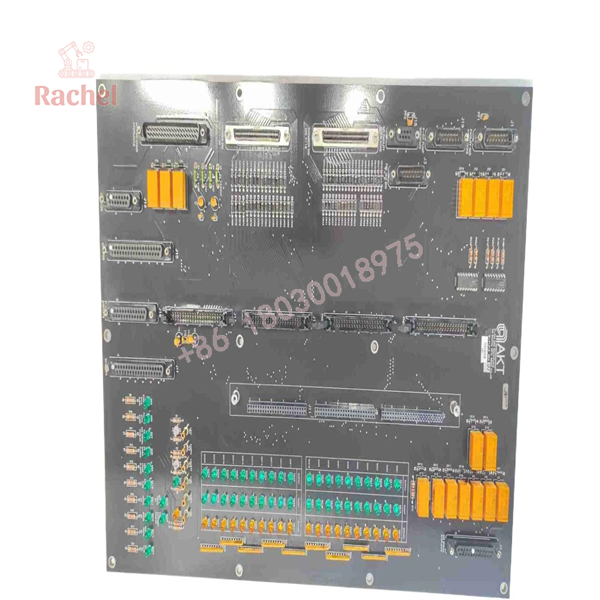
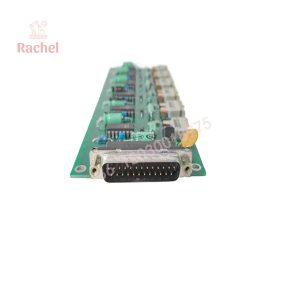
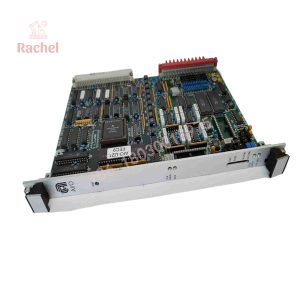
0100-71313
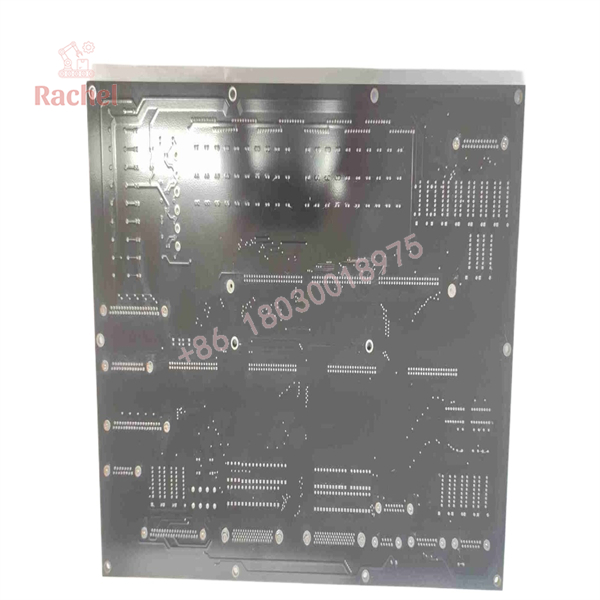
0100-71313
Field Application & the “Trench” Experience
A legacy AKT tool starts producing intermittent positioning faults. The motor hardware checks out, and the field wiring passes continuity testing. Yet the controller occasionally loses the expected motion sequence.
The technician notices something important: the fault is not isolated to one motor. Several motion-related functions are affected.
That shifts the investigation toward the common control layer.
The installed card is identified as 0100-71313, and the replacement candidate carries a different revision marking. Instead of installing it immediately, the technician compares the board revision, host controller interface, configuration, and machine software requirements.
The replacement is then tested through the complete control path—not merely powered on.
That is the right way to handle this part. A CPU/control card can look perfectly healthy on the bench while failing when the host controller actually exchanges data with it.
Specific Application Scenarios
- AKT motion-control systems — coordinating machine positioning functions through the GMC control architecture.
- Semiconductor equipment controller interfaces — linking legacy motion/control hardware with Allen-Bradley SLC-family controllers where configured.
- Wafer-handling positioning — controlling or coordinating precision movement in older semiconductor processing equipment.
- Legacy equipment recovery — replacing an obsolete controller card while retaining the original machine architecture.
Transparency SOP: QA & Testing
For 0100-71313, a meaningful test should cover both the processor and its external communication path.
1. Identity verification
Confirm:
0100-71313- Board revision
- AMAT/AKT markings
- Serial number
- Barcode
- Connector arrangement
2. Physical inspection
Look closely at the card-edge connector, terminal connectors, processor area, memory devices, electrolytic capacitors, and any socketed components.
3. Power-up test
Use the appropriate AMAT test chassis or a qualified compatible fixture. Monitor startup current and processor initialization.
4. Memory test
Verify that the reported memory configuration is recognized correctly and remains stable during extended operation.
5. Host communication test
If the target architecture uses an SLC 5/03, 5/04, or 5/05 interface, verify actual data exchange rather than simply checking electrical continuity. The GMC Turbo configuration is specifically reported as supporting high-speed links to these controllers.
6. Motion/control simulation
Exercise representative control commands using an approved test fixture.
7. Extended run
Run repeated initialization and communication cycles. Intermittent processor or communication faults can take hours to reproduce.
One current marketplace listing shows a used Rev. 01 unit with actual photographs, while another supplier advertises Rev. E2 stock.
The Veteran’s Tech Trap Guide
⚠️ Trap #1 — Confusing 0100-71313 with a generic I/O module
Several reseller pages call it an “industrial input/output module.”
That description is too broad for a serious replacement specification.
The more useful technical identification is GMC Turbo control card.
PRO TIP: Put the complete machine model and existing board revision on the RFQ.
⚠️ Trap #2 — Ignoring revision differences
Current market evidence shows Rev. 01 and Rev. E2 examples.
Never assume that a later revision is automatically a drop-in replacement. Firmware, connector assignments, memory configuration, and host communication behavior can change.
⚠️ Trap #3 — Testing only for power
A control card that boots is not necessarily a working control card.
You need to verify:
Power → processor initialization → memory → host communication → control response.
⚠️ Trap #4 — Assuming the published 32-bit/64K information is a complete datasheet
The 32-bit processor and 64K memory description is useful, but it comes from secondary-market documentation.
Do not infer CPU manufacturer, clock speed, firmware version, or memory technology without documentation for the actual board revision.
Dynamic FAQ
What is AMAT 0100-71313?
It is an Applied Materials/AKT control card associated with the GMC control family. Secondary technical documentation specifically identifies the 0100-71313 as a GMC Turbo version.
What processor does 0100-71313 use?
Secondary technical records describe the GMC Turbo version as having a 32-bit processor with 64K memory. The exact processor manufacturer and device number are not sufficiently documented publicly to state them as OEM specifications.
Does 0100-71313 communicate with Allen-Bradley SLC controllers?
The GMC Turbo documentation available through secondary sources states support for high-speed links to SLC 5/03, SLC 5/04, and SLC 5/05 controllers. Verify the actual machine configuration before assuming that interface is populated or enabled.
Which revisions are available?
Current secondary-market records show at least Rev. 01 and Rev. E2 examples.
Is New Surplus 0100-71313 available?
Yes. Current suppliers advertise both new and used stock, while marketplace inventory includes used Rev. 01 units.
For a New Surplus purchase, request photographs of the actual board and original packaging rather than relying on a catalog photograph.
How do I verify New Surplus authenticity?
Request clear photographs showing the 0100-71313 part number, revision, serial/barcode label, PCB markings, connectors, and packaging. The supplier should explicitly state whether the unit is New OEM, New Surplus/NOS, Refurbished, or Used-Tested.
What warranty should I request?
A current supplier advertises a 365-day warranty, but that is seller-backed coverage and should not be represented as an Applied Materials manufacturer warranty.

 Start Chat


