





Description
Product Introduction & Engineering Value
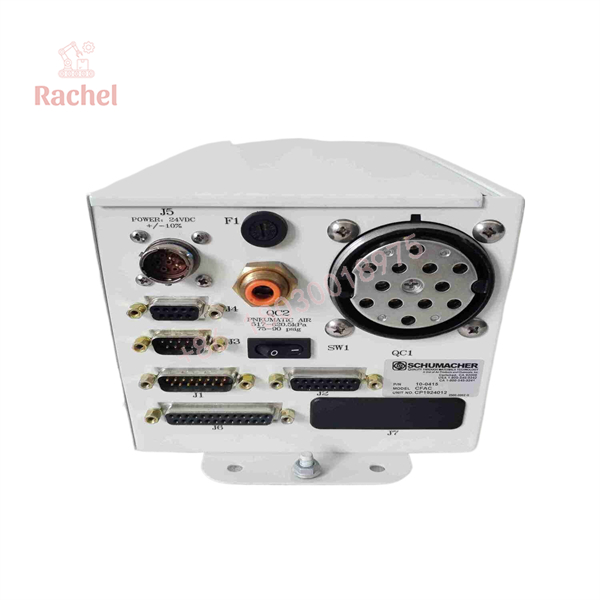
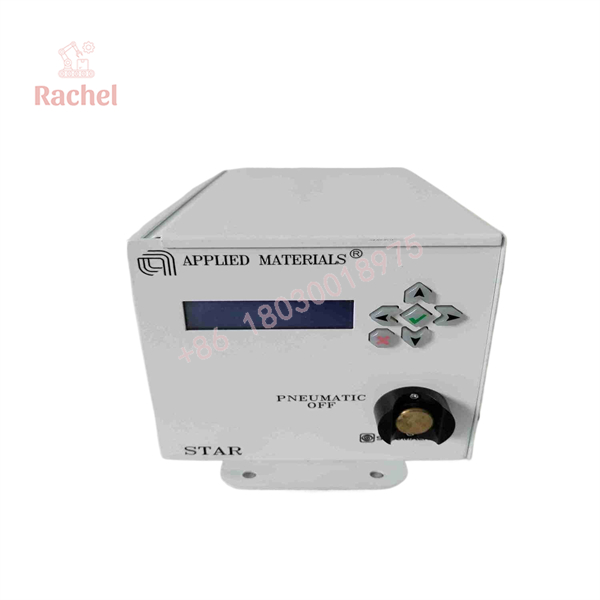
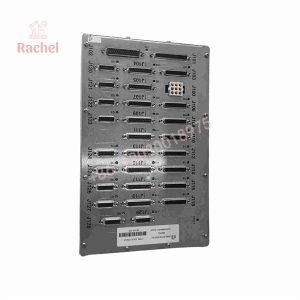
The Applied Materials 0190-15779 appears to be associated with a Schumacher CFAC pneumatic controller, with 10-0415 given as the associated part number. This places the component in the equipment-control/pneumatic subsystem rather than allowing it to be safely classified as a generic PLC I/O module.
There is a significant documentation problem with this part number: several secondary suppliers assign completely different functions to 0190-15779. One describes it as a high-power programmable DC supply, while another database calls it a V6U/DSP VME motion controller. Those descriptions conflict directly with the Schumacher CFAC identification. For engineering and procurement purposes, the exact board/unit label and revision should therefore be treated as authoritative.
Technical Specifications
| Specification | 0190-15779 |
|---|---|
| OEM | Applied Materials |
| Part number | 0190-15779 |
| Associated designation | Schumacher CFAC |
| Associated P/N | 10-0415 |
| Function | Pneumatic controller |
| Component category | Equipment controller |
| Listed condition example | Pre-owned |
| Listed weight | 2.45 kg |
| Verified input voltage | Not established from reliable public documentation |
| Verified output specification | Not established |
| Verified communication protocol | Not established |
| Verified firmware revision | Not established |
The 2.45 kg figure comes from a direct secondary-market listing for the Schumacher CFAC identification.
⚠️ Specification Integrity Note
A reseller currently describes 0190-15779 as a 480 VAC three-phase, 0–200 VDC/200 A programmable power module and publishes extensive specifications around that description.
I would not use those specifications in a purchase specification or machine-maintenance document without an OEM document, equipment manual, nameplate photograph, or verified technical drawing supporting them.
That same catalog number is also classified elsewhere as a V6U/DSP VME motion controller.
This is exactly the type of legacy AMAT part-number ambiguity that can result in a costly wrong-part purchase.
0190-15779
0190-15779
Field Application & “Trench” Experience
Example: Pneumatic Control Fault on Legacy AMAT Equipment
Suppose an older Applied Materials tool develops an intermittent pneumatic-control fault. The controller reports an abnormal pneumatic sequence, but downstream valves and actuators test correctly.
A maintenance engineer should work backward through the control chain:
- Confirm the exact equipment model and chamber configuration.
- Record the complete alarm/event code.
- Verify pneumatic supply pressure independently.
- Check valve/actuator operation.
- Inspect controller connectors and harnesses.
- Verify the installed controller’s exact part number and revision.
- Compare the controller configuration against a known-good machine.
- Replace the controller only after the pneumatic field devices and supply system have been eliminated as causes.
- Perform the manufacturer’s required pneumatic/interlock verification after replacement.
This approach is particularly important for legacy semiconductor equipment because a controller fault can be caused by an upstream supply, valve, sensor, or communication problem.
Niche Applications
- Legacy semiconductor-tool pneumatic sequencing
- Vacuum-tool valve actuation and equipment permissive systems
- AMAT tool refurbishment where original controller assemblies are no longer readily available
QA & Testing SOP
For a 0190-15779, identification testing is more important than generic bench testing because of the conflicting public descriptions.
Recommended Receiving Procedure
1. Photograph the actual unit
Capture:
- OEM label
- Part number
- Revision
- Serial number
- Board/unit designation
- Connector side
- Nameplate
2. Confirm the identity
The preferred identification should agree with:
AMAT 0190-15779 / Schumacher CFAC / P/N 10-0415
The Schumacher CFAC identification is directly supported by a current secondary-market listing.
3. Physical inspection
Check for:
- Bent connector pins
- Corrosion
- Contamination
- Cracked PCB assemblies
- Burn marks
- Damaged pneumatic interfaces
- Evidence of previous repair
- Missing labels
4. Functional testing
A meaningful test should use an appropriate Schumacher CFAC / AMAT tool test setup. A generic power-up test is insufficient to establish correct pneumatic-control operation.
5. Record condition
Classify the unit clearly:
- New Surplus
- New Open Box
- Refurbished
- Tested Used
- Untested / As-Is
⚠️ Veteran’s Tech Trap Guide
⚠️ Trap 1 — Trusting the first Google result
This part number is a particularly good example of why legacy AMAT parts should not be identified from a single reseller description.
Public sources currently assign at least three different functions to 0190-15779.
Do not build a technical specification from an unverified reseller page.
⚠️ Trap 2 — Confusing 0190-15779 with 0195-15779
Search results also contain 0195-15779, which is a different catalog number. A one-digit discrepancy can result in a completely different AMAT assembly.
PRO TIP: Require a photograph of the actual OEM label before approving a secondary-market purchase.
⚠️ Trap 3 — Assuming “AMAT” means universal compatibility
Applied Materials equipment commonly uses configuration-specific assemblies. Even when two parts appear to perform similar functions, equipment generation, controller revision, firmware, connector configuration, and pneumatic architecture can determine compatibility.
Lifecycle & Spare-Inventory Strategy
The available evidence indicates that 0190-15779 is primarily encountered through secondary-market industrial-equipment suppliers rather than conventional current-production distribution. One listing currently describes its unit as pre-owned and untested/as-is.
For a critical AMAT tool, inventory records should therefore include:
- Exact OEM part number
- Associated Schumacher part number
- Board/unit revision
- Tool model
- Chamber configuration
- Condition
- Test status
- Supplier
- Warranty period
- Last successful tool test
For high-value semiconductor equipment, a tested spare is substantially more useful than an inexpensive “as-is” board that cannot be validated until the tool is already down.
Dynamic FAQ
What is Applied Materials 0190-15779?
The strongest direct secondary-market identification currently available describes it as a Schumacher CFAC Pneumatic Controller, P/N 10-0415, for Applied Materials equipment.
Is 0190-15779 a DC power supply?
One reseller claims that it is a high-power programmable DC supply, but this conflicts with other sources. I would not classify it as a DC power supply without confirming the physical unit or OEM documentation.
Is 0190-15779 a VME motion controller?
Another parts database assigns that description to 0190-15779, but this also conflicts with the Schumacher CFAC identification.
What should I verify before purchasing?
At minimum, request:
- Actual unit photograph
- OEM label
- Revision
- Associated model/assembly number
- Tool compatibility
- Functional-test report
- Condition
- Warranty
Can I buy a New Surplus unit?
Potentially, but the public listings I found include pre-owned/untested inventory. New Surplus availability should be verified from the actual seller rather than inferred from the part number.
What warranty should I expect?
There is no universal warranty established for this part. The cited pre-owned listing explicitly states that its unit is untested, sold as-is, and without warranty. Supplier warranty terms must therefore be confirmed on the quotation.
Bottom Line
0190-15779 requires identification caution. The strongest direct listing identifies it as an Applied Materials Schumacher CFAC Pneumatic Controller, P/N 10-0415, but other secondary databases assign completely different functions to the same catalog number.
For a procurement-grade listing, I recommend treating 0190-15779 / Schumacher CFAC / 10-0415 as the working identification and not publishing unverified electrical specifications until the actual nameplate or OEM documentation is available.
If you have the 0190-15779 nameplate or board photo, upload it and I can identify the exact revision and produce a much tighter technical specification.

 Start Chat


