





Description
Product Introduction & Engineering Value
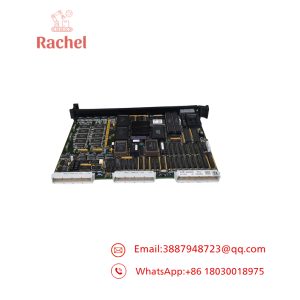
Nothing kills a control cabinet redesign faster than a backplane that doesn’t fit or a bus connector that’s gone intermittent from years of vibration. That’s exactly the frustration the BS207 exists to end. It gives you seven slots on a single, rigid carrier, so your CPU, PSU, comms, and I/O modules sit on one clean systembus with no field wiring between them.
The bus itself is the backbone of the M200 controller. Modules lock in with vibration-proof fixing, the whole unit snaps onto a standard EN 60715 DIN rail, and the shielded connector chain keeps the data path honest in electrically noisy cabinets. Simple part. Critical part.
Technical Specifications
Descriptive parameters, so here’s the bolded list treatment:
- Module slots: 7
- Supported module families: Bachmann M200 hardware (power supplies, CPU modules, I/O modules, communication modules)
- Bus function: Mechanical + electrical interconnection of the M200 systembus
- Mounting: Snap-on to EN 60715 top-hat DIN rail
- Module retention: Vibration-proof fixing mechanism per module slot
- Construction: Rigid PCB backplane, shielded bus chain
- Dimensions: 38.7 cm × 2.5 cm × 12.1 cm (15.3″ × 1.0″ × 4.8″)
- Weight: Approx. 1 lb 6.4 oz (~625 g)
- Power routing: Supply distribution from PSU slot to all module positions
- Configuration flexibility: Slot count scalable across the family (BS201–BS216, 1–16 slots) for right-sized racks
Field Application & The “Trench” Experience
The Trench Story: A plant electrician at a Scandinavian hydropower station once told me the BS207 swap took him eleven minutes — that was the second time. The first time, nobody had labeled which modules came out of which slot, and the station ran blind for half a shift while they reconstructed the layout from cabinet photos taken two years earlier. Lesson burned in: the backplane is passive, but your documentation discipline shouldn’t be. Physically, the job is trivial — unlatch seven modules, unsnap the old rail carrier, snap down the new one, reseat everything, and the systembus comes back exactly as it left. The station’s original BS207 had failed after 14 years of relay-room humidity, with two bus connector pins showing contact corrosion. The replacement New Surplus unit powered up the rack on first try, and the online diagnostics confirmed a clean systembus with zero module errors.
Niche application scenarios:
- Pitch-regulation cabinet retrofits on 3 MW wind turbines — compact 7-slot rack for the M200 controller governing blade pitch servo drives.
- Gas turbine fuel-skid control enclosures — where DIN-rail footprint and vibration-proof module locking matter more than slot count.
- Marine engine-room automation — consolidating safety I/O, CPU, and comms modules on one backplane within tight, shock-prone cabinet space.
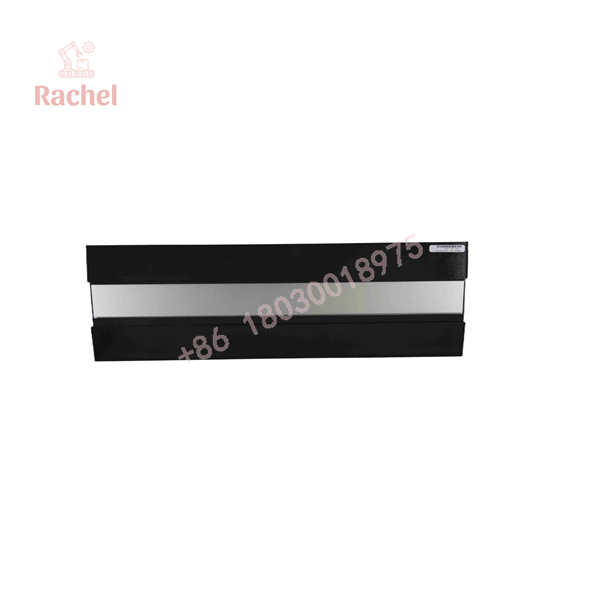
BS207
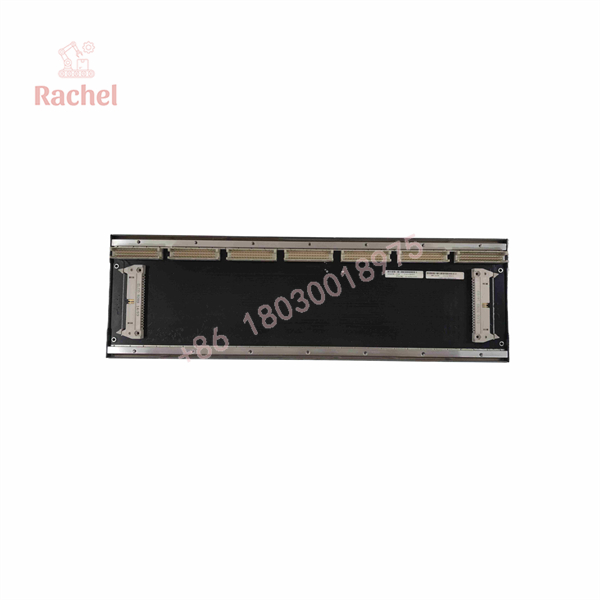
BS207
Transparency SOP: QA & Testing
Our bench routine for every BS207, whether New Surplus or Refurbished:
- Full visual inspection — bus connector pins, slot guides, DIN rail clips checked for damage or corrosion
- Point-to-point continuity across the entire bus chain, slot by slot, pin by pin
- Insulation resistance test on power distribution traces
- Loaded functional check — populated on a reference M200 rack with CPU and I/O to verify error-free systembus recognition
- Serial number verification against Bachmann OEM records
- Serialized QA certificate packed with every unit before it leaves the shelf
The Veteran’s Tech Trap Guide
⚠️ Slot 1 is not negotiable. Power supply modules and the CPU typically have designated slot positions on Bachmann racks. Reassemble modules in the wrong order after a backplane swap and you’ll either fault the systembus or boot into an unexpected configuration. Photograph before you unplug. Always.
PRO TIP: Old backplanes fail at the connector, not the PCB. If you’re troubleshooting intermittent module dropouts, don’t swap modules first — inspect the BS207’s bus pins for fretting corrosion. Nine times out of ten, the “bad I/O card” is a tired backplane contact.
⚠️ Match your series. Bachmann has shipped multiple hardware generations (M1 legacy vs. M200). Confirm which controller generation your rack runs before ordering — a BS207 built for the M200 line won’t play nice in a mismatched legacy rack, no matter how similar the connectors look.
PRO TIP: DIN rail condition matters. A corroded, bent, or undersized rail puts mechanical stress on the vibration-proof locks and can walk the backplane loose over months of pump vibration. Replace sketchy rail while you’re in there.
Dynamic FAQ
Q1: How many modules can the BS207 hold, and what fits in each slot?
Seven slots, accepting the full M200 module range — CPU, power supply, communication, and I/O modules. Need more capacity? The BS200 family scales from 1 to 16 slots (BS201–BS216).
Q2: Can I extend the rack later, or do I have to buy a bigger backplane now?
The backplane slot count is fixed. If you anticipate growth, size up to a BS209 or larger now — swapping backplanes later means powering down and repopulating the whole rack.
Q3: Is the BS207 compatible with the older Bachmann M1 system?
Contact us with your controller’s exact part number and firmware generation. The BS200 series is designed for M200 hardware; legacy M1 racks may require a different backplane family, and we’ll confirm compatibility before you order rather than after.
Q4: What does “New Surplus” mean for a passive part like this?
It means genuine Bachmann OEM production, never placed into field service — typically excess factory or integrator stock. Since it’s a passive part with no firmware to age, the main risk is connector condition, and ours are pin-inspected and continuity-tested before listing.
Q5: What warranty comes with a Refurbished BS207?
The same functional warranty as New Surplus — full coverage against DOA and bus continuity defects, backed by the loaded-rack bench test in our QA sequence. Ask the sales desk for the current warranty term on this SKU.
Q6: Do you stock mating modules or just the backplane?
We regularly stock M200 CPUs, power supplies, and common I/O modules. Buying the complete rack from one shipment means the systembus is bench-verified as a set, not just as parts.

 Start Chat


