





Description
Core Product Summary (Brand / Model / Key Attributes)
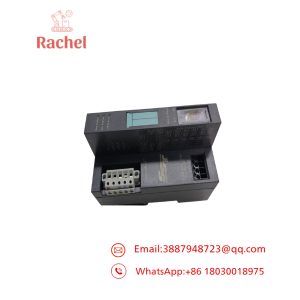
The Bachmann DIO280 (part number 00019114-00) is a high-density digital input/output module for the Bachmann M200 control system, a modular automation platform widely used in wind turbines, marine, and general industrial applications. The module provides 80 digital channels in total — 32 dedicated digital inputs, 32 dedicated digital outputs, and 16 channels that can be configured as either inputs or outputs — organized in 6 groups, with outputs rated at 24V DC and 0.5 A per channel.
Beyond simple switching I/O, the module integrates signal-processing functions that eliminate separate counter and timing hardware: eight inputs can be configured as interrupt inputs or as up to four 32-bit counters operating in event counter, incremental encoder (A/B), gate-time, period-duration, or frequency-measurement modes, and all outputs support PWM operation with a configurable valve hold time for energy-saving inductive-load control. A ColdClimate variant (DIO280 CC, part number 00019119-00) extends the working temperature range for wind energy and outdoor applications.
Key Technical Specifications
| Parameter | Value |
|---|---|
| Product type | Digital input/output module for the M200 control system |
| Model / part number | DIO280 / 00019114-00 (ColdClimate variant: DIO280 CC / 00019119-00) |
| Total digital channels | 80 |
| Channel configuration | 16x DIO (input or output configurable), 32x DI, 32x DO; 6 groups |
| Input voltage range (H) | 15–34 V DC |
| Input voltage range (L) | 0–5 V DC |
| Input filter | Standard 600 µs; settable 10 µs to 270 ms |
| Input internal resistance | 8 kΩ |
| Interrupt inputs | 8, configurable as counter or interrupt inputs |
| Counters | Up to 4, 32-bit resolution |
| Counter operating modes | Event counter, incremental encoder, gate time measurement, period duration, frequency measurement |
| Encoder support | Incremental encoder with A and B channel; one-channel pulse encoder |
| Signal evaluation | 1-/2-/4-fold edge evaluation or pulse direction mode |
| Maximum input frequency | 50 kHz (one-channel), 20 kHz (dual-channel) |
| Output voltage range | 18–34 V DC |
| Output current per channel (max.) | 0.5 A |
| Total output current (max.) | 24 A |
| Switching frequency (max., resistive load) | 1 kHz |
| Inductive breaking capacity | 1.15 H |
| PWM | All outputs; 0–100 % mark-to-space ratio, 13-bit resolution, 1 Hz to 1 kHz, hold time 0–2 s configurable |
| Supply voltage | 18–34 V DC nominal 24 V DC, reverse polarity protected |
| Galvanic isolation | 500 V from the system |
| Internal power supply | Via BS2xx bus power supply module; 180 mA at 5 V |
| Status indication | Green LED per channel |
| Approvals | CE, UKCA, cULus; marine: ABS, BV, DNV, KR, LR, NK, RINA |
| Operating temperature | −30 °C to +60 °C (standard); −40 °C working temperature for ColdClimate |
| Storage temperature | −40 °C to +60 °C |
| Relative humidity | 5–95 % noncondensing (standard); ColdClimate rated for condensing conditions |
| Pollution degree | 2 (IEC 60664-1) |
| Weight | 374 g |
Detailed Product Overview
The DIO280 is the highest-density member of Bachmann’s DIO module family (DIO248, DIO264, DIO280), designed to operate digital consumers such as contactors, relays, and pneumatic and hydraulic valves, and to read signals from digitally operating sources such as sensors, photocells, and switches. With 32 dedicated inputs, 32 dedicated outputs, and 16 direction-configurable channels, one module covers mixed I/O requirements that would otherwise need separate input and output modules, saving rack space and cost.
The module’s input side is engineered for signal integrity and event handling. The standard 600 µs input filter suppresses contact bounce and noise, with a configurable range from 10 µs to 270 ms to match each channel’s signal characteristics. Eight inputs can instead serve as interrupt inputs, letting the controller react to events immediately rather than on a scan, or as counter inputs: up to four 32-bit counters can run as event counters, incremental encoder interfaces with 1-, 2-, or 4-fold edge evaluation, or gate-time, period-duration, and frequency measurement channels, accepting one-channel signals up to 50 kHz and dual-channel (A/B) signals up to 20 kHz. This makes the module suitable for position sensing, piece counting, and speed measurement without external counter hardware.
The output side is rated at 0.5 A per channel at 24V DC (up to 24 A total), sufficient to drive relays, contactors, and solenoid valves directly. All outputs support PWM operation with 13-bit resolution at 1 Hz to 1 kHz, including a configurable hold time of 0 to 2 seconds for the valve economy mode — a feature that reduces coil power consumption of hydraulic and pneumatic valves after switching. Outputs operating in the same mode can be parallel-connected for higher load current, and the specified inductive breaking capacity of 1.15 H covers substantial solenoid loads. Each channel carries a green status LED, and the module is powered from the M200 backplane via the BS2xx bus power supply (180 mA at 5 V internal consumption) with an external 24V DC supply for the I/O circuits, both reverse-polarity protected.
The DIO280 CC ColdClimate variant matches the standard module’s function but extends the working temperature range down to −40 °C and tolerates condensing humidity, qualifying it for wind turbine nacelle and outdoor installations — the core market of the Bachmann M200 platform. Marine type approvals from all major classification societies (ABS, BV, DNV, KR, LR, NK, RINA) support shipboard and offshore use.
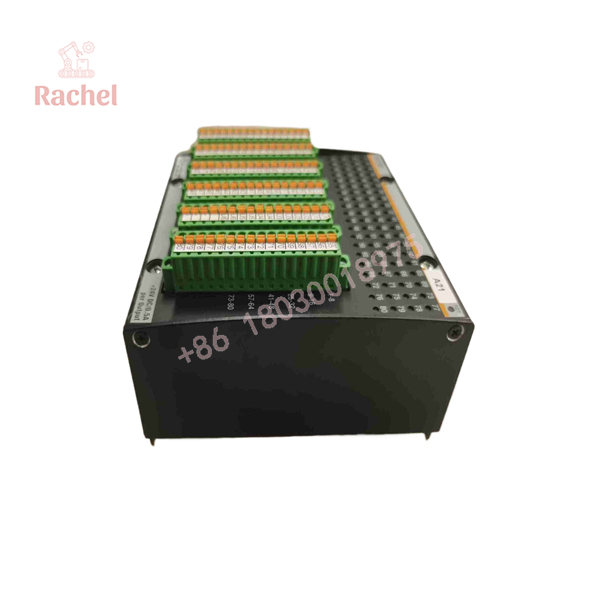
DIO280
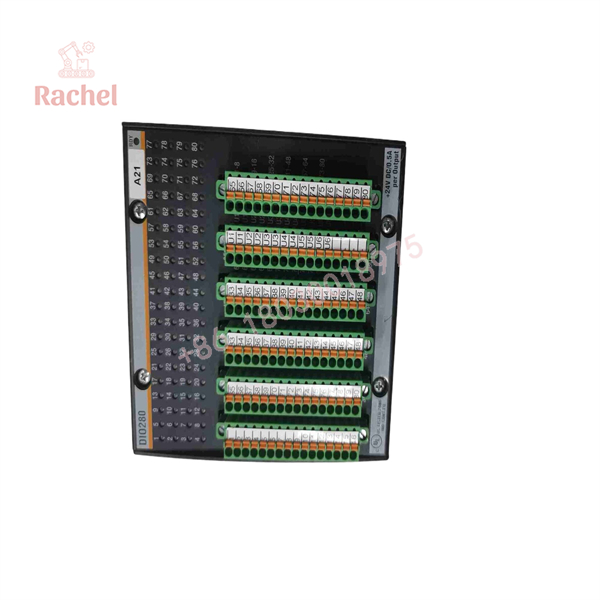
DIO280
Engineering Selection Highlights
- Channel budget — with 32 DI + 32 DO + 16 configurable DIO channels, one DIO280 frequently replaces an input/output module pair; compare against the smaller DIO248 (48 channels) and DIO264 (64 channels) when sizing racks.
- Counter and interrupt planning — the four 32-bit counters and eight interrupt channels are configurable per channel; reserve these channels early in the I/O plan so encoder and counting duties don’t conflict with ordinary signal inputs.
- Input filter matching — set the per-channel filter (10 µs to 270 ms) to the signal source: short filters for encoder and high-speed pulse inputs, longer filters for mechanical contacts and long, noise-exposed field lines.
- PWM valve economy mode — for hydraulic and pneumatic solenoids, use PWM with the 0–2 s hold time to reduce holding power and coil heating; verify the valve’s minimum holding current before applying.
- Load check per group — 0.5 A per output and 24 A total, but the six groups each carry a share of the total; distribute inductive loads across groups and use the parallel-connect option (same operating mode) where more than 0.5 A is needed.
- Power architecture — internal logic comes from the BS2xx bus power supply (180 mA at 5 V); the I/O side needs an external nominal 24V DC supply within 18–34 V; both are reverse-polarity protected.
- Environment variant — specify DIO280 CC (00019119-00) for wind and outdoor applications requiring −40 °C working temperature or condensing-humidity tolerance; the standard DIO280 covers −30 °C to +60 °C, noncondensing.
- Termination choice — order the matching terminal set: KZ-DIO280 B+C cage-clamp (00011978-50) or SS-DIO280 B+C screw terminal set (00012538-50), each with labeling strips and keying elements.
Dimensions, Mounting & Connection Notes
- Mounting: installs in the M200 control system rack; field wiring via plug-in terminal sets on the module’s 6 groups
- Weight: 374 g
- Status indication: green LED per channel for inputs and outputs
- Isolation: field side galvanically isolated from the system at 500 V
- Termination: Phoenix cage-clamp (KZ-DIO280 B+C) or screw-type (SS-DIO280 B+C) terminal sets with labeling and keying elements
- Environment: standard −30 °C to +60 °C operating, 5–95 % RH noncondensing; ColdClimate −40 °C working temperature with condensation tolerance; storage −40 °C to +60 °C; pollution degree 2
System Compatibility & Integration Requirements
| Item / Dependency | Verified Compatibility or Requirement | Practical Note |
|---|---|---|
| Controller platform | Bachmann M200 control system | Module mounts in the M200 rack and is configured in the Bachmann software environment |
| Internal power supply | BS2xx bus power supply module | Provides the 5 V internal supply; DIO280 draws 180 mA at 5 V |
| External power supply | Nominal 24 V DC (18–34 V DC), reverse polarity protected | Powers the input and output circuits; budget total output current up to 24 A |
| Field signals | Inputs 15–34 V DC high / 0–5 V DC low, 8 kΩ internal resistance | Standard 24V DC sensors, contacts, encoders |
| Encoder / counter interfaces | Up to 4 counters, A and B channel incremental or single-channel pulse, max. 50 kHz / 20 kHz | Configure interrupt channels as counter inputs in software |
| Loads | 0.5 A per output, inductive breaking capacity 1.15 H, 1 kHz max. switching frequency | Contactors, relays, solenoid valves; parallel connection allowed in same operating mode |
| Terminal sets | KZ-DIO280 B+C (cage clamp, 00011978-50) or SS-DIO280 B+C (screw, 00012538-50) | Includes labeling strips and keying elements |
| Approvals | CE, UKCA, cULus; marine ABS, BV, DNV, KR, LR, NK, RINA | Marine approvals support ship and offshore installations |
| ColdClimate variant | DIO280 CC, part number 00019119-00 | −40 °C working temperature and condensing-humidity tolerance for wind/outdoor sites |
FAQ
What is the Bachmann DIO280?
It is an 80-channel digital input/output module (part number 00019114-00) for the Bachmann M200 control system, providing 32 digital inputs, 32 digital outputs, and 16 channels configurable as either inputs or outputs, at 24V DC and 0.5 A per output.
What is the difference between DIO248, DIO264, and DIO280?
Density: the DIO248 provides 48 channels (16 DIO + 16 DI + 16 DO), the DIO264 provides 64 channels (16 DIO + 24 DI + 24 DO), and the DIO280 provides 80 channels (16 DIO + 32 DI + 32 DO). Functionally they share the same input, counter, and PWM features.
What counter functions does the DIO280 provide?
Up to four 32-bit counters, configurable as event counters, incremental encoder interfaces (A/B channels with 1-, 2-, or 4-fold edge evaluation), or gate-time, period-duration, and frequency measurement channels, with maximum input frequencies of 50 kHz one-channel and 20 kHz dual-channel.
What are the interrupt inputs used for?
Eight channels can be configured as interrupt inputs so the controller reacts immediately to field events such as limit switches or photocell triggers, or as counter inputs for the encoder and counting functions.
Can outputs drive solenoid valves directly?
Yes — outputs are rated 0.5 A at 24V DC with 1.15 H inductive breaking capacity, and all outputs support PWM with a configurable 0–2 s hold time for valve economy operation. Outputs in the same operating mode can be paralleled for higher current.
What is the DIO280 CC?
A ColdClimate variant (part number 00019119-00) with identical functions, rated for −40 °C working temperature and condensing humidity, intended for wind turbine and outdoor applications.
What approvals does the module carry?
CE, UKCA, and cULus for general use, plus marine type approvals from ABS, BV, DNV, KR, LR, NK, and RINA for shipboard and offshore installations.
What power supplies does it need?
Internal logic power comes from the M200 backplane via a BS2xx bus power supply (180 mA at 5 V), and the I/O circuits require an external nominal 24V DC supply (18–34 V DC), both protected against reverse polarity.
Verification & Troubleshooting Notes
- Inputs read intermittently or bounce: review the configured input filter per channel — mechanical contacts generally need longer filters (up to 270 ms), while encoder inputs need short filters (down to 10 µs); the standard setting is 600 µs.
- Encoder counting errors: verify A/B channel wiring and polarity, confirm the signal frequency is within 20 kHz for dual-channel operation, and check the edge-evaluation setting (1/2/4-fold) matches the encoder’s resolution.
- Outputs not switching loads: confirm the external 24V DC supply is present at the module (outputs need the field supply, not just backplane power), and check the group terminal for the affected channels.
- Output resets when driving a large solenoid: check the per-channel 0.5 A limit and total group loading; use parallel-connected outputs in the same operating mode for higher current, and verify the load inductance is within the 1.15 H breaking capacity.
- PWM-driven valve chatters or overheats: review the PWM frequency (1 Hz to 1 kHz), mark-to-space ratio, and the 0–2 s hold time configuration against the valve manufacturer’s holding-current specification.
- Interrupt events missed: confirm the affected channels are actually configured as interrupt inputs rather than filtered standard inputs, and that the interrupt delay setting (50 µs) is compatible with the event source.
- Module not powering up: verify the BS2xx bus power supply is delivering 5 V to the rack (180 mA internal draw) and that the external supply polarity is correct — both supplies are reverse-polarity protected, so an incorrect polarity results in no function rather than damage.
- Condensation or sub-−30 °C environment: the standard module is rated noncondensing and −30 °C; for condensing or colder sites, use the DIO280 CC ColdClimate variant.
- Configuration, filter, and counter settings are managed in the Bachmann software environment; after any module exchange, verify the configuration was correctly applied and channels indicate correctly before returning the system to service.

 Start Chat


