





Description
Product Introduction
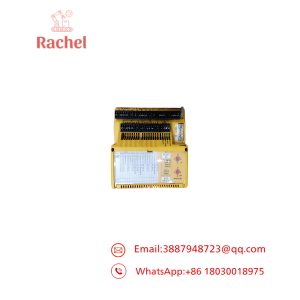
The Bachmann TCO216-C is a compact, remote I/O terminal controller built for distributed automation architectures. Acting as a fieldbus node within the Bachmann M1 automation ecosystem, it aggregates local sensor and actuator field wiring directly to a central CPU over a CANopen network. This decentralized design eliminates long multicore cable runs from remote field cabinets back to the primary control enclosure.
Unlike basic remote I/O couplers that require multiple piggybacked cards, the TCO216-C combines processing logic, fieldbus communications, and mixed I/O channels into a single ruggedized housing. Its dual CAN interface ports allow engineers to construct redundant ring or line bus topologies, ensuring uninterrupted signal processing even if a field bus cable suffers a physical break.
Key Technical Specifications
| Parameter | Value / Feature |
| Manufacturer | Bachmann Electronic |
| Product Family | M1 Controller System / Terminal Controllers |
| Model Code | TCO216-C |
| Fieldbus Protocols | CANopen / Proprietary CAN protocols |
| Bus Interfaces | 2x CAN interfaces (Sub-D 9-pin male/female connectors) |
| Supply Voltage | 24 VDC (-15% / +25%) isolated power terminal |
| Address Setting | Rotary HEX switches on front panel |
| Status Indicators | LED indicators for RUN, INIT, ERR, and channel status |
| Mounting Style | Direct DIN rail mount / Panel mount |
| Operating Temperature | -30°C to +60°C (-22°F to 140°F) |
Application Scenarios & The “Trench” Experience
A pitch control cabinet inside a 3 MW wind turbine loses communication with its hub I/O module during a storm. The central M1 controller registers a CAN node timeout, tripping the safety chain and feathering the blades. Waiting weeks for a specialized marine-rated module means losing $8,000 per day in ungenerated power. Dropping in a fully pre-tested Bachmann TCO216-C surplus unit, setting the node ID rotary switches, and reconnecting the pluggable terminal blocks restores pitch monitoring in under an hour.
- Wind Energy Systems: Handles pitch control, nacelle yaw monitoring, and tower-base distributed I/O over CAN networks.
- Marine & Offshore Automation: Serves as a ruggedized Remote Terminal Unit (RTU) for engine room alarms and ballast valve sequencing.
- Hydroelectric Power Generation: Monitors turbine bearing temperatures and governor feedback loops in harsh, high-EMF environments.
- Mobile Machinery & Heavy Equipment: Manages hydraulic valve manifold outputs and sensor inputs on large mobile rigs exposed to severe vibration.
Transparency SOP: Quality Assurance & Testing
- Inbound Mechanical Check: Inspect housing latches, rotary address switches, Sub-D 9-pin connector threads, and removable screw-terminal blocks for pin fatigue or mechanical wear.
- Power Supply & Diagnostic Rail Check: Apply 24 VDC input power; confirm logic boot sequences, power rail stability, and initial LED diagnostic light states (RUN/INIT/ERR).
- Dual CAN Bus Communication Loop Test: Hook up both CAN A and CAN B interfaces to an active Bachmann M1 master rack; verify bus handshakes, baud rate auto-negotiation, and telegram frame integrity.
- I/O Channel Signal Injection: Inject digital and analog signals across input channels and verify output driver latching using a calibrated I/O test rig.
- ESD Packaging & Dispatch: Enclose in anti-static shielding bags and pack in custom high-density foam shipping boxes to prevent shock during transit.
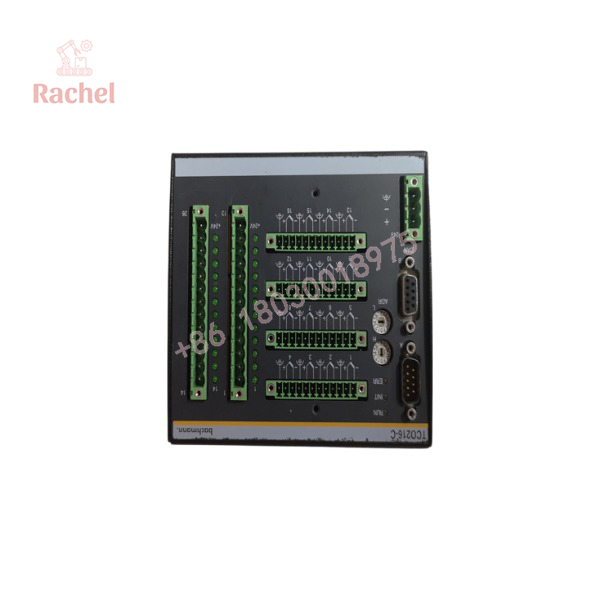
TCO216-C
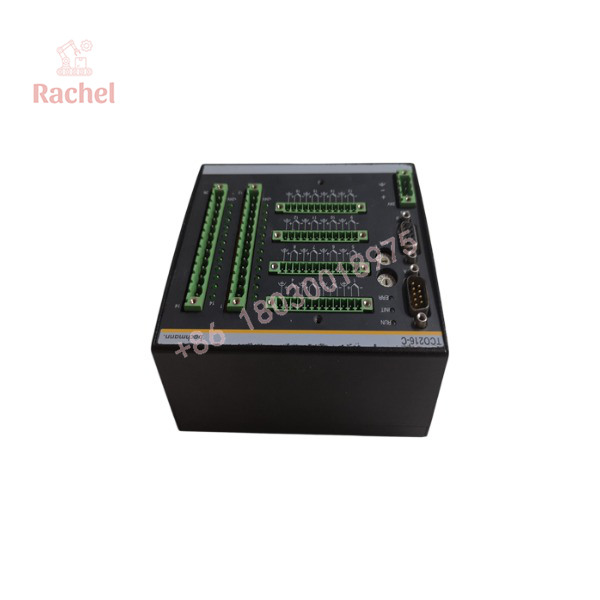
TCO216-C
The Veteran’s Tech Trap Guide (Crucial Value-Add)
- ⚠️ Set Node Address Before Powering Up: The TCO216-C reads its CAN bus node address from the front rotary switches only during initial power-on boot up. Changing the address switches while 24 VDC is applied will not change the active node ID until you cycle power.
- ❗ Verify CAN Bus Termination Resistors: CAN networks require 120-ohm termination resistors at both physical ends of the line. If replacing a TCO216-C situated at the end of a bus drop, double-check whether the internal or external line terminator resistor is properly set.
- ⚠️ Match Baud Rates in Solution Center: Ensure the CAN baud rate configured in Bachmann Solution Center matches the network configuration. Mismatched baud rates will lock the module in an
ERRstatus state and flood the CAN bus with error frames. - ❗ Label Pluggable Screw Terminals: The terminal strips pull off easily for module maintenance. Label each green terminal block position before removal—swapping adjacent 24 VDC power and signal blocks will damage input channels.
Frequently Asked Questions (FAQ)
Q: Can the Bachmann TCO216-C operate as a standalone controller?
A: No. The TCO216-C functions as a distributed fieldbus node (slave unit). It requires a central controller CPU (such as a Bachmann MPC270 or MH212) on the CAN network to execute application code.
Q: Are the green field wiring connector blocks included with surplus units?
A: Yes. All pre-tested surplus and refurbished TCO216-C modules ship complete with clean, verified screw-terminal connector blocks.
Q: What do the front-panel status LEDs indicate during normal operation?
A: Under normal conditions, the RUN LED lights up solid green (indicating active CAN communication), INIT remains off after boot complete, and ERR stays off. A red ERR LED points to bus off errors or wiring faults.
Q: Is the TCO216-C coated for harsh offshore environments?
A: Yes. Most Bachmann C-series modules feature conformal coating to protect internal surface-mount components against moisture, salt haze, and condensation.
Q: What warranty coverage applies to this module?
A: Every clean surplus and fully tested refurbished TCO216-C controller includes a 12-month replacement warranty from the date of shipment.

 Start Chat


