





Description
Product Introduction & Engineering Value
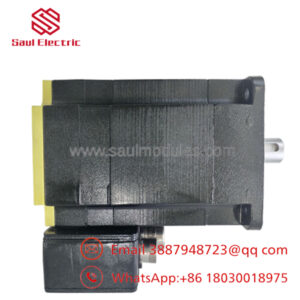
Hook option A (Direct & Technical): The BSM90A-2150AA is a 90-frame brushless AC servo built around a three-phase PM rotor, a resolver for absolute position tracking, and a thermostat winding protection layer — the workhorse configuration Baldor shipped into thousands of OEM machines.
Why it endures: the BSM90 line was the motor integrators reached for when they needed torque density in a compact square frame with standard NEMA-style pilot and shaft dimensions. 2150 winding means it’s tuned for the low-speed, high-torque end of the range. It mates with Baldor’s FlexDrive, MicroFlex, and BSM-era amplifiers without proprietary surprises — and a resolver, unlike an encoder, shrugs off heat and vibration that would scramble glass-scale feedback. That’s why you still find these on machines twenty years old, still turning.
Technical Specifications
| Parameter | Value |
|---|---|
| Frame size | 90 mm (BSM90 family) |
| Winding / speed designation | 2150 winding, 1000 rpm class (“A” speed code) |
| Motor type | Three-phase brushless AC, permanent magnet rotor |
| Bus voltage | 300 V DC |
| Feedback | Resolver (position/velocity), plus winding thermostat |
| Continuous stall torque | ~38 lb-in class (BSM90 family, winding-dependent) |
| Peak current capability | Approx. 2.5× continuous (drive-limited) |
| Mounting | Square flange, pilot-face with precision shaft, keyway standard |
| Environment | IP65 sealed front bearing design (standard BSM90 construction) |
| Insulation class | Class F (class H available on select specs) |
| Construction | Rare-earth magnets, grease-packed sealed bearings, winding thermostat for drive cutoff |
| Complementary drives | Baldor MicroFlex, FlexDrive, and BSM-series servo amplifiers |
Field Application & The “Trench” Experience
The Trench Story: A packaging OEM called on a Friday with a downstream wrapper down — the BSM90A driving their film-feed axis had thrown a bearing after nine years of two-shift running, and a machine worth forty grand an hour sat idle. The catch: ABB’s lead time on a new unit was quoted in weeks. We had a New Surplus BSM90A-2150AA on their dock Saturday morning. The swap itself was textbook — four bolts, one coupling, one resolver connector. The part that saved the weekend was the resolver: no battery, no absolute encoder to re-home, no encoder alignment fixture. Zero on the reference mark, jog the axis home, and the wrapper was running film by 11 a.m. Monday. The maintenance lead’s takeaway: “Resolver motors are boring. That’s exactly why I like them.”
Niche application scenarios:
- Film-feed and cross-sealing axes on horizontal form-fill-seal wrappers, where thermal cycling and grease-laden air kill encoder bearings early.
- Rotary table indexers on die-cast trim presses — low-speed, high-torque duty that matches the 2150 winding’s character without a gearbox stage.
- Automated spray-booth gantry axes in bus-body paint lines, where solvent-laden atmosphere and washdown heat make resolver feedback the safer bet than optical encoders.
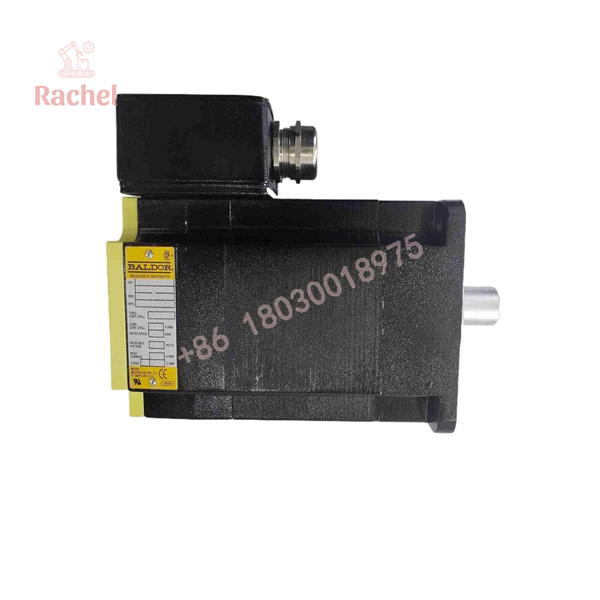
BSM90A-2150AA
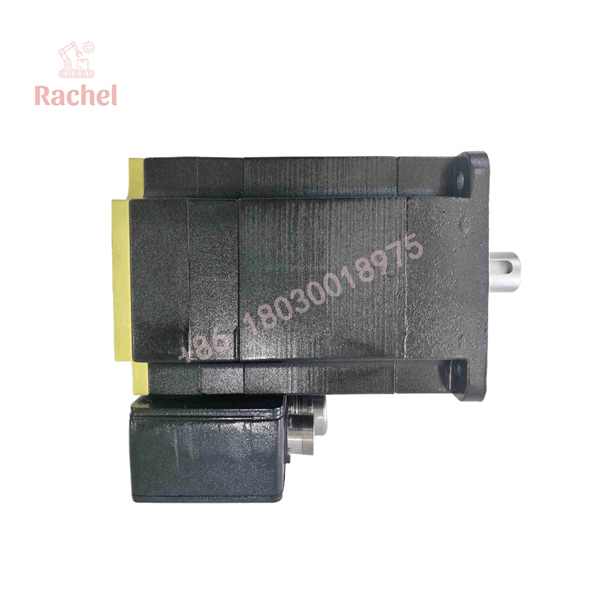
BSM90A-2150AA
Transparency SOP: QA & Testing
Narrative form this time, because a servo deserves it. Each BSM90A-2150AA that enters our stock — New Surplus or Refurbished — goes on a dyna-coupled test stand wired to a Baldor MicroFlex drive. We first meg the windings phase-to-phase and phase-to-ground to confirm insulation integrity, then check phase-to-phase resistance balance within spec. Then the motor spins: low-speed jog, rated-speed run, and a thermal soak while we watch the resolver’s commutation track through the drive’s tuning software. Front-bearing smoothness gets a listening check and a shaft-play inspection. A Refurbished unit additionally gets seal and connector replacement as needed before it earns the same test sequence. Only after a clean run does the unit get bagged, serialized, and photographed for its QA record — which ships with it.
The Veteran’s Tech Trap Guide
⚠️ Resolver wiring is where swaps go wrong. BSM motors come with different resolver connector pinouts depending on spec revision and amplifier generation. Don’t assume the connector that fits is the connector that works — cross-check the motor’s spec number (e.g., S3P…) against your drive’s resolver interface chart before applying power. Swapped sin/cos pairs spin the motor into a fault instantly, or worse, faultlessly wrong.
PRO TIP: Match the winding, not just the frame. A BSM90A-2150AA and a BSM90B-2150AA share a nameplate family but differ in speed-torque character. Dropping a “B” (2000 rpm) winding where an “A” (1000 rpm) belongs changes loop tuning entirely — your drive’s current loop gains and velocity constants no longer match the motor.
⚠️ Don’t ignore the thermostat. The winding thermostat exists to trip the drive before insulation cooks. If you’re bench-testing a used unit and bypass it “temporarily,” you’re one blocked cooling fan away from an unwound stator. Test it closed, and leave it wired.
PRO TIP: ESD matters less here than mechanics — the front bearing seal is the real liability on shelf stock. Motors stored shaft-vertical or with the flange face pressed against anything can develop flat spots in the grease over years. Spin the shaft by hand before install. Roughness at low speed means the bearing already told you something.
Dynamic FAQ
Q1: Can I run the BSM90A-2150AA on a modern ABB/Baldor drive, or only legacy amplifiers?
Yes to both. It mates with the BSM-era amplifiers it was designed for, and Baldor’s MicroFlex and FlexDrive families support resolver feedback directly. The key is entering the correct motor data (resistance, inductance, resolver poles) during drive commissioning.
Q2: What’s the difference between BSM90A, BSM90B, and BSM90N?
The letter designates the speed winding: A is the 1000 rpm class, B is 2000 rpm, N is the 3000 rpm NEO-class winding. Same frame, same mechanics, different torque-speed trade-off — match your original exactly.
Q3: Resolver vs. encoder — should I worry about precision for my application?
A resolver is coarser in raw resolution but far tougher: heat, vibration, and contamination tolerant, with no battery or alignment procedure. For most industrial motion, drive interpolation makes the practical difference negligible, and reliability improves. For sub-arc-second positioning, encoder-feedback variants are the better tool.
Q4: What does “New Surplus” mean for this motor, and is it genuine?
Genuine Baldor OEM production that never entered service — typically excess OEM integrator stock. Every unit ships with its original nameplate, and we verify spec numbers against Baldor’s factory records. Serials are documented in the QA record packed with the motor.
Q5: What warranty do you offer on New Surplus and Refurbished units?
Both categories carry our full functional warranty — coverage for winding, bearing, and feedback defects including DOA replacement. Warranty term for this SKU is available from the sales desk at quote time.
Q6: Do you stock the mating drive and resolver cable?
We regularly stock Baldor servo amplifiers, and we can supply resolver extension cable or build a custom-length feedback harness. Buying motor plus drive from one source means we can bench-run them as a pair before shipment.

 Start Chat


