





Description
Core Product Summary
The Basler DECS-200-2C is a microprocessor-based digital excitation control system from the DECS-200 series. It regulates the field current of a synchronous generator to control terminal voltage, reactive power or power factor.
One unit supports continuous field outputs of 32 Vdc, 63 Vdc or 125 Vdc at up to 15 Adc. It offers automatic voltage regulation (AVR), field current regulation (FCR), power factor and var control modes with ±0.25 % voltage regulation accuracy. True RMS sensing is available for single- or three-phase generator voltage. Configuration is performed from the front-panel HMI or via BESTCOMS software.
Key Technical Specifications
| Parameter | Value |
|---|---|
| Product Type | Digital excitation control system / digital voltage regulator |
| Series | DECS-200 |
| Control Modes | AVR, FCR (manual), Power Factor (PF), Reactive Power (var) |
| Field Output | 32 Vdc, 63 Vdc or 125 Vdc at 15 Adc continuous |
| Voltage Regulation Accuracy | ±0.25 % (AVR mode, rated PF, constant frequency) |
| Sensing | True RMS, single-phase or three-phase |
| Stability Selections | 20 standard + user-customizable |
| Soft Start | Adjustable ramp in AVR and FCR modes |
| Paralleling | Reactive droop or cross-current compensation |
| Limiters | Overexcitation (OEL), underexcitation (UEL), underfrequency / V/Hz |
| Communications | Front-panel RS-232, side-panel RS-485 (Modbus) |
| Setup | Front-panel HMI or BESTCOMS Windows software |
| Approvals | UL recognized, CSA certified, CE compliant |
Engineering Selection Highlights
- Single DECS-200-2C unit covers 32 Vdc, 63 Vdc and 125 Vdc field applications up to 15 Adc continuous, simplifying inventory for multiple generator sizes.
- Four primary control modes (AVR, FCR, PF, var) with automatic tracking between modes support both islanded and paralleled operation.
- ±0.25 % voltage regulation accuracy and true RMS sensing maintain stable terminal voltage under varying loads.
- Built-in over- and under-excitation limiters, underfrequency/V/Hz compensation and paralleling compensation protect the machine and enable grid or multi-generator coordination.
- Front-panel HMI plus BESTCOMS software allow local or remote parameter setting and monitoring without additional hardware.
- RS-485 Modbus port supports communication distances up to approximately 1 km for SCADA or DCS integration.
- Compatible with both 1 A and 5 A current transformers for generator current sensing and cross-current compensation.
Detailed Product Overview
The Basler DECS-200-2C belongs to the DECS-200 family of microprocessor-based digital excitation control systems. It consolidates voltage regulation, limiting, protection and system interface functions into a single enclosure suitable for a wide range of synchronous generators.
The unit provides four primary control modes: automatic voltage regulation (AVR), field current regulation (FCR), power factor control and reactive power (var) control. Modes can track one another so that transfers are bumpless. Voltage regulation accuracy is ±0.25 % under rated power-factor and constant-frequency conditions. True RMS sensing is available for single-phase or three-phase generator voltage, and the controller automatically selects the appropriate sensing range for common potential-transformer secondary voltages.
A single DECS-200-2C accommodates continuous field outputs of 32 Vdc, 63 Vdc or 125 Vdc at up to 15 Adc. The power stage uses pulse-width modulation, which improves performance with non-linear loads. Soft-start ramping is adjustable in both AVR and FCR modes to limit voltage overshoot during buildup. Twenty standard stability settings plus a user-customizable stability option allow tuning for different machine and system characteristics.
Paralleling compensation (reactive droop or cross-current) supports multi-unit or grid-connected operation. Overexcitation and underexcitation limiters, underfrequency compensation or a V/Hz ratio limiter, and a stator current limiter help keep the generator inside its capability envelope. Additional protection functions include field overvoltage and overcurrent, generator over- and undervoltage, loss-of-sensing detection, and an exciter diode monitor.
Local configuration and monitoring are performed through the front-panel backlit LCD and keypad. Full parameter access and data logging are available via the BESTCOMS Windows software connected to the front RS-232 port. A side-mounted RS-485 port supporting Modbus protocol enables remote communication over distances up to approximately 1 km. The unit is UL recognized, CSA certified and CE compliant.
Installation requires correct matching of operating power voltage to the desired field voltage, proper CT and PT connections, and wiring of contact inputs and output relays according to the application. When dual control-power sources are used, an isolation transformer may be required for the AC input.
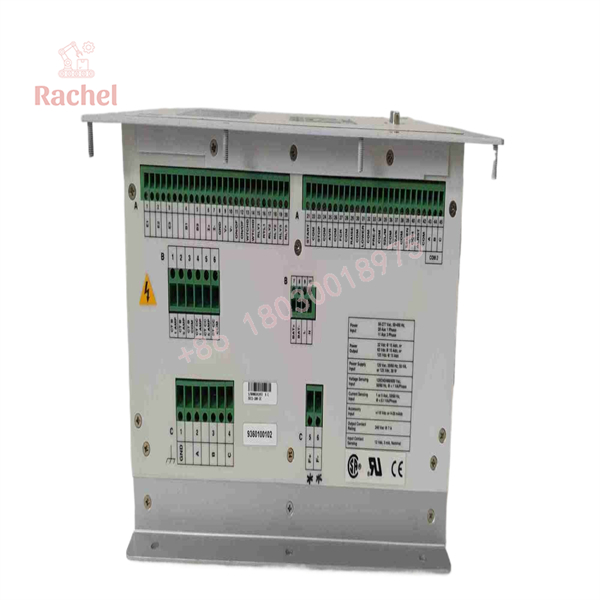
DECS-200-2C
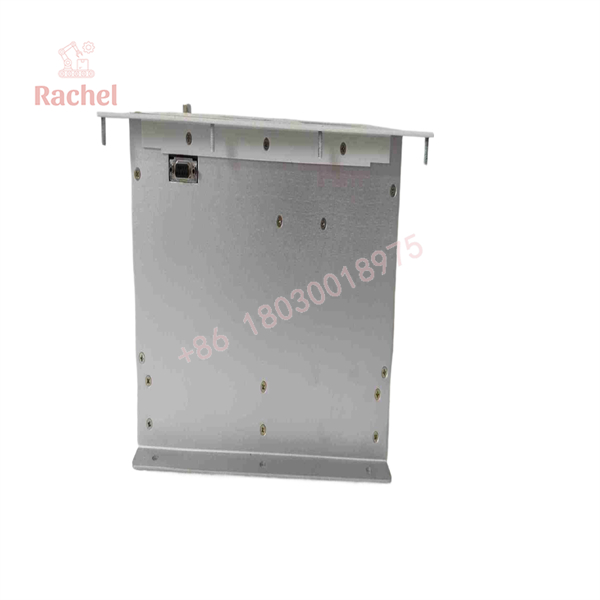
DECS-200-2C
System Compatibility & Integration Requirements
| Item / Dependency | Verified Compatibility or Requirement | Practical Note |
|---|---|---|
| Generator Type | Synchronous generators with exciter field | Suitable for a wide range of machine sizes up to 15 Adc continuous field current |
| Field Voltage Options | 32 Vdc, 63 Vdc or 125 Vdc | Selected by operating power input voltage |
| Voltage Sensing | Single- or three-phase true RMS | Automatic range selection for common PT secondary voltages |
| Current Sensing | 1 A or 5 A CT secondary | Used for paralleling compensation and metering |
| Control Power | Style-dependent (AC and/or DC options) | Dual sources can be used for redundancy on applicable styles |
| Communication | RS-232 (front) and RS-485 Modbus (side) | BESTCOMS software for PC configuration |
| Parallel Operation | Reactive droop or cross-current compensation | Supports multi-generator or grid-connected systems |
Dimensions, Mounting & Connection Notes
The DECS-200 series is designed for panel or cubicle mounting. Terminal arrangements include screw compression terminals for power, sensing and contact inputs, a front-panel DB-9 RS-232 connector, and a side-panel RS-485 port. Field output terminals supply continuous DC excitation current up to 15 A. Control power, generator voltage sensing, current sensing and contact inputs are wired according to the style-specific terminal designations. An isolation transformer may be required when dual AC control-power sources are used.
Applications & System Role
The DECS-200-2C functions as a complete digital excitation control system for synchronous generators. It varies the DC current supplied to the generator’s exciter field to regulate terminal voltage in AVR mode, field current in FCR mode, or reactive power and power factor when operating in parallel with a grid or other machines. Integrated limiting, protection and paralleling functions allow the unit to keep the generator within its capability curve while supporting soft-start voltage buildup and voltage matching.
FAQ
What is the Basler -2C?
It is a microprocessor-based digital excitation control system that regulates the field current of a synchronous generator to control terminal voltage, power factor or reactive power.
What field output ratings does the DECS-200-2C support?
One unit supports continuous field outputs of 32 Vdc, 63 Vdc or 125 Vdc at up to 15 Adc.
What control modes are available?
Automatic voltage regulation (AVR), field current regulation (FCR), power factor control and reactive power (var) control.
What is the voltage regulation accuracy?
±0.25 % in AVR mode over the load range at rated power factor and constant generator frequency.
he configured?
Parameters can be set from the front-panel HMI or via BESTCOMS Windows software connected to the RS-232 port.
Does the DECS-200-2C support paralleling?
Yes. It includes reactive droop compensation and cross-current compensation for multi-generator or grid-connected operation.
What communication interfaces are provided?
A front-panel RS-232 port for local PC connection and a side-panel RS-485 port supporting Modbus protocol.

 Start Chat


