





Description
Product Introduction and Engineering Value
The AVS-1700-ACX combines digital motion commands with brushless servo control. A controller can issue step-and-direction pulses while the drive uses encoder feedback to regulate motor motion. This architecture is useful when upgrading a stepper-style command system without giving up closed-loop servo performance.
The unit is discontinued, making repair and replacement planning important for installed equipment. Before approving a substitute, compare the motor’s electrical ratings, encoder type, command timing, configuration settings, and cooling arrangement. A drive with a similar current rating is not necessarily a compatible replacement.
Technical Specifications
The following values are drawn primarily from the AVS Series system manual. They supersede conflicting figures found in some reseller descriptions.
| Parameter | Specification |
|---|---|
| Manufacturer | Bearing Engineers; associated with Motion Solutions |
| Model | AVS-1700-ACX |
| Product category | Advanced Vector Servo drive |
| DC supply voltage | 24–75 VDC nominal |
| Continuous output current | 7 A RMS in free air |
| Derated continuous current | 9 A RMS mounted vertically on a metal bulkhead; 11.5 A RMS with vertical mounting and forced-air cooling |
| Peak output current | 23 A for 3 seconds, per the system manual |
| PWM switching frequency | 20 kHz |
| Step-and-direction input | Isolated TTL-level inputs; 2 MHz standard maximum rate |
| Encoder input | TTL or differential incremental encoder, with or without index |
| Encoder rate | 2 MHz standard; 20 MHz optional |
| Analog command input | Differential ±10 V |
| Vector-control calculation rate | 10 kHz |
| Operating temperature | 0°C to 40°C |
| Humidity | 0–90%, noncondensing |
| Dimensions | 7.310 × 4.876 × 1.156 inches |
| Weight | 20 oz (approximately 567 g) |
Specification caution: Current capability depends on mounting orientation and cooling. Do not size the drive around the peak-current figure or assume that the maximum cooled rating applies inside an unventilated enclosure. Confirm the exact installation limits in the system manual.
Field Applications and Maintenance Scenario
Field scenario: Recovering a precision indexing axis
Consider an automated packaging machine whose indexing table intermittently loses position after a servo-drive fault. The original AVS-1700-ACX is identified as the installed drive.
Rather than installing a substitute based solely on current rating, the maintenance engineer checks the motor’s phase wiring, encoder signals, step-and-direction timing, and stored drive configuration. The replacement is tested at reduced speed before the machine is returned to production. Position error, acceleration behavior, and fault response are checked under controlled conditions.
This is an illustrative engineering scenario, not a documented customer installation.
Other potential applications for the AVS servo platform include:
- Precision indexing and positioning: Rotary tables, indexing mechanisms, and automated assembly axes.
- Packaging and labeling machinery: Servo-driven feed mechanisms requiring repeatable movement from digital motion commands.
- CNC auxiliary axes: Compatible positioning axes that use incremental encoder feedback and step-and-direction commands.
Actual suitability depends on the motor, load inertia, required torque, and drive configuration. These are application examples, not a guarantee of compatibility with every machine in these categories.
Quality Assurance and Testing
Because the AVS-1700-ACX is discontinued, procurement should include a defined acceptance procedure rather than relying on a supplier’s condition label.
- Identity verification: Check the manufacturer label, complete model number, connector arrangement, and any revision markings.
- Visual inspection: Examine the PCB, power terminals, motor connections, encoder connector, and mounting points for damage or signs of overheating.
- Electrical inspection: Verify the DC supply requirements and inspect the drive for shorts or damaged components before energizing it.
- Functional test: Use a compatible motor and encoder setup to test startup, feedback recognition, command response, and fault protection.
- Load and thermal test: Confirm that continuous current remains within the rating for the actual mounting and cooling arrangement.
- Documentation: Record test results, product condition, warranty terms, and any accessories included with the shipment.
New-surplus stock should be distinguished from refurbished equipment. A new-surplus unit may be unused but stored for years; a refurbished unit may have repaired components. Request a written condition declaration and a functional test report for either category.
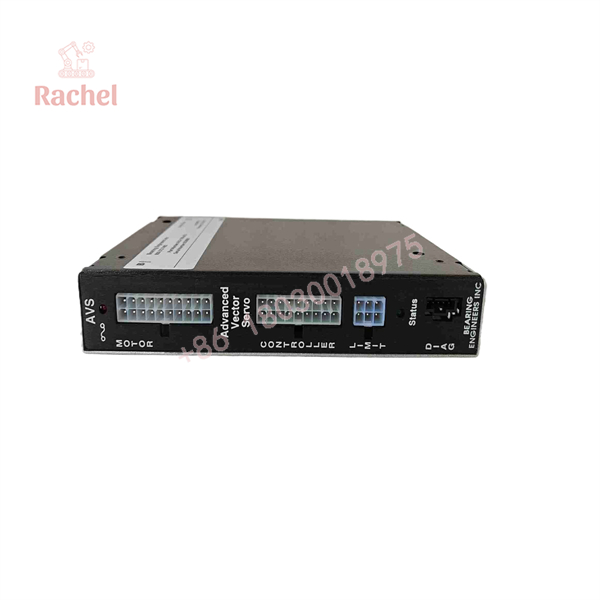
AVS-1700-ACX
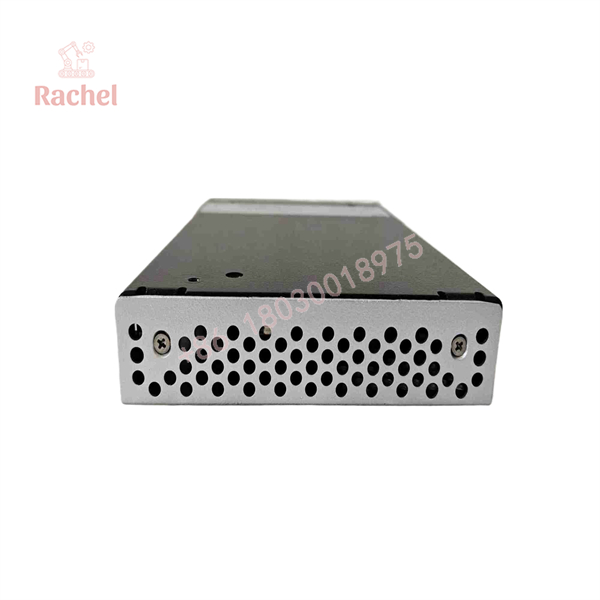
AVS-1700-ACX
Replacement Pitfalls: What Engineers Should Check
Pitfall 1: Misinterpreting the continuous-current rating
The manual specifies 7 A RMS in free air, with higher ratings under defined mounting and cooling conditions. Those values are not interchangeable. An enclosed cabinet with poor airflow may require a lower operating current than a forced-air test setup.
Pitfall 2: Mismatching encoder electrical levels
The drive supports TTL or differential incremental encoder inputs. Verify the encoder’s signal format, voltage levels, channel arrangement, and index requirements. Connector fit alone does not establish electrical compatibility.
Pitfall 3: Overlooking stored configuration and command timing
The original drive may contain application-specific parameters, input filtering, scaling, and motion settings. Record accessible configuration data before removal. Confirm that the replacement accepts the existing controller’s pulse rate and signal format.
PRO TIP: The AVS-1700-ACX manual documents protection against phase-to-phase and phase-to-ground shorts, but this does not eliminate the need for correct wiring. Isolate the DC supply, follow the manufacturer’s discharge procedure, and use appropriate ESD precautions before handling the drive.
Frequently Asked Questions
Q1. Is the AVS-1700-ACX still manufactured?
The model is listed as discontinued by the manufacturer in Radwell’s product record. Remaining stock may be available through surplus-equipment suppliers, and repair services may be offered by specialist vendors. Confirm current availability directly with the supplier.
Q2. What is the input voltage of the ?
The AVS Series manual specifies a nominal DC supply range of 24–75 VDC. This is a low-voltage servo drive, not a three-phase 380–480 VAC industrial variable-frequency drive.
Q3. What is its continuous current rating?
The manual specifies 7 A RMS in free air, 9 A RMS with vertical mounting on a metal bulkhead, and 11.5 A RMS with vertical mounting and forced-air cooling. The documented peak rating is 23 A for three seconds. Actual limits must follow the applicable installation conditions.
Q4. Can it work with an existing PLC or motion controller?
Potentially, provided the controller supplies compatible step-and-direction signals or another supported command input. Confirm signal levels, maximum pulse rate, encoder feedback, electrical isolation, and the required control mode before integrating the drive.
Q5. How can I source a new-surplus or refurbished ?
Specialist suppliers list used, refurbished, and unused-stock condition categories. For example, provides a product record and condition information. Confirm live stock, test coverage, included accessories, and warranty directly before ordering.
Q6. What warranty applies to a replacement drive?
Warranty coverage depends on the seller and the condition of the unit. Some resellers offer their own warranty even when the original manufacturer’s warranty no longer applies. Obtain written terms covering the warranty period, exclusions, return authorization, and remedy for a failed acceptance test.

 Start Chat


