





Description
Product Introduction
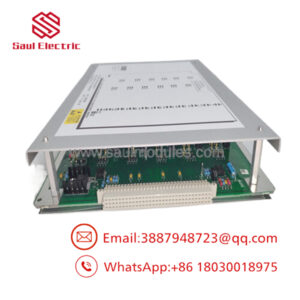
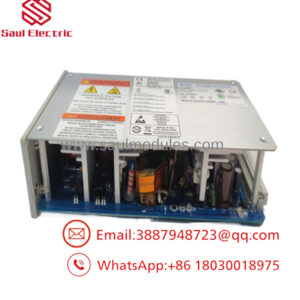
The Bently Nevada 2300/20-RU is a compact, standalone dual-channel vibration monitor designed for critical balance-of-plant assets such as pumps, motors, blowers, and small compressors. Operating within the 2300 Series hardware family, this unit continuously processes dynamic signals from proximity probes, accelerometers, or velocity transducers to safeguard rotating equipment against catastrophic failure.
Unlike complex 3500 rack-based systems that swallow cabinet space, the 2300/20-RU delivers localized machinery protection right at the skid level. It provides direct Modbus/TCP connectivity alongside standard 4-20mA outputs, enabling smooth integration into existing DCS or PLC architectures without requiring dedicated monitoring software interfaces.
Key Technical Specifications
| Parameter | Value / Technical Specification |
| Input Signal Types | 2 Dynamic Channels (Proximity, Accelerometer, or Velocity) + 1 Speed/Keyphasor Input |
| Transducer Compatibility | 3300 XL 8mm/11mm Proximitor, 200350 Accelerometer, 330500 Velocity Sensor |
| Analog Outputs | 2 Configurable 4-20mA outputs + 3 Buffered BNC outputs |
| Relay Outputs | 2 Programmable Alert/Danger Relays (SPDT) |
| Communication Protocols | Ethernet 10/100Base-T supporting Modbus/TCP |
| Frequency Response | 0.2 Hz to 20 kHz (Bandpass filter configurable) |
| Operating Power | 18 to 36 VDC (Typical consumption: 7.5W) |
| Operating Temperature | -30°C to +65°C (-22°F to +149°F) |
| Regional Certifications | RU Option (EAC / GOST approval marking for Eurasian Customs Union) |
Application Scenarios & The “Trench” Experience
Picture this: It is 2:00 AM on a freezing January night. The lube oil pump on a refinery’s primary cooling circuit starts tripping its thermal overload due to an unbalanced impeller. The main rack system in the control room doesn’t show a baseline shift until it’s too late. Having a localized 2300/20 unit mounted right on the pump skid catches that localized shaft displacement before the bearing housing shears off—saving a $200,000 repair bill and an unscheduled shutdown.
- Oil & Gas Pipeline Facilities – Centrifugal Booster Pumps – Requires immediate local relay trip capability when bearing vibration exceeds peak-to-peak displacement limits.
- Power Generation – Forced Draft Fans & Blowers – Uses velocity-to-peak measurements to flag rotor imbalance before casing damage occurs.
- Wastewater Treatment – High-Volume Aeration Compressors – Leverages the onboard speed input alongside vibration channels to cross-correlate 1X phase metrics.
Field Case Study: A chemical processing plant experienced repeated communications lockups on an aging third-party vibration monitor tied to a critical feed pump. Plant engineers swapped the failed module with a Bently Nevada 2300/20-RU. Total downtime was under two hours. The unit immediately picked up a 0.15 in/s RMS velocity fault on Channel 1, allowing maintenance to schedule a planned bearing swap during a normal shift change instead of suffering a midnight line trip.
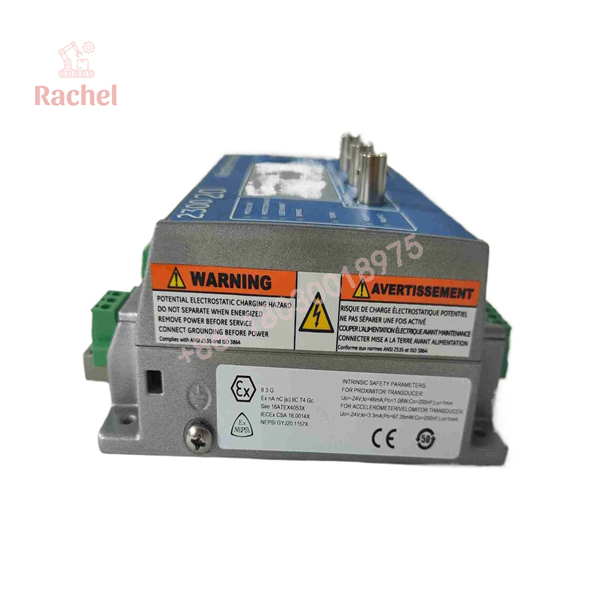
2300/20-RU
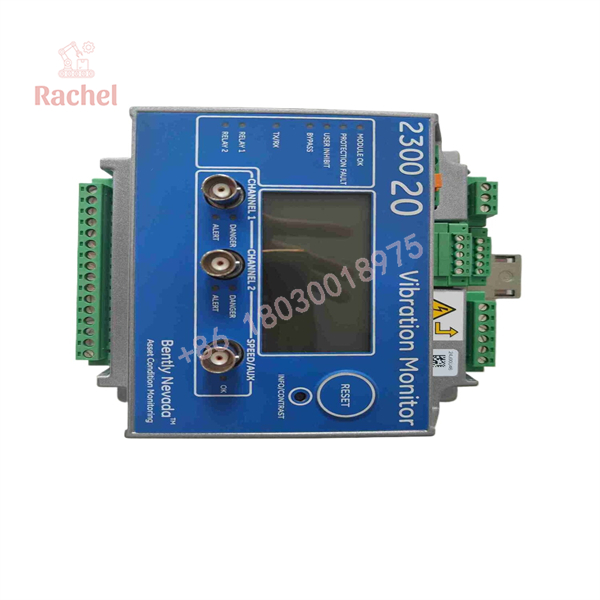
2300/20-RU
Transparency SOP: Quality Assurance & Testing
We don’t just ship boxes; we test them on actual Bently Nevada test rigs.
- Inbound Inspection: Verify original factory seals, inspect terminal blocks for physical deformation, and screen for anti-counterfeit markings on the housing label.
- Live Rig Bench Test: Mount the unit onto a test DIN rail, supply 24VDC power, and run through the self-test boot sequence to verify clean status LEDs.
- Signal Generator Calibration: Inject simulated AC/DC waveform signals (0-10V, 4-20mA, and pulse trains) into Channels 1, 2, and Keyphasor terminals to check accuracy against OEM tolerances.
- Network & Firmware Verification: Hook up to the Ethernet port via Modbus/TCP, log exact firmware revisions, and verify register readouts match input values.
- Final QC & Packaging: Clear custom test configurations, apply ESD-safe shielding, and seal in custom-molded foam shipping containers.
The Veteran’s Tech Trap Guide
To be honest, most field failures with this module aren’t caused by manufacturing defects—they come from simple installation oversights. Here is what to watch out for:
- ⚠️ Transducer Power Voltage Selection: Double-check whether your proximity probe requires -24VDC or -18VDC excitation before wiring. Misconfiguring the internal transducer power jumper can result in clipped dynamic signals or dead sensor channels.
- ❗ Modbus Register Mapping Mismatch: If your PLC isn’t pulling data, check your register offsets. Bently Nevada Modbus tables often use 1-based indexing instead of 0-based indexing. A quick offset adjustment in your PLC tag setup usually solves “zero value” comm faults.
- ⚠️ Shielding and Ground Loops: Always ground signal cable shields at ONE end only—preferably at the 2300/20 terminal block, NOT at the sensor end inside the field junction box. Ground loops will inject 60Hz noise directly into your vibration readings, causing false high-vibration alarms.
- ❗ EAC / RU Suffix Confusion: The “-RU” suffix specifically designates Eurasian Customs Union regulatory approval markings. Mechanically and electrically, the base board functions identically to standard 2300/20 hardware, but keeping the right regional approval code on file matters for plant compliance audits.
Frequently Asked Questions (FAQ for Conversion)
Q: Can I hot-swap the 2300/20-RU module while the machine is running?
A: No. Unlike large 3500 rack cards, the 2300/20 is a compact standalone monitor. Always isolate power to the terminal strip before disconnecting or swapping wiring blocks to avoid shorting out the 24VDC bus or triggering false relay trips.
Q: What is the difference between a standard 2300/20 and the 2300/20-RU?
A: The core circuit board, firmware, and input/output specs are functionally identical. The “-RU” suffix indicates that the unit carries official EAC regulatory documentation and labeling required for Russian/Eurasian installations.
Q: How do I pull vibration data into my Allen-Bradley or Siemens PLC?
A: You can map the unit directly over Ethernet using Modbus/TCP protocol. If you prefer hardwired signals, utilize the two onboard 4-20mA analog outputs for primary overall vibration levels.
Q: Does this unit require dedicated Bently Nevada software to configure?
A: You can perform baseline configuration and setup via the standard Bently Nevada System 1 or the free 2300 configuration software utility via the RJ45 Ethernet connection.
Q: Why buy New Surplus instead of ordering direct from the OEM lead-time queue?
A: Direct OEM lead times for specialty monitoring hardware can stretch into many months. Our New Surplus stock consists of genuine, factory-sealed modules sourced from canceled global projects—giving you original factory hardware immediately with a standard 12-month supplier warranty.

 Start Chat


