





Description
Product Introduction & Engineering Value
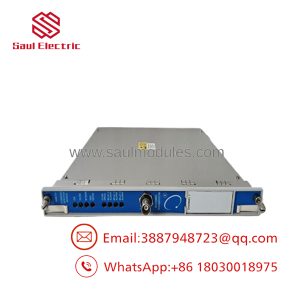
The Bently Nevada 3500 Series is a modular machinery protection platform used for continuous online monitoring of critical rotating equipment. The system combines dedicated monitor modules, power supplies, a rack, transient data interface, relay modules, communication gateways, and compatible sensors to create a configurable protection system. Bently Nevada states that the 3500 is designed for machinery protection applications and aligns with API 670 requirements.
The important procurement point is that “3500” is a system family, not a single interchangeable module. A 3500/42M, 3500/50M, 3500/62, 3500/15, and 3500/22M perform completely different functions. The exact module number, revision, I/O configuration, barriers, and rack arrangement must therefore be identified before ordering.
Technical Specifications
- Manufacturer: Bently Nevada
- Product Family: 3500 Machinery Protection System
- System Architecture: Modular rack-based
- Required Rack: 3500/05 Instrument Rack
- Power Supply: One or two 3500/15 modules
- System Interface: 3500/22M Transient Data Interface (TDI)
- Monitor Modules: 3500-series monitor modules selected according to the measurement requirement
- Relay Modules: 3500/32M or 3500/33 where relay outputs are required
- Keyphasor Modules: 3500/25, optional depending on system configuration
- Communication: 3500/92 or other applicable communication gateway configurations
- Configuration Software: 3500 System Configuration Software
- Protection Parameters: Vibration, position, speed, temperature, process variables, and other machine measurements
- Safety/Compliance: The 3500 platform is available in configurations with SIL 2 capability and hazardous-area/country-specific approvals.
Representative 3500 modules
| Module | Typical Role |
|---|---|
| 3500/05 | System rack |
| 3500/15 | AC/DC power supply |
| 3500/22M | Transient Data Interface |
| 3500/25 | Enhanced Keyphasor |
| 3500/32M | 4-channel relay |
| 3500/33 | 16-channel relay |
| 3500/40M | Proximitor monitor |
| 3500/42M | Proximitor/Seismic monitor |
| 3500/50M | Tachometer |
| 3500/62 | Process variable monitor |
| 3500/65 | 16-channel temperature monitor |
| 3500/92 | Communication gateway |
Bently Nevada’s current documentation confirms that these modules serve different measurement, relay, communication, and rack functions.
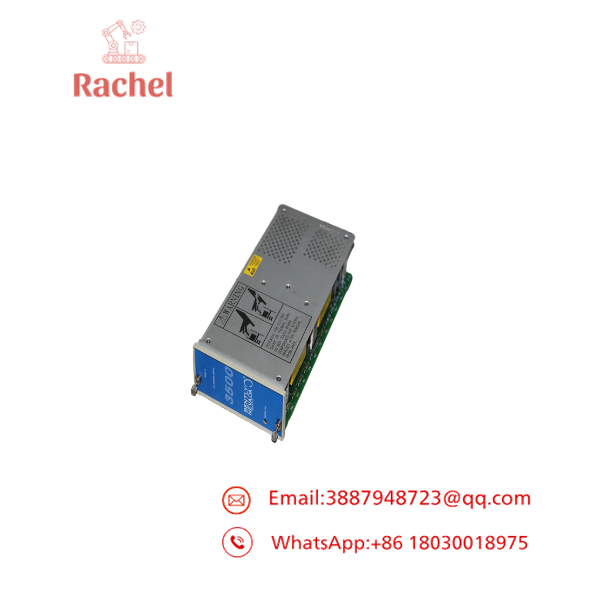
3500
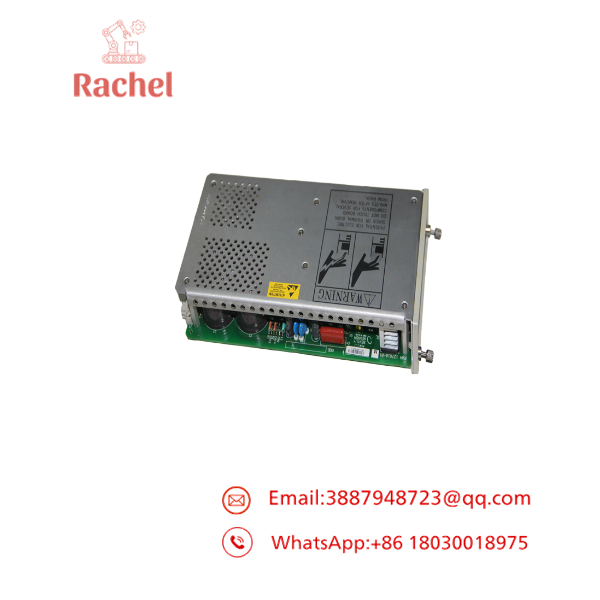
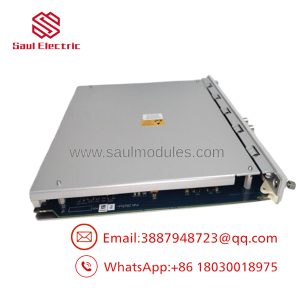
3500
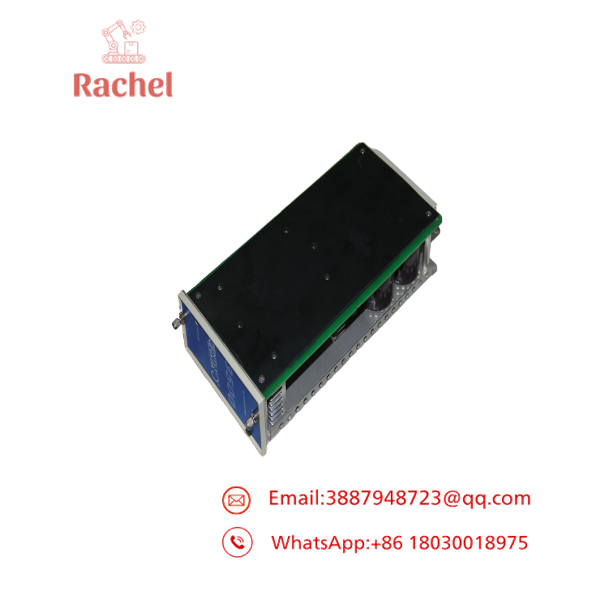
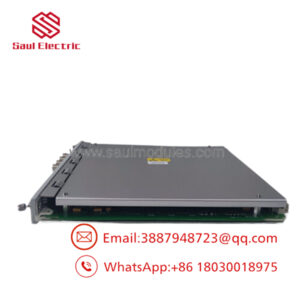
3500
Field Application & the “Trench” Experience
A steam turbine has an established 3500 rack monitoring shaft vibration, thrust position, speed, and Keyphasor signals. One monitor begins reporting a persistent channel fault.
The replacement discussion initially sounds simple: “We need a 3500 module.”
That description is useless for procurement.
The technician needs to identify whether the failed unit is a 3500/40M, 3500/42M, 3500/50M, 3500/45, or another monitor, then verify its I/O module, firmware/configuration, sensor type, and rack position. Bently Nevada’s own documentation shows that these modules have different measurement functions.
Specific application scenarios
- Steam turbine TSI — Monitoring radial vibration, thrust position, differential expansion, eccentricity, speed, and Keyphasor measurements.
- Centrifugal compressor protection — Monitoring shaft vibration, axial position, speed, and process variables.
- Large generator monitoring — Protecting rotating machinery using vibration, position, and temperature measurements.
- Reciprocating compressor protection — Using dedicated 3500 modules for rod position, cylinder pressure, acceleration, and velocity measurements.
Transparency SOP: QA & Testing
A 3500 system component should be tested according to its specific function.
Recommended acceptance sequence:
- Identify the module — Record the complete catalog number, revision, serial number, and I/O configuration.
- Inspect physically — Check the front panel, connectors, terminal assemblies, housing, and module contacts.
- Rack recognition test — Install the module in a compatible 3500 rack and verify system recognition.
- Configuration verification — Confirm that the module accepts the intended 3500 configuration.
- Signal simulation — Apply appropriate simulated sensor or process signals.
- Measurement verification — Compare displayed/measured values with known reference inputs.
- Alarm verification — Check Alert/Danger setpoint behavior where applicable.
- Relay verification — Where a relay module is involved, verify programmed relay logic and output operation.
- Communication test — Verify the applicable TDI/gateway communication path.
- Documentation — Record test conditions and results.
Bently Nevada describes the 3500 as a continuous online machinery-protection system and identifies the 3500/22M TDI as the rack interface/gateway to System 1.
The Veteran’s Tech Trap Guide
⚠️ Trap #1 — Ordering “a Bently 3500” without the module number.
This is the most common procurement problem.
3500 is the platform. The actual replacement could be a 3500/15 power supply, 3500/22M TDI, 3500/25 Keyphasor, 3500/42M vibration monitor, 3500/50M tachometer, or another module.
PRO TIP: Photograph the failed module’s entire front label before creating the purchase order.
⚠️ Trap #2 — Ignoring the I/O module.
The monitor electronics and I/O configuration are part of the measurement chain. A replacement monitor with a different I/O arrangement may not reproduce the original installation.
⚠️ Trap #3 — Treating a vibration monitor as a generic analog input module.
The 3500 monitors condition and interpret specific transducer signals. For example, the 3500/42M can be configured for radial vibration, thrust position, differential expansion, eccentricity, acceleration, velocity, and other measurements.
⚠️ Trap #4 — Forgetting configuration and setpoints.
A replacement monitor may require the correct rack configuration, channel assignments, alarm setpoints, and measurement parameters. Preserve the existing configuration before removing the failed unit.
⚠️ Trap #5 — Assuming every 3500 rack has the same power arrangement.
The 3500/05 rack can use one or two 3500/15 power supplies. Redundant power arrangements and hazardous-area configurations need to be considered when replacing rack hardware.
Dynamic FAQ
What is the Bently Nevada 3500 Series?
The 3500 Series is a modular machinery protection and condition monitoring platform for continuous online monitoring of rotating machinery. It is used for applications including turbines, compressors, motors, generators, and other critical assets.
Is Bently Nevada 3500 a single product?
No. It is a family/system platform containing numerous racks, power supplies, monitor modules, communication interfaces, relay modules, and I/O configurations.
What is the 3500/22M?
The 3500/22M Transient Data Interface (TDI) is a central interface in the 3500 rack. It supports rack configuration and provides communication with Bently Nevada System 1 software.
What is the difference between 3500/40M and 3500/42M?
Both are vibration/position monitoring hardware, but their supported measurement configurations differ. Bently Nevada identifies the 3500/40M as a Proximitor Monitor and the 3500/42M as a four-channel Proximitor/Seismic Monitor with a broader set of programmable measurement functions.
Can I replace one 3500 module with another?
No. The exact module function must match the application. Verify catalog number, revision, I/O configuration, sensor type, rack position, firmware/configuration, and required approvals.
Is new-surplus 3500 hardware suitable for a critical machine?
It can be, but the unit should be authenticated and functionally tested. For a protection system, ask for actual rack-level testing rather than accepting a simple power-up statement.
What should I request when purchasing refurbished 3500 hardware?
Request the complete module number, hardware revision, serial number, I/O configuration, photographs of the actual unit, test report, calibration/verification information where applicable, and warranty terms.
What warranty should I expect?
Warranty is supplier-specific. For critical machinery protection hardware, obtain written warranty coverage and confirm whether the supplier guarantees functional operation or only component condition.

 Start Chat


