





Description
Product Introduction
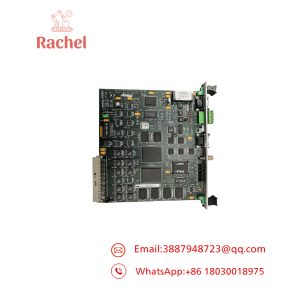
The DEIF 11-0018905 is identified in industrial surplus documentation as a GEMPAC CANBUS module used in DEIF generator control and synchronization equipment. It is associated with legacy GEMPAC/DELOMATIC architectures used for generator-set control and power-management applications.
The important point is compatibility. This is not a generic CANbus card that can simply be substituted by another communication module. Available technical documentation describes I/O address selection and voltage-measurement jumpers, making configuration part of the replacement process.
Key Technical Specifications
| Parameter | Specification |
|---|---|
| Manufacturer | DEIF A/S |
| Part Number | 11-0018905 |
| Product Family | GEMPAC |
| Module Identification | GEMPAC CANBUS |
| Associated System | DEIF DELOMATIC / GEMPAC |
| Primary Function | CANbus communication and synchronization-related control |
| Interface | CANbus |
| I/O Addressing | DIP-switch configurable |
| Address Setting | S2 switch on the SCM-B section |
| Voltage Measurement | Generator and busbar measurement ranges configurable |
| Voltage Configuration | Jumpers on SCM-C |
| Board Architecture | SCM-A / SCM-B / SCM-C assembly |
| Typical Application | Generator synchronization and power-control systems |
The available documentation describes 11-0018905 as part of an SCM-1 synchronizing/measuring assembly, with three boards interconnected by an eight-wire front-side bus rather than the rack backplane bus. The SCM-B section handles I/O addressing, while SCM-C uses jumpers to select generator and busbar voltage measurement ranges.
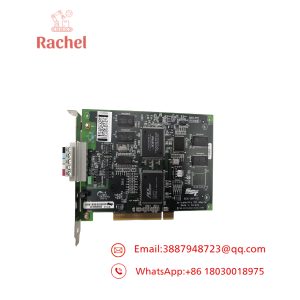
Important: Publicly available sources are inconsistent about the exact physical assembly represented by part number 11-0018905. Other current listings describe it as a GEMPAC control unit with display or a DU-2/GEMPAC display. Do not rely on the part number alone when ordering a critical spare. Compare the PCB marking, front-panel assembly, connector arrangement, and existing unit photographs.
Application Scenarios & The “Trench” Experience
A generator controller fails at 2:00 AM. The machine is otherwise healthy, but the synchronization sequence will not complete. You swap in a visually similar module and the fault remains. That is where these legacy DEIF systems become expensive: part-number similarity does not guarantee configuration compatibility.
- Power Generation — Generator Synchronization — Used within legacy GEMPAC/DELOMATIC architectures where generator and busbar measurements must be coordinated for synchronization.
- Industrial Standby Power — Generator Control — Suitable for maintaining existing DEIF control hardware when an obsolete CANbus-related module becomes unavailable.
- Temporary Power Systems — Generator Sets — Relevant to older Aggreko-associated GEMPAC installations where maintaining the original control architecture can be preferable to redesigning the panel.
- Marine Power — Generator Control — DEIF equipment is used across marine power-management applications; exact GEMPAC compatibility must be established from the installed system documentation.
- Legacy Plant Maintenance — Emergency Spare Inventory — A candidate for controlled spare-stock holdings when a facility still depends on an older GEMPAC/DELOMATIC installation.
Field case — plausible replacement scenario:
A three-generator installation develops a synchronization fault after years of service. The failed module is identified as 11-0018905, but the replacement technician initially focuses only on the CANbus connection. The machine still refuses to synchronize. The problem turns out to be configuration: the replacement assembly’s I/O address and voltage-measurement jumper settings do not match the removed unit. After documenting the original S2 and SCM-C settings and reproducing them on the replacement, the synchronization sequence returns to normal.
That is the lesson. The replacement card is only half the job. Configuration is the other half.
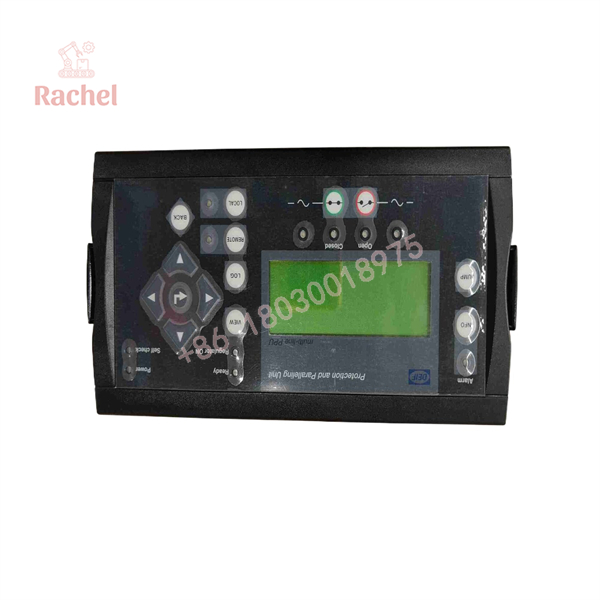
11-0018905
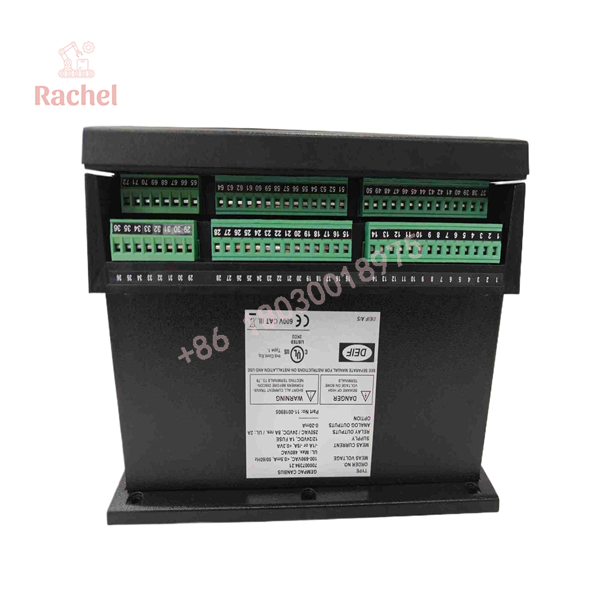
11-0018905
Transparency SOP: Quality Assurance & Testing
For a legacy DEIF component such as 11-0018905, testing should focus on identification, electrical condition, communications, and configuration integrity.
- Inbound Inspection
- Verify DEIF markings, part number, PCB identifiers, connectors, and serial information.
- Inspect OEM labels and seals where present.
- Check for cracked housings, damaged locking hardware, corrosion, bent pins, and unauthorized PCB repairs.
- Live Rig Testing
- Where the correct DEIF test hardware is available, power the module in an appropriate GEMPAC/DELOMATIC test environment.
- Check startup behavior and communication handshakes.
- Verify that the module responds correctly within the expected control architecture.
- Electrical Parameter Checks
- Inspect power rails and connector continuity before live testing.
- Check for abnormal current draw or evidence of shorted circuitry.
- Do not apply arbitrary insulation-resistance or Megger testing directly to semiconductor circuitry unless the OEM procedure explicitly permits it.
- Firmware Verification
- Record every identifiable firmware or PCB revision.
- Compare revision markings against the removed unit and installed system documentation.
- Do not assume that two modules with the same external part number have identical revision histories.
- Final QC & Anti-Static Packaging
- Photograph the tested unit and identifying labels.
- Protect the electronics using ESD-safe packaging.
- Record test results against the serial number before shipment.
We don’t just ship boxes; for a critical legacy controller, the correct approach is to test the module against the actual DEIF architecture whenever the required test rack is available.
The Veteran’s Tech Trap Guide (Crucial Value-Add)
- ⚠️ Do not assume the part number tells the whole story. Public listings associate 11-0018905 with GEMPAC CANBUS, while other listings identify it with a DU-2/GEMPAC display. Match the physical assembly before purchasing.
- ❗ Photograph every DIP switch and jumper before removing the old unit. The SCM-B S2 switch establishes the I/O address, and the SCM-C jumpers establish voltage-measurement ranges. Copy the old configuration, not somebody’s generic setup sheet.
- ⚠️ Do not confuse CANbus with the rack backplane bus. The available DEIF-related documentation describes the SCM-1 boards as interconnected by an eight-wire bus on the front side. Treating every connector as a standard backplane interface is asking for trouble.
- ❗ Do not hot-swap unless the exact DEIF documentation for your installation explicitly permits it. For a legacy generator-control assembly, remove power and follow the installed system’s isolation procedure. A synchronization controller is not the place to experiment.
Frequently Asked Questions (FAQ for Conversion)
Q1. Is DEIF 11-0018905 a PLC CPU?
No. Available documentation identifies it primarily with the GEMPAC CANBUS / synchronizing-measuring architecture, not as a conventional PLC CPU. Some sellers describe it more broadly as a control unit, so the physical assembly should be verified before purchase.
Q2. Is 11-0018905 hot-swappable?
Do not assume it is. There is insufficient public evidence to classify this specific assembly as hot-swappable. Shut down and electrically isolate the equipment according to the installed DEIF system procedure before replacement.
Q3. Does the replacement require DIP-switch or jumper configuration?
Yes, where the supplied unit corresponds to the documented SCM-1/GEMPAC CANBUS assembly. The SCM-B section uses S2 for I/O addressing, while SCM-C uses jumpers for generator and busbar voltage measurement ranges.
Q4. Does it need firmware flashing after installation?
Not necessarily. This is a legacy hardware assembly, and the more immediate replacement concern is matching the correct hardware revision and configuration. If firmware or programmable-device revisions differ, verify compatibility against the installed DEIF documentation before energizing the system.
Q5. Is this a replacement for newer DEIF AGC controllers?
No—not as a direct assumption. GEMPAC belongs to an older DEIF generator-control architecture. A newer AGC-family controller may provide different functions, interfaces, configuration tools, and wiring requirements. Treat migration as an engineering project rather than a card-for-card substitution. DEIF’s UL listing separately identifies GEMPAC and newer controller families such as AGC-4 and AGC-200-related equipment.
Q6. Why can a surplus 11-0018905 cost less than buying directly from an OEM channel?
Legacy parts often circulate through industrial surplus, decommissioned equipment, service inventories, and equipment removals. The lower price does not automatically mean counterfeit, but it also does not prove OEM-new condition. Current listings show both new and used examples, with substantial variation in condition and description.
Q7. Is the 11-0018905 fake or refurbished?
The part number alone cannot answer that. Global surplus sourcing is normal for obsolete industrial controls, but the buyer should require photographs of the actual unit, PCB markings, serial information, condition disclosure, and a defined warranty. A 12-month warranty can be offered by a supplier, but that is a supplier warranty, not proof that the unit is factory-new. One current surplus listing, for example, explicitly identifies the item as used and notes physical damage.

 Start Chat


