





Description
Product Introduction & Engineering Value
The Delta Tau ACC-51E is a UMAC backplane interpolator intended for applications that use high-resolution analog sine/cosine encoder feedback. Its base configuration accepts two 1 Vp-p sinusoidal encoder inputs and generates 4,096 interpolation steps per sine-wave cycle. Option 1 expands the board to four encoder channels.
The important replacement issue is not simply matching the ACC-51E model number. Encoder type, board revision, factory-installed options, UMAC processor generation, jumper configuration, and backplane addressing all affect installation. The ACC-51E is a 3U card designed for Turbo UMAC and MACRO Station racks.
Technical Specifications
- Model: ACC-51E
- Function: UMAC 4096x sine-wave encoder interpolator
- Standard encoder channels: 2
- Optional encoder channels: 4 with factory-installed Option 1
- Encoder signal: 1 Vp-p sinusoidal or quasi-sinusoidal
- Interpolation: 4,096 steps per sine-wave cycle
- Maximum sine-cycle input frequency: approximately 8 MHz
- Input termination: selectable unterminated or 120 Ω
- Form factor: 3U UMAC Eurocard
- Operating temperature: 0°C to 45°C
- Storage temperature: -25°C to 70°C
- Relative humidity: 10% to 95%, non-condensing
- Dimensions: 6.4 × 3.94 × 0.80 in.
- Weight: approximately 220 g without Option 1A
- Power requirements: +5 V at 0.5 A ±10%; +15 V at 0.08 A ±10%; -15 V at 0.04 A ±10%
- Backplane: UBUS
- Terminal connector: Phoenix Contact FRONT-MC1,5/10-ST3,81
- Compliance: CE, UL/cUL; the manual also lists KC conformity for the documented revision.
For a 1,000-line sinusoidal rotary encoder, the documented interpolation produces 4,096,000 discrete states per revolution and 128,000 software counts. The manual gives approximately 8 MHz as the maximum sine-cycle input frequency; this figure should not be interpreted as a practical mechanical speed rating for an encoder.
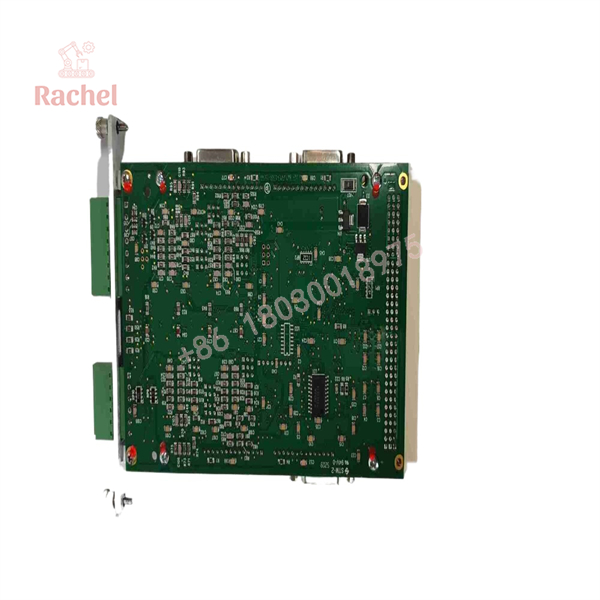
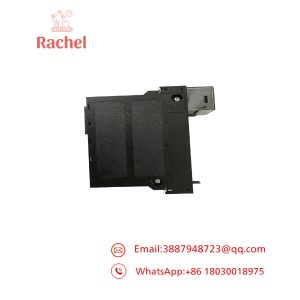
ACC-51E
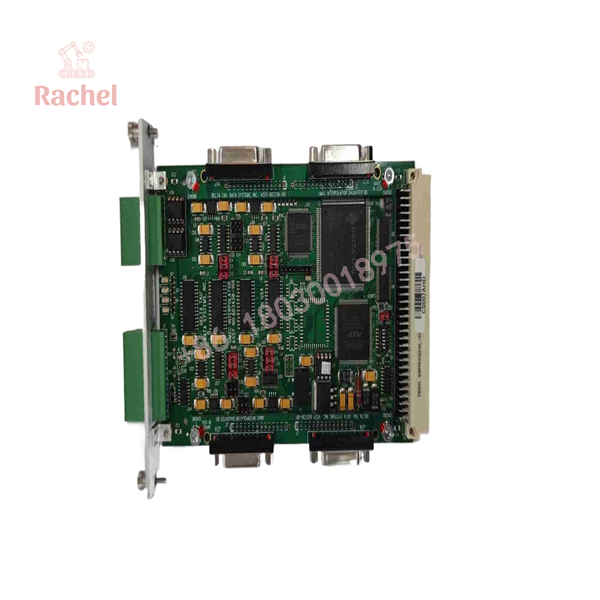
ACC-51E
Field Application & Trench Experience
A typical replacement situation involves a legacy UMAC-controlled machine where the position feedback is still based on 1 Vp-p sine/cosine encoders. The machine may continue to operate correctly until the interpolator begins producing unstable position counts, encoder faults, or inconsistent homing behavior. Replacing the ACC-51E requires more than installing another board: the technician must first document the existing encoder termination, address settings, processor type, and installed options.
Application Scenarios
Precision CNC and machine tools
The high interpolation ratio makes the ACC-51E suitable for motion systems requiring fine position feedback from analog sinusoidal encoders.
Semiconductor and precision equipment
UMAC systems using high-resolution encoder feedback can use the ACC-51E to interface analog encoder signals with the motion processor.
Legacy multi-axis motion platforms
The board can serve as a replacement component in existing Turbo UMAC or MACRO Station architectures where maintaining the original feedback interface is preferable to redesigning the control system.
QA & Testing SOP
For New Surplus ACC-51E inventory, verification should include:
- Part-number inspection — Confirm ACC-51E and the complete board identification before shipment.
- Revision inspection — Check the board revision because jumper and connector arrangements differ between documented revisions.
- Option verification — Determine whether Option 1 and/or Option 2 is factory installed.
- Connector inspection — Examine the UBUS connector, encoder connectors, terminal blocks, and front-panel hardware.
- Electrical inspection — Check for damaged components, corrosion, contamination, or evidence of overheating.
- Configuration verification — Compare DIP-switch and jumper settings with the customer’s UMAC processor architecture.
- Functional testing where equipment permits — Verify encoder input response and position-data behavior using a compatible UMAC test environment.
The manufacturer manual specifically identifies the ACC-51E as containing static-sensitive components and recommends qualified handling and installation in a protected industrial cabinet.
For refurbished units, inspection should additionally cover solder joints, connector integrity, board contamination, and evidence of previous field repair.
Veteran’s Tech Trap Guide
⚠️ Trap 1: Assuming every ACC-51E has four encoder inputs
The standard ACC-51E has two sinusoidal encoder inputs. Factory-installed Option 1 adds two additional channels. Do not purchase a base two-channel unit when the existing application requires Channels 3 and 4.
⚠️ Trap 2: Ignoring the board revision
The manual documents different jumper arrangements for revisions 104 and below versus revision 105. Revision 105 also adds documented selection provisions for Hiperface/EnDat interfaces. Check the physical board revision before copying jumper positions from an older installation.
PRO TIP: Verify the encoder interface before ordering
The ACC-51E is fundamentally designed around sinusoidal encoder feedback. The documented Option 2 provides Hiperface support for compatible Stegmann Sincos and SinCoder encoders. If the replacement board does not have the required factory option, the model number alone is not enough to establish compatibility.
⚠️ Trap 3: Treating UMAC addressing as a plug-and-play setting
The ACC-51E uses different addressing arrangements depending on whether it is connected to a Turbo UMAC or a UMAC MACRO Station processor. DIP-switch S1 and jumper E1 are therefore part of the installation configuration, not cosmetic settings.
FAQ
What is the Delta Tau ACC-51E used for?
The ACC-51E is a UMAC encoder interpolator for sinusoidal or quasi-sinusoidal analog encoder signals. It provides high-resolution position data to a Delta Tau motion processor.
How many encoders can an ACC-51E support?
The base board supports two encoder inputs. Factory-installed Option 1 adds two more, allowing four encoder channels.
What encoder signal does the ACC-51E accept?
The documented base configuration is designed for 1 Vp-p sinusoidal encoder signals. Input termination can be configured for unterminated or 120 Ω operation.
Is ACC-51E compatible with Turbo UMAC?
Yes. The ACC-51E is specifically designed as a 3U UMAC accessory and supports Turbo UMAC configurations. It also has configuration provisions for UMAC MACRO Station processors. Exact compatibility depends on processor generation, addressing, board revision, and installed options.
Is a New Surplus ACC-51E genuine?
New Surplus means the unit is original manufacturer equipment that may have been stored as excess inventory rather than purchased directly through the current OEM production channel. Authenticity should be verified from the physical Delta Tau identification, board markings, revision, connectors, and inspection records. A supplier should provide clear condition information rather than describing refurbished or used equipment as factory-new.
What warranty should I expect for an ACC-51E replacement?
Warranty terms depend on the supplier and condition of the specific unit. Before purchase, confirm the warranty period, DOA policy, return conditions, and whether the warranty covers functional failure after installation. For a legacy motion-control board, matching the exact hardware configuration is as important as the stated warranty period.

 Start Chat


