





Description
Core Product Summary (Brand / Model / Key Attributes)
The DELTE DELCOM-3222 is an industrial-grade serial interface converter that performs bidirectional, transparent conversion between RS-232C signals and RS-485 bus signals. It allows equipment with short-range RS-232 ports, such as computers, PLCs, and intelligent instruments, to be connected onto long RS-485 multidrop buses, extending serial communication up to approximately 1200 meters depending on cable and baud rate.
The converter incorporates optical isolation and surge protection circuitry to block ground potential differences and high-voltage transients between the RS-232 device and the field bus. It supports baud rate adaptation or DIP-switch setting from 300 bps to 115.2 kbps, carries a standard 32-node bus load (expandable to 256 nodes with repeaters), and mounts on a 35 mm DIN rail or by screws inside a control cabinet. Indicator LEDs for power, transmit, and receive simplify commissioning and troubleshooting.
Key Technical Specifications
| Parameter | Value |
|---|---|
| Product type | Industrial serial interface converter (RS-232C ↔ RS-485) |
| Model | DELCOM-3222 |
| Interface, RS-232 side | RS-232C via DB9 connector or terminal wiring |
| Interface, RS-485 side | RS-485 via terminals |
| Communication mode | Asynchronous serial communication |
| Transmission speed | 300 bps – 115.2 kbps (adaptive or DIP-switch set) |
| Maximum transmission distance | Up to 1200 m on RS-485 side (depends on cable and baud rate) |
| Bus load capacity | 32 nodes standard; expandable to 256 nodes with repeaters |
| Isolation | Optical (optocoupler) isolation |
| Surge protection | Built-in TVS diodes and lightning/surge protection circuit |
| Duplex support | Full-duplex/half-duplex, auto-detected or set by DIP switch |
| Supply voltage | 9–24 Vdc (external DC supply) |
| Wiring terminals | Pluggable screw terminal blocks |
| Indicators | PWR (power), TXD (transmit), RXD (receive) |
| Operating temperature | −20 °C to +70 °C |
| Mounting | 35 mm DIN rail or screw fixing |
| Supported protocols | Modbus RTU, Profibus physical layer, free-port protocols |
Detailed Product Overview
In factory automation retrofits, a common constraint is that older PLCs, HMIs, and field instruments expose only an RS-232 port, while the site wiring plan requires an RS-485 bus running several hundred meters. The DELCOM-3222 addresses this by converting the single-ended RS-232C signal into a balanced differential RS-485 signal in both directions, with transparent data flow and no protocol interpretation of its own.
Beyond simple line conversion, the unit’s electrical protection is its main engineering value in industrial environments. Optical isolation separates the RS-232 device ground from the RS-485 bus ground, and TVS-based surge suppression guards the differential lines. This protects the serial port of the connected computer or PLC from ground potential differences and induced transients — the typical failure mechanism when RS-485 buses run alongside motor circuits or are exposed to lightning-induced surges.
Operation is intended to be simple to deploy: full-duplex or half-duplex operation is auto-detected or selected with an onboard DIP switch, and the same switch set configures the baud rate and terminal resistor. The converter works at the physical layer, so it is compatible with protocols commonly carried over RS-485, including Modbus RTU and Profibus at the physical layer, as well as free-port protocols used by various PLC brands. The RS-485 driver supports the standard 32-node multidrop load, and buses can be extended with repeaters where more slaves — such as temperature and humidity sensors or power meters — must share one port.
Status is reported through three LEDs: a power indicator plus transmit and receive indicators that flash as frames pass in each direction, which makes wiring faults visible without a separate instrument.
System Compatibility & Integration Requirements
| Item / Dependency | Verified Compatibility or Requirement | Practical Note |
|---|---|---|
| Host side | Any device with an RS-232C serial port (PC, PLC, instrument) | TXD/RXD must be cross-connected (host TXD to converter RXD, host RXD to converter TXD) |
| Bus side | RS-485 two-wire multidrop bus (A+/D+ and B−/D−) | A/B polarity must not be reversed; reversal disables the whole bus |
| Protocols | Modbus RTU, Profibus physical layer, free-port PLC protocols | Converter is protocol-transparent at the physical layer |
| Baud rate | 300 bps – 115.2 kbps | Must match the master and all slaves |
| Duplex | Full- or half-duplex, DIP-switch selectable or auto-detected | Half-duplex two-wire is typical for multidrop Modbus RTU |
| Power supply | 9–24 Vdc external | Observe polarity; verify PWR LED after power-up |
| Cable | Shielded twisted pair recommended for long runs | Shield grounded at one end only |
| Grounding | Converter ground/PE terminal to cabinet PE bus | Required for surge protection to be effective |
| Mounting | 35 mm DIN rail or screw mounting | Suitable for direct installation in a control cabinet |
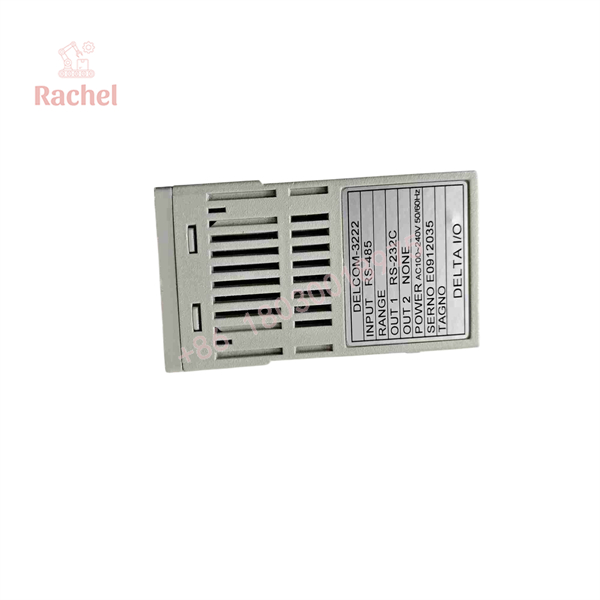
DELCOM-3222 | RS-485/RS-232C
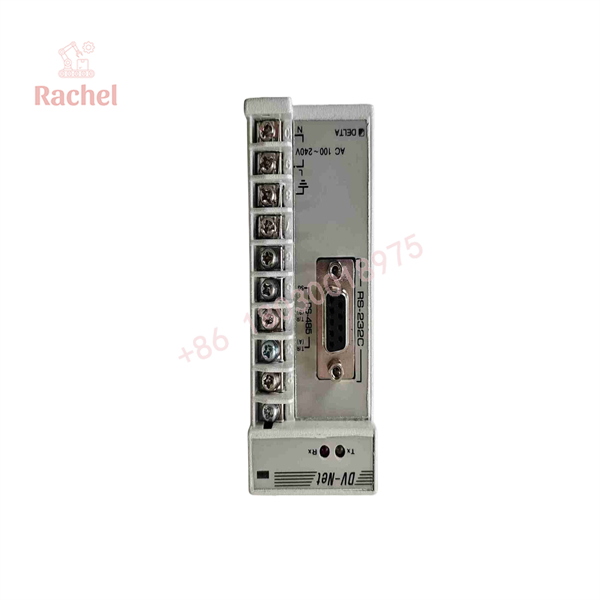
DELCOM-3222 | RS-485/RS-232C
Engineering Selection Highlights
- Interface match — the RS-232 side accepts a DB9 or terminal connection and the RS-485 side is wired to terminals; confirm the host device’s port type before specifying the interconnecting cable.
- Distance and rate trade-off — the 1200 m bus reach depends on cable quality and selected baud rate; for long runs use shielded twisted pair and reduce the baud rate where margin is needed.
- Node count — a standard 32-node bus load is supported directly; larger networks require repeaters, up to 256 nodes.
- Isolation requirement — optical isolation is built in, so no separate isolator is normally required between the host serial port and the field bus.
- Power supply — an external 9–24 Vdc supply powers the active circuitry; include a 24 Vdc feed from the cabinet distribution when planning the bill of materials.
- Configuration — baud rate, duplex mode, and terminal resistor are set by DIP switch or adaptive selection; standardize the baud rate across all slaves on the bus.
- Termination practice — the 120 Ω bus termination should be enabled at both physical ends of the RS-485 segment; mid-drop devices should not terminate.
Dimensions, Mounting & Connection Notes
- Mounting: 35 mm DIN rail snap-mount or screw fixing inside the control cabinet
- RS-232 connection: DB9 or screw terminals; cross-connect TXD/RXD (host TXD → converter RXD, host RXD → converter TXD, GND → GND)
- RS-485 connection: pluggable screw terminals; bus A+ (D+) to the 485+ terminal, B− (D−) to the 485− terminal
- Power: 9–24 Vdc external supply, observing polarity
- Grounding: connect the housing or dedicated ground terminal to the cabinet PE bus
- Indicators: PWR (steady when powered), TXD and RXD (flash on traffic in each direction)
- Termination: enable the 120 Ω terminal resistance at both ends of the bus segment
FAQ
What is the DELTE DELCOM-3222?
It is an industrial-grade serial converter that performs bidirectional transparent conversion between RS-232C and RS-485 signals, allowing RS-232 equipment to join long-distance RS-485 multidrop buses.
What data rates does it support?
300 bps to 115.2 kbps, set by adaptive baud rate selection or DIP switch.
How far can the RS-485 bus reach?
Up to approximately 1200 meters, depending on the cable used and the selected baud rate.
How many devices can the bus carry?
The converter supports a standard 32-node bus; with repeaters the network can be extended to 256 nodes.
Does it provide electrical isolation?
Yes. The converter includes optical isolation between the two sides, plus TVS-based surge protection on the bus lines.
What power supply does it need?
An external DC supply of 9 to 24 Vdc.
Which protocols can it carry?
As a physical-layer transparent converter, it carries protocols typical of RS-485, including Modbus RTU, Profibus at the physical layer, and free-port PLC protocols.
How is it mounted?
On a 35 mm DIN rail or by screws, directly inside the control cabinet.
Does it work full-duplex or half-duplex?
Both are supported; the mode is auto-detected or selected by DIP switch.
Verification & Troubleshooting Notes
- No LEDs after power-up: check the DC supply voltage (9–24 Vdc) and polarity at the power terminals.
- Transmits but never receives: the RS-232 side is almost certainly wired straight-through instead of crossed — swap host TXD/RXD so they cross to the converter’s RXD and TXD.
- Garbled or intermittent data: confirm that master and all slaves use the same baud rate; verify the bus uses twisted pair, and ground the cable shield (at one end only) when the run passes near variable-frequency drives or other noise sources.
- Multi-slave communication fails: check that 120 Ω termination is enabled at the two physical ends of the bus only, and that no two slaves share the same address.
- Entire bus dead: an A+/B− polarity reversal on any drop can disable the segment — verify polarity at each connection point.
- Ground-loop or surge damage recurring: confirm the converter’s ground terminal is bonded to the cabinet PE bus and that isolation has not been bypassed by a second ground reference on the RS-232 side.
- All wiring and DIP-switch changes should be made with the converter and the connected devices powered down, particularly when adding the unit to a running system — stop communication and isolate the related equipment first.

 Start Chat


