





Description
Product Introduction & Engineering Value
The HD22010-3 is designed for high-voltage industrial DC power systems where the rectifier has to provide both DC-bus power and battery-charging capacity. Its nominal output is 220 VDC at 10 A, while the three-phase input architecture is designed for the electrical environment found in substations and similar power installations.
The -3 suffix matters. This is not simply a 10 A version of the older HD22010-2. The documented HD22010-3 incorporates a revised power-conversion design, natural/forced cooling, internal CPU control, protection functions, and RS-485 system communication.
Technical Specifications
| Parameter | HD22010-3 |
|---|---|
| Manufacturer | Emerson |
| Series | HD |
| Model | HD22010-3 |
| Emerson Code | 02130517 |
| Function | AC/DC rectifier and battery-charging module |
| Rated DC Output | 220 VDC |
| Rated Output Current | 10 A |
| Nominal Output Power | Approx. 2.2 kW |
| AC Input | 323–475 VAC |
| Input Configuration | 3-phase, 3-wire |
| Frequency | 45–65 Hz |
| Adjustable Output Range | Approx. 176–320 VDC |
| Maximum Output Current | Approx. 11 A |
| Power Factor | ≥0.94 |
| Voltage Regulation | ≤±0.5% |
| Current Regulation | ≤±0.5% |
| Ripple | ≤0.1% |
| Communication | RS-485 |
| Cooling | Natural + forced air |
| Dimensions | Approx. 413 × 110 × 257 mm |
| Weight | Approx. 8 kg |
Current industrial references consistently identify the module as a 323–475 VAC three-phase input, 220 VDC/10 A output rectifier. The published physical dimensions are approximately 413 × 110 × 257 mm.
Power-Conversion Architecture
The HD22010-3 uses a two-stage conversion architecture: a three-phase passive PFC/rectification stage followed by a high-frequency DC/DC conversion stage. The design also includes auxiliary power, input/output detection, temperature sensing, protection circuitry, and RS-485 control/communication.
Field Application & the “Trench” Experience
A common field situation is a 220 VDC substation system running several rectifier modules in parallel. One HD22010-3 develops an input or thermal fault. The DC bus may remain energized because the other modules continue supplying the load.
That does not mean the failed module is unimportant.
Loss of one 10 A module reduces available charging capacity and system redundancy. During a battery-discharge event or high DC load, the remaining rectifiers have less reserve. Replacing the failed unit with the correct restores the original system architecture without changing the charging-system configuration.
The model is documented for 35 kV to 330 kV substation applications, particularly systems with a relatively small number of feeders.
Specific applications include:
- 220 VDC substation protection and control power
- Circuit-breaker trip/close power systems
- Battery charging sections of PowerMaster DC panels
- Plant electrical control and protection DC systems
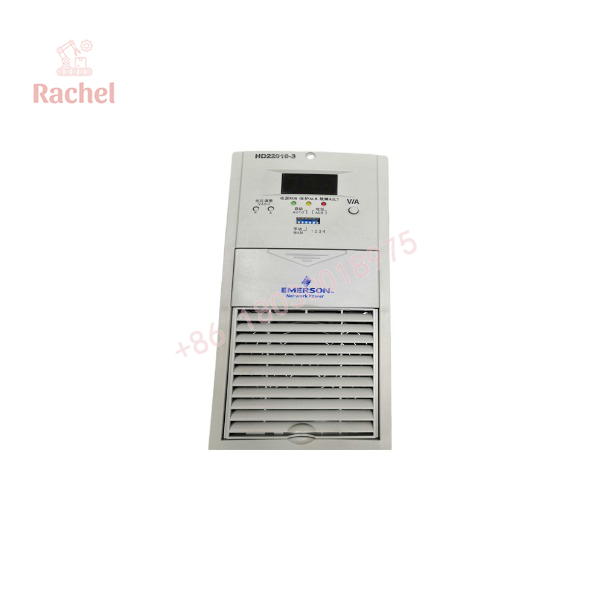
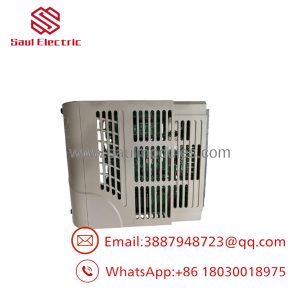
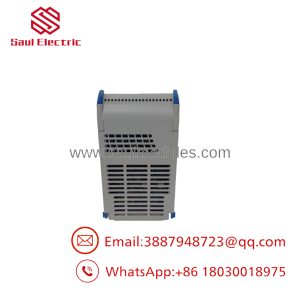
HD22010-3
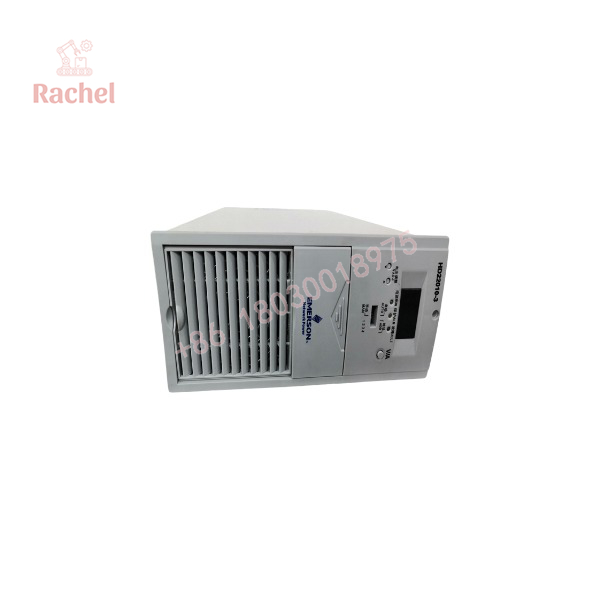
HD22010-3
Transparency SOP: QA & Testing
For New Surplus or Refurbished HD22010-3 stock, a meaningful acceptance test should go well beyond checking whether the front display illuminates.
Identification
- Confirm
. - Verify Emerson code 02130517, where applicable.
- Record serial number and revision information.
- Compare connectors and mechanical dimensions with the installed unit.
Physical inspection
- Inspect the aluminum enclosure.
- Check AC/DC terminals and rear connectors.
- Inspect cooling paths and fan assembly.
- Look for corrosion, overheating, damaged components, or previous repair work.
Electrical test
- Apply an appropriate three-phase AC source within the specified range.
- Verify startup behavior and DC output regulation.
- Check RS-485 communication where test equipment is available.
Load test
- Progressively load the output toward the rated 10 A.
- Verify voltage regulation and thermal behavior.
- Check current limiting and protection functions.
System test
- Where possible, install the module into a compatible PowerMaster cabinet.
- Verify module recognition, current sharing, alarms, and DC-bus operation.
The Veteran’s Tech Trap Guide
⚠️ Trap #1 — Buying HD22010-2 because the voltage and current match.
The older HD22010-2 is not automatically equivalent to the HD22010-3. The -3 is a revised product, and the system documentation treats the two generations separately.
⚠️ Trap #2 — Ignoring thermal conditions.
The HD22010-3 uses natural cooling at moderate load and forced cooling as temperature rises. Poor cabinet ventilation, blocked airflow, or high ambient temperature can cause thermal protection.
⚠️ Trap #3 — Treating an adjustable output range as permission to change the system voltage.
Some references list an output adjustment range extending approximately from 176 to 320 VDC. That does not mean the installed system should be operated anywhere within that range. The correct charging/float voltage must follow the battery and DC-system design.
PRO TIP: When requesting a replacement, specify Emerson HD22010-3, 220 VDC/10 A, Emerson code 02130517 and include a photograph of the original nameplate. That is much safer than sending only “Emerson 220 V 10 A rectifier.”
Dynamic FAQ
What is Emerson HD22010-3?
The is a high-frequency switching rectifier and charging module for Emerson PowerMaster-style industrial DC systems. Its rated output is 220 VDC at 10 A.
What is the input voltage?
The documented operating input is 323–475 VAC, three-phase, three-wire, with a frequency range of 45–65 Hz.
What is the rated output?
The rated output is 220 VDC at 10 A, corresponding to approximately 2.2 kW nominal output power.
Does HD22010-3 support RS-485?
Yes. The rectifier’s control architecture includes RS-485 communication for system monitoring and control.
Is the same as HD22010-2?
No. HD22010-3 is the later optimized version of the HD22010-2 family. Do not substitute one for the other solely because both are rated 220 V/10 A.
Is New Surplus HD22010-3 acceptable?
Yes, provided the unit is genuine and has been electrically tested. For a critical 220 VDC system, I would specifically request full-load testing, thermal testing, protection verification, and communication testing, rather than accepting a simple power-on test.
What warranty should I request?
For New Surplus or refurbished stock, request written coverage for startup, 220 VDC output regulation, 10 A load operation, current limiting, thermal behavior, protection functions, and RS-485 communication. Ask for the actual test procedure and results when the module is intended for a critical DC system.

 Start Chat


