





Description
Product Introduction & Engineering Value
The PSM-E20 is not a conventional PLC I/O card. Its role is closer to a DC power-system supervisory controller: it gathers operating information from downstream equipment, processes alarms and status information, manages battery-related functions, and communicates with higher-level automation systems.
That distinction matters during replacement. A modern generic monitoring device may measure voltage and current, but it may not reproduce the original Emerson system’s alarm contacts, charger communication, battery-management logic, or legacy communication protocols.
Technical Specifications
| Parameter | Specification |
|---|---|
| Manufacturer | Emerson |
| Model | PSM-E20 |
| Product Type | DC Power System Monitoring / Controller Module |
| System Application | Industrial DC power supply systems |
| Monitoring | DC system operating parameters and alarms |
| Battery Management | Automatic battery-management functions |
| Interfaces | RS-232, RS-485, RS-422 |
| Protocol Options | Modbus, DNP3.0, IEC 101, IEC 103, CDT91 |
| Local Interface | LCD display and front-panel keys |
| Alarm Interface | Dry-contact outputs |
| Downstream Communication | RS-485 |
| Installation | DC power-system monitoring cabinet |
| Product Generation | Legacy Emerson PowerMaster equipment |
Historical Emerson documentation identifies the PSM-E20 with an LCD display and front-panel keys for configuration, status viewing, and event recording. Its rear terminal arrangement includes dry-contact outputs and an RS-485 communication port.
The same documentation specifies the PSM-E20’s SYSF self-fault relay and configurable R1–R6 alarm relays as dry-contact outputs. The contacts are rated at 220 VDC/300 mA or 250 VAC/1 A.
Communication capability
The PSM-E20 is particularly useful in legacy power-system integration because historical Emerson material lists several optional background protocols, including:
Modbus · DNP3.0 · IEC 101 · IEC 103 · CDT91
The controller provides RS-232, RS-485, and RS-422 interfaces according to Emerson’s catalog material.
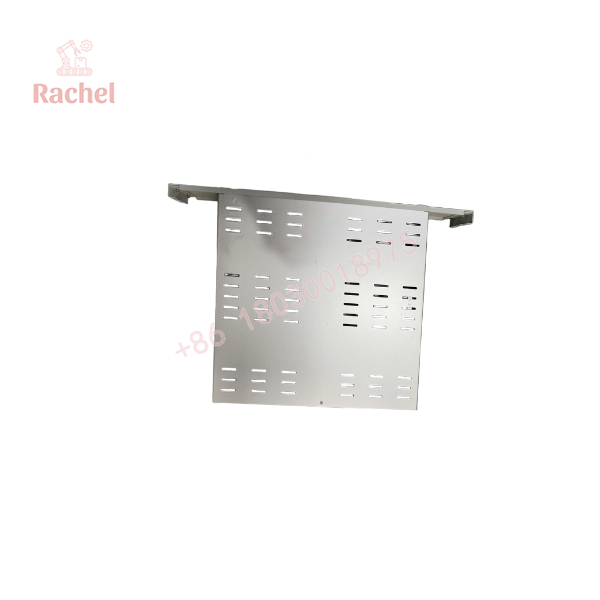
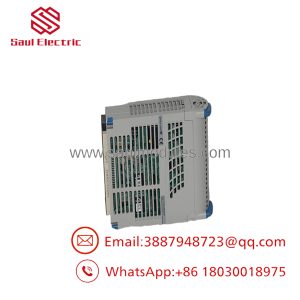
PSM-E20
Field Application & the “Trench” Experience
A utility substation has an aging DC system supporting protection relays, breaker controls, annunciation, and other critical equipment. The rectifier modules are functioning, but the supervisory controller begins generating unexplained monitoring faults.
The maintenance engineer finds the PSM-E20 responsible for the monitoring and control layer. Replacing it with a generic DC monitor would mean re-engineering the alarm mapping and potentially the station communication interface.
Instead, the engineer verifies the PSM-E20 model, records the existing communication configuration, documents the relay outputs, and checks the connected charger and downstream monitoring devices. After installing a tested replacement, the team verifies local display functions, alarm contacts, RS-485 communication, and remote supervisory data before returning the DC system to normal service.
That is the practical value of an exact spare: the DC power architecture remains unchanged.
Specific application scenarios
- Substation battery and charger monitoring
- Power-plant station DC systems
- Utility protection and control DC systems
- Industrial switchgear control-power systems
- Remote DC power-system monitoring
- Legacy Emerson PowerMaster installations
Transparency SOP: QA & Testing
A PSM-E20 should be tested as a system controller, not simply powered on.
Inspection
- Confirm the model marking and hardware revision.
- Inspect the LCD, keypad, rear connectors, terminal blocks, and enclosure.
- Check for corrosion, overheating, damaged connectors, or capacitor leakage.
- Record the installed communication configuration.
Functional testing
A proper test should include:
- Power-up and self-diagnostics
- LCD and keypad operation
- Alarm/event display
- Dry-contact relay operation
- RS-485 communication
- Appropriate RS-232/RS-422 interface testing
- Communication with representative downstream equipment
- Alarm and status reporting
Historical documentation specifically identifies the PSM-E20 as a module capable of collecting downstream information, performing analysis and calculation, displaying results, generating alarms, and issuing control commands.
For New Surplus stock, verify that the unit is genuinely unused and inspect storage condition. For Refurbished stock, request a documented functional test and written warranty.
The Veteran’s Tech Trap Guide
⚠️ Trap 1: Calling it a PLC module
The PSM-E20 is better understood as a DC power-system monitoring/controller module. Treating it as a generic PLC card can lead to an incorrect replacement strategy.
⚠️ Trap 2: Losing the communication configuration
The PSM-E20 can interface with higher-level automation systems using legacy protocols such as Modbus, DNP3.0, IEC 101, IEC 103, and CDT91.
PRO TIP: Photograph the communication settings and terminal wiring before removing the failed unit.
⚠️ Trap 3: Forgetting the dry-contact alarm circuits
The rear terminal block contains the PSM-E20’s own fault relay and configurable alarm relays. Those contacts can be part of the plant’s annunciation or SCADA alarm chain.
Do not assume that replacing the controller automatically preserves the alarm mapping.
⚠️ Trap 4: Buying from a listing with invented specifications
There are several contradictory online listings for PSM-E20. Some incorrectly describe it as a 20-channel analog-output module or assign unrelated voltage/current ratings to it.
For procurement, the Emerson PowerMaster documentation is a much better technical reference than generic reseller descriptions.
Dynamic FAQ
Q1. What is the Emerson PSM-E20?
The PSM-E20 is an Emerson DC power-system monitoring/controller module used to supervise DC power equipment, batteries, chargers, alarms, and associated system functions.
Q2. What communication protocols can the PSM-E20 support?
Historical Emerson documentation identifies Modbus, DNP3.0, IEC 101, IEC 103, and CDT91 as available protocol options, with RS-232, RS-485, and RS-422 interfaces.
Q3. Does the PSM-E20 provide alarm outputs?
Yes. The documented terminal arrangement includes a self-fault relay (SYSF) and configurable alarm relay outputs R1–R6.
Q4. What should I verify before ordering a replacement?
Verify the complete model, hardware revision, communication configuration, connected charger/monitoring equipment, alarm-relay wiring, and the exact Emerson DC system in which it is installed.
Q5. Is New Surplus PSM-E20 inventory available?
Yes. Current industrial suppliers continue to list PSM-E20 units as new or surplus inventory, although seller descriptions vary considerably in accuracy.
For a critical power-system application, request the nameplate photograph, serial number, hardware revision, functional-test report, condition classification, and written warranty before purchase.
Q6. Can a refurbished PSM-E20 be used in a critical DC power system?
Potentially, provided it is properly tested. At minimum, verify startup, display/keypad operation, alarm relays, communication interfaces, and communication with the connected DC-system equipment. A simple power-on test is not enough for a supervisory controller in a protection or station-power application.

 Start Chat


